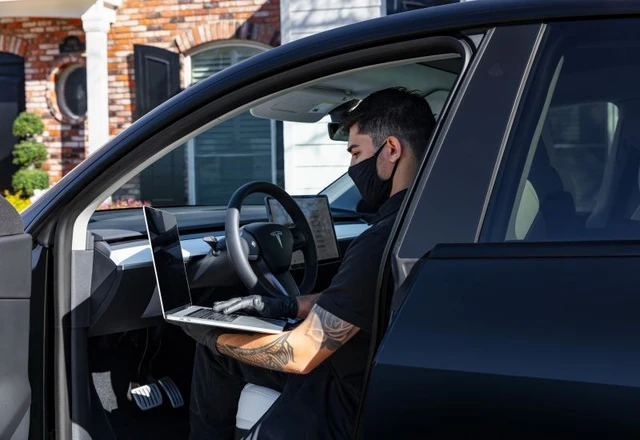
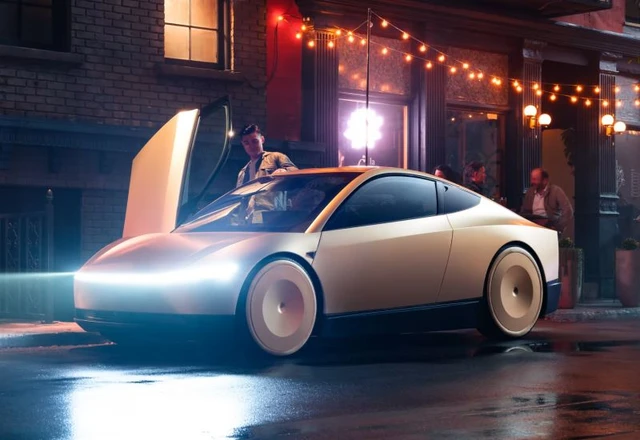
The transition to fully autonomous transportation has evolved from a technological utopia into a pressing operational challenge for the world's industrial titans. Tesla is taking a decisive leap forward with the introduction of the Cybercab—a vehicle entirely devoid of traditional controls. This Texas-based pilot is designed to validate the viability of the robotaxi concept amidst the unpredictability of real-world urban traffic. This is not merely the launch of a new product, but a fundamental shift in the paradigm of urban mobility.
For years, Tesla’s approach to autonomous driving centered on the adaptation of mass-market models. Even within the robotaxi services launched last year, modified Model Ys played the lead role, always accompanied by a safety operator in the front passenger seat. The current phase, however, marks a pivot toward a more radical architectural shift: the rollout of the purpose-built Cybercab in Austin. These two-seater electric vehicles, featuring expanded cargo space, are entirely devoid of steering wheels and pedals—effectively shifting the discourse on autonomy from the realm of software to the physical architecture of the vehicle itself.
The initial deployment will follow a closed-loop operational model, where Cybercab passengers are exclusively company employees. This measured approach allows Tesla to refine the system's interaction with the urban environment before the service is scaled for public consumption.
The project's implementation faces significant regulatory headwinds. Under U.S. law, the absence of manual controls is a critical bottleneck, restricting the operation of such vehicles on public roads. Nevertheless, in the Texas capital—home to the company's headquarters—deployment is accelerating. Municipal services have already undergone specialized training to respond effectively to potential incidents, ranging from technical glitches to the specific fire hazards associated with high-capacity EVs.
While Austin demonstrates relative flexibility, the experience in Nevada underscores the rigidity of the regulatory framework. Despite Tesla's request for a quota of 5,000 vehicles, authorities have authorized the operation of only ten units. The restrictions are multifaceted: a strict speed ceiling of 72 km/h has been imposed, service to Las Vegas International Airport is prohibited, and the operational zone is strictly confined to a specific sector of Clark County.
Furthermore, Nevada maintains a requirement for constant human oversight of every vehicle's movement, effectively neutralizing the concept of full autonomy. Each Cybercab must be clearly marked to ensure that bystanders understand the vehicle is governed by algorithms rather than a human driver.
Currently, Tesla's robotaxi footprint in Texas remains modest, with a fleet of fewer than 20 vehicles. However, the expansion into new regions and the transition to specialized platforms like the Cybercab signal the company's intent to scale its infrastructure. A full-scale launch is slated for late August, potentially serving as the catalyst for transforming urban transit from a model of individual ownership into an on-demand service.
 The Price of Acceleration: CXMT’s Rapid Push into Memory