The quest for evidence of ancient Martian life has long evolved beyond the simple search for surface water. Modern research now focuses on the intricate chemical and thermal dynamics that may have sustained biological activity deep within the planet's subsurface. Data transmitted by the Perseverance rover from Jezero Crater are revealing a surprisingly nuanced history of aqueous-rock interactions. This region is emerging as a veritable geological archive, offering profound insights into the dynamic and potentially habitable environment of early Mars.
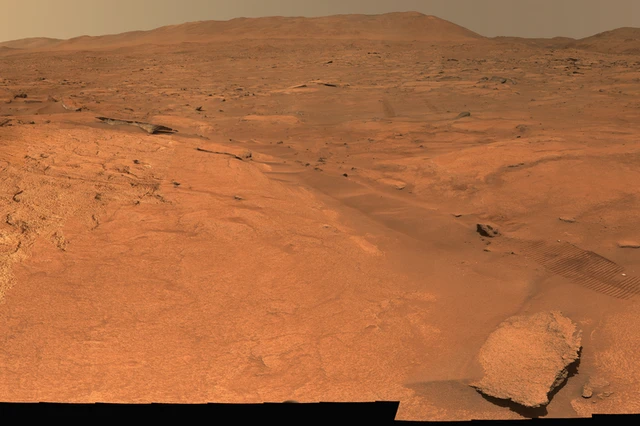
The exploration of the Margin Unit, situated on the inner rim of Jezero Crater, has fundamentally reshaped our understanding of the Red Planet's hydrological past. While researchers initially expected to find classic sedimentary deposits from an ancient lake, the reality has proven far more complex. The Perseverance rover has uncovered three distinct scenarios of water-magma interaction, pointing to a prolonged, multi-stage environmental evolution.
In the upper reaches of this geological formation, approximately 265 meters above the lower sections, the rover identified rocks characterized by large olivine crystals. The minimal evidence of aqueous alteration in this layer suggests that magma ascended from the planet's depths and cooled slowly during a period when liquid water had virtually vanished from the Martian surface. This phase marks the final stage of magmatic activity within this specific locale.
However, as the rover descended the slope, the lithology shifted radically. Here, the olivine crystals are degraded, with intercrystalline spaces filled with silica, carbonates, and silicate minerals. From a geochemical perspective, this is a critical signal. On Earth, the interaction between olivine and water triggers serpentinization—a process that releases hydrogen. For extremophilic microorganisms, such hydrogen can serve as a primary energy source, rendering these conditions ideal for the emergence and sustenance of primitive life.

Data analysis suggests that the magmatic rocks were subjected to circulating groundwater saturated with carbon dioxide. Weakly alkaline flows permeated fractures within the olivine massif, facilitating the formation of carbonates. Over time, the surrounding material eroded, leaving these minerals behind as resilient ridges—effectively "fingerprints" of an ancient hydrological system.
The subsequent stage of transformation is linked either to the influence of Lake Jezero itself or to a shift in the chemical composition of the groundwater. During this period, carbonates were redistributed, and silica precipitated within the mineral pores. To study this process in detail, the mission utilized SuperCam—a sophisticated instrument suite that uses a laser to vaporize rock particles from distances of up to 6.5 meters, enabling the analysis of the resulting plasma to determine the precise mineral composition of the bedrock.
Completing this complex mosaic are traces of hydrothermal activity. In the eastern sector of the Margin Unit, mineral veins approximately 25 centimeters thick were discovered, containing calcium sulfate and fluorite. The presence of fluorite is particularly significant; in terrestrial geology, it often serves as an indicator of hot, mineralized solutions circulating through volcanic rocks. This suggests the existence of localized hydrothermal systems that may have remained active even after the planet's primary water resources began to dwindle.
Consequently, the Margin Unit serves as a unique stratigraphic cross-section, sequentially capturing distinct epochs: from primary magmatism and saturated groundwater to the influence of an open body of water and late-stage hydrothermal surges. While the precise chronology of these events remains to be refined, the sequence of interactions provides a fundamental framework for reconstructing the climate and assessing the habitability of early Mars.
 First Direct Radio Contact with an Exoplanet