The global semiconductor market has evolved into a high-stakes geopolitical battlefield, where supply chains are increasingly weaponized as instruments of diplomatic leverage. South Korean titans Samsung and SK hynix now stand at the epicenter of this conflict, caught in a precarious balancing act between their critical reliance on U.S. technology and their strategic footprint in the Chinese market. Faced with the looming threat of sudden disruptions to Western equipment support, these firms are being driven toward localized alternatives. This strategic pivot has the potential to permanently reshape the power dynamics of the global microelectronics industry.
For decades, the global semiconductor industry has operated under a rigid hierarchy dominated by the United States, Japan, and Europe. However, current geopolitical tensions have created a perilous paradox: Washington's export controls, designed to stifle Beijing's technological ascent, have unexpectedly acted as a catalyst for the development of domestic Chinese equipment. Samsung and SK hynix, both of which maintain massive production capacities within China, now face a reality where access to critical systems could be severed at any moment.
In response to these vulnerabilities, the Korean giants have begun extensive qualification testing of systems from Advanced Micro-Fabrication Equipment (AMEC). The primary focus is on etch systems—a pivotal stage in semiconductor fabrication where superfluous material layers are removed with nanometric precision. This strategic pivot began two years ago as the uncertainty surrounding U.S. sanctions became palpable.
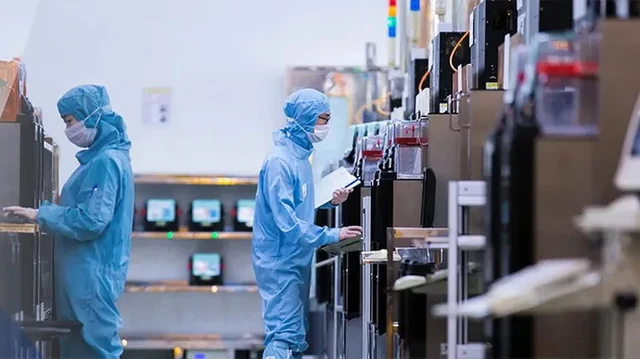
The situation is further complicated by the fact that "validated manufacturer" status, which previously allowed Samsung and SK hynix to import equipment without specific licenses, is no longer a reliable shield. The primary fear for these tech titans is not merely the prohibition of new acquisitions, but the potential blockade of maintenance, repairs, or spare parts for their existing fleets. In such a scenario, fabrication plants in Xi'an, Dalian, and Wuxi risk becoming "technological monuments"—facilities that can neither be modernized nor maintained.
Against this backdrop, Chinese vendors like AMEC are becoming a strategic hedge for South Korea. While China still lags significantly behind global leaders in advanced lithography (where ASML maintains a hegemony) and metrology, the gap is closing rapidly in etching, deposition, and chemical-mechanical planarization (CMP). Furthermore, Chinese solutions are often 20–30% more cost-effective than their Western counterparts, making them attractive not only from a security standpoint but also in terms of operational margins.
AMEC's viability has already been proven in production; the company's equipment is actively deployed at Yangtze Memory Technologies (YMTC) plants, providing Samsung and SK hynix with an empirical foundation for their own trials. For Western market leaders—Applied Materials, Lam Research, and KLA—this trend represents a significant long-term threat. China remains one of their largest revenue streams; for instance, Applied Materials' revenue from the Chinese region reached $8.53 billion in fiscal year 2025, accounting for nearly a third of the company's total income.
Nevertheless, the path to full autonomy for Chinese suppliers remains arduous. They must navigate grueling qualification cycles, build global service networks, and overcome intellectual property hurdles under constant pressure from Washington.
Despite these barriers, the growth trajectory is impressive. Deutsche Bank analysts project that by the end of 2026, the combined revenue of key players—Naura Technology, AMEC, Piotech, and ACM Research—will exceed one billion dollars. In the equipment segment (excluding lithography and quality control), the share of local suppliers in China could climb to 40%. Ultimately, the sanction pressure intended to constrain the industry has effectively fostered the creation of a powerful alternative technological ecosystem—one that is now attracting even the most conservative players in the market.
 Breaking the Lithography Barrier in China