Modern electronic prototyping demands agility and seamless scalability, eliminating the need for tedious PCB redesigns every time project requirements evolve. However, conventional data interfaces frequently emerge as bottlenecks as sensor density increases or actuators are positioned further from the central controller. The latest expansions to the Modulino ecosystem offer an elegant solution to these challenges through rigorous standardization and intelligent I²C bus management. Consequently, the development of sophisticated distributed systems is now attainable, even within the fast-paced cycles of iterative design.
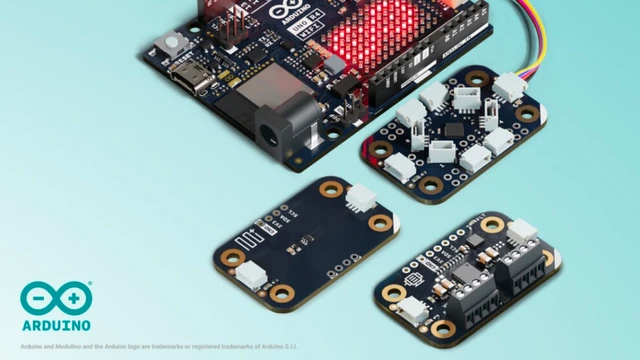
The Arduino ecosystem continues its strategic pivot toward modularity, introducing tools designed to minimize complex wiring and the need for custom intermediate boards. The new Hub, Extender, and Motors modules—interconnected via universal Qwiic connectors—transform the classic I²C interface from a simple chip-to-chip communication method into a robust network infrastructure tailored for robotics and automation.
One of the fundamental challenges when working with I²C is address conflict: if a developer needs to connect multiple identical sensors with hard-coded addresses, the system ceases to function. The Modulino Hub resolves this issue using the Texas Instruments TCA9548ARGER multiplexer. Essentially, the module splits a single shared bus into eight independent channels, allowing the controller to address each device individually.
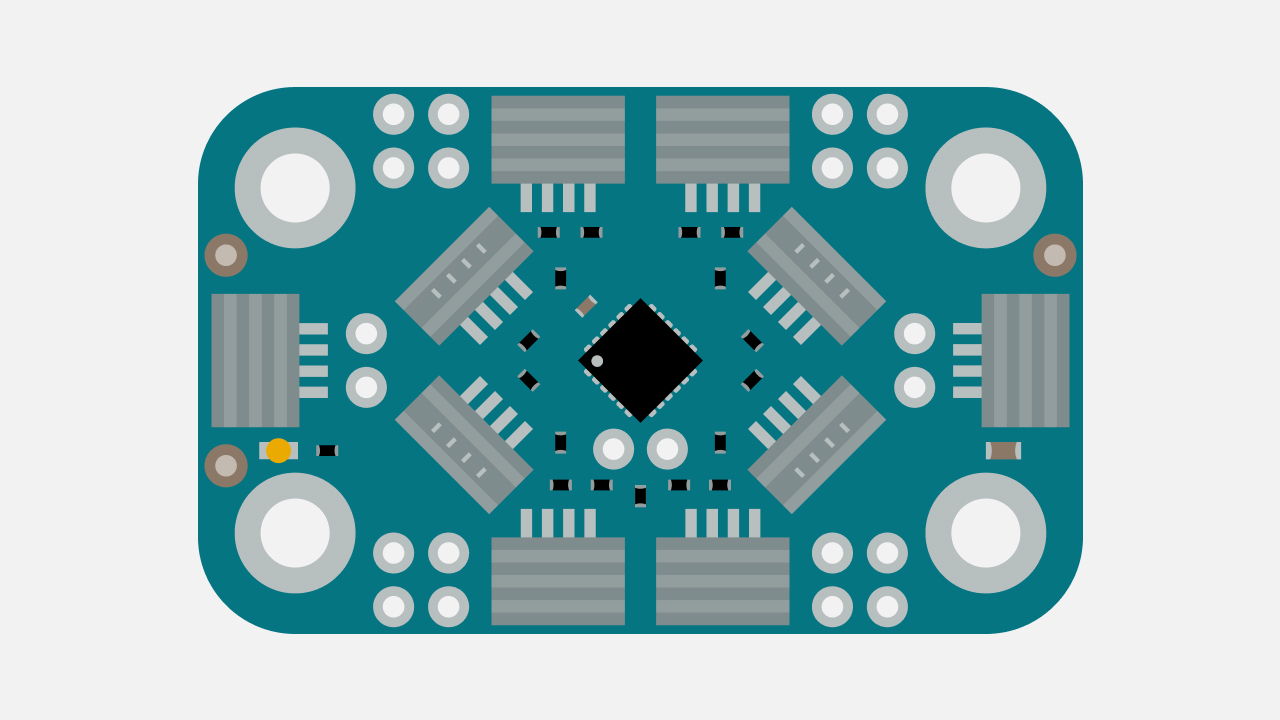
From a technical standpoint, the Hub features dedicated pull-up resistors for each channel with the ability to disable them independently. Thanks to flexible module address configuration via jumpers (ranging from 0x70 to 0x77), engineers can cascade up to eight such hubs. This allows the system to scale up to 64 independent channels, opening vast possibilities for creating high-density monitoring networks in weather stations or automated agrotech complexes.
Another critical limitation of I²C is physical distance. The interface was originally designed for communication between components within a single enclosure; as cable length increases, parasitic capacitance leads to signal degradation and data loss. The Modulino Extender eliminates this barrier using the Analog Devices LTC4311 bus accelerator. This component corrects signal edges, ensuring stable data transmission over distances of up to 30 meters.
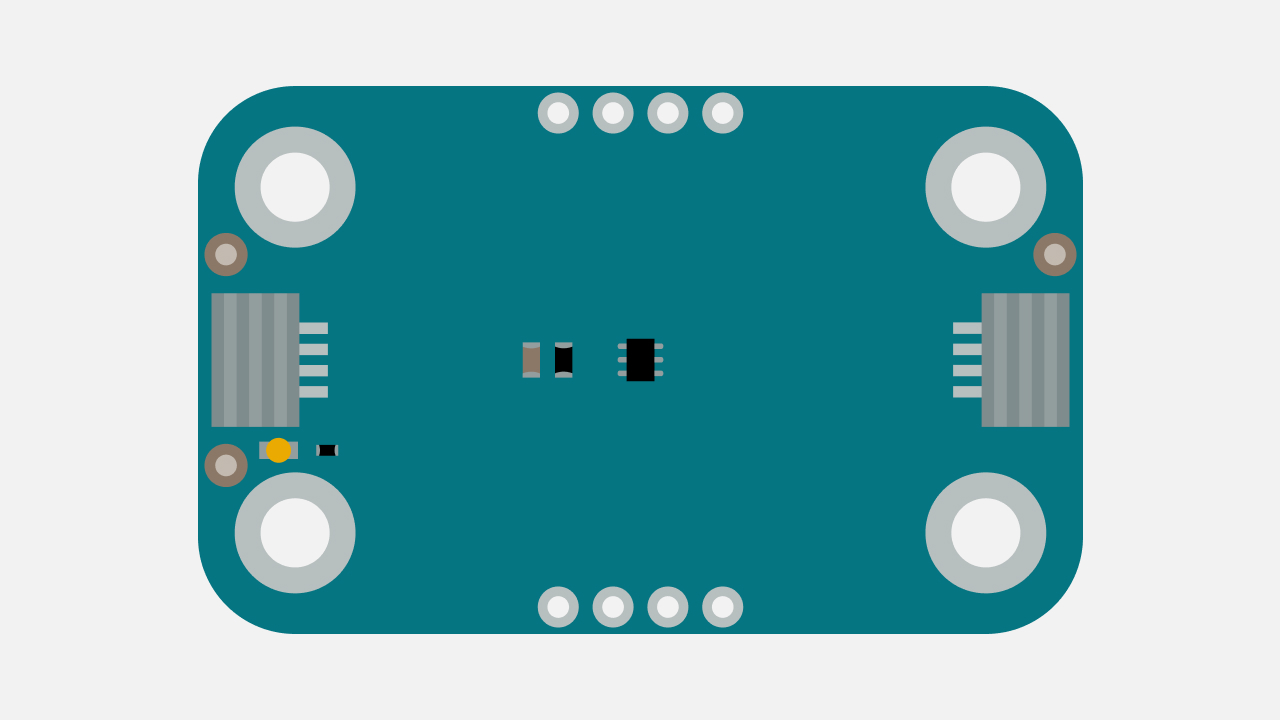
The defining characteristic of the Extender is its "transparency" to the system: it does not occupy a bus address and requires no additional libraries, operating seamlessly at standard frequencies of 100 and 400 kHz. This transforms the module into an invisible yet efficient bridge, allowing sensors or actuators to be positioned far beyond the main control unit.
Completing the trio is Modulino Motors—a solution for mechanical motion control. Unlike traditional methods where motor management requires a significant number of I/O ports and external drivers, this module offloads all control logic to the I²C plane. Internally, the device utilizes a combination of an STM32C011F6 microcontroller and a MAX22211 driver featuring dual H-bridges.
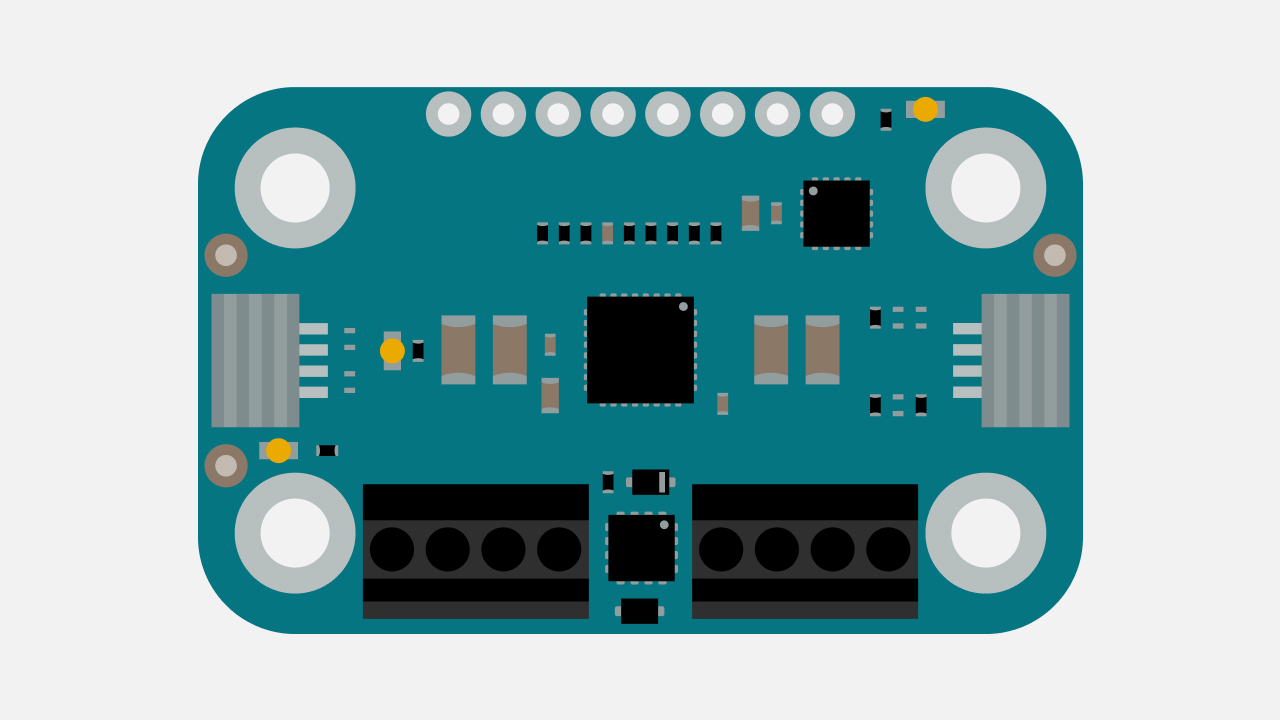
This configuration enables the control of two brushed DC motors or a single stepper motor, allowing for PWM-based speed regulation, direction control, and braking modes. The power stage is built for demanding loads: support for voltages from 5 to 24V and currents up to 3.8A per channel make it ideal for active robotics prototyping. System reliability is ensured by integrated reverse polarity protection and TVS diodes to suppress voltage spikes.
All modules share a unified, compact form factor of 41 × 25.36 mm and operate on 3.3V logic. They are fully compatible with modern boards such as the Arduino UNO R4 WiFi, Nesso N1, and UNO Q, and can be integrated into Nano-based projects via a corresponding adapter. Software support is comprehensive, with libraries available for both classic C++ and MicroPython, positioning the Modulino line as a versatile toolset for developers of all skill levels.
 Energy Autonomy: The Extreme Edition