The vision of seamless global connectivity—void of "dead zones"—is evolving from a theoretical blueprint into a phase of industrial-scale deployment. AST SpaceMobile is pivoting its strategy, shifting from isolated launches toward the serial deployment of its satellite constellation. The rollout of the new BlueBird satellites is designed to permanently blur the line between terrestrial cellular networks and space-based infrastructure. This move marks a critical juncture in the race to deliver high-speed internet to any standard smartphone, anywhere on Earth.
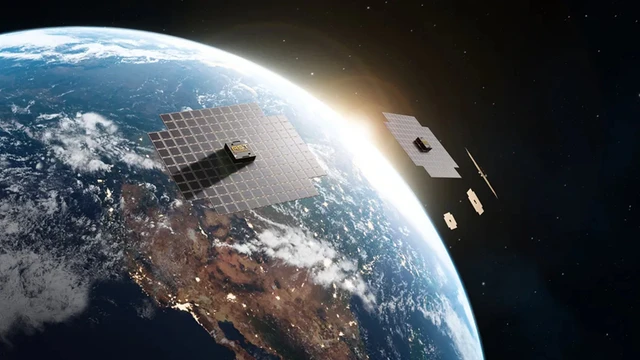
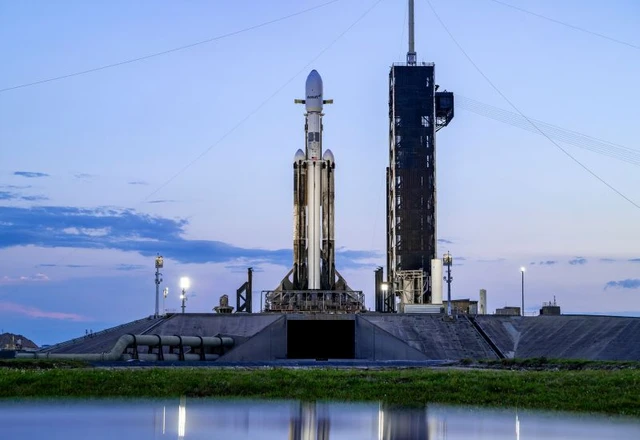
June 2026 marked a pivotal infrastructural shift in the architecture of the space-based internet. A SpaceX Falcon 9 rocket successfully deployed three satellites—BlueBird 8, 9, and 10—into low Earth orbit (LEO). For AST SpaceMobile, this launch represented a strategic turning point: the company has abandoned its previous tactic of single-satellite missions in favor of batch deployments, a move that exponentially accelerates the build-out of its comprehensive network.
The technological heart of these new satellites lies in their massive deployable phased-array antennas. Each spans 223 square meters, making them the largest commercial communication antennas currently in LEO. These imposing dimensions are dictated by the uncompromising laws of radio physics: to capture the incredibly faint signals emitted by a standard smartphone—which lacks external amplifiers or specialized terminals—the satellite requires an immense aperture. However, this engineering triumph comes with a cost; the high reflectivity of the antennas makes the satellites excessively bright objects in the night sky, sparking significant concern within the astronomical community.
The transition to this new generation of spacecraft has delivered both quantitative and qualitative leaps in performance. While the initial Block 1 platforms demonstrated peak download speeds of approximately 98.9 Mbps, the updated models are pushing toward a 200 Mbps threshold. This increase enables a full spectrum of services, ranging from standard voice calls to high-speed broadband and video streaming, delivered directly to 4G/5G devices.
The primary catalyst for this performance gain is the AST5000, a custom Application-Specific Integrated Circuit (ASIC). Developed specifically for the satellite platform, this chip boasts a processing bandwidth of up to 10 GHz and is capable of efficiently managing multiple beams. Consequently, the network achieves higher capacity while substantially reducing the risk of mutual interference between subscribers.
The current success with the Falcon 9 serves as a form of strategic redemption following the failure of BlueBird 7. Launched via Blue Origin's New Glenn, that satellite suffered a calculation error that placed it in an orbit too low to sustain, effectively leading to its destruction. Having now regained its momentum, AST SpaceMobile is pursuing an aggressive scaling strategy, with satellites produced up to unit number 37.
The strategic weight of this deployment is underscored by contracts with global mobile operators, encompassing millions of potential users. By establishing a dense orbital constellation, AST SpaceMobile is transforming the satellite from a "last-resort" tool into an integral layer of modern telecommunications infrastructure, accessible to every smartphone owner on the planet.
 SpaceX’s Hundred-Billion Dollar Leap into Louisiana