The race for computational supremacy in the era of generative AI has evolved into a battle against the very limits of engineering. Even for a titan like Nvidia, the physical constraints of manufacturing are becoming a critical bottleneck on the road to hyper-scaling. The delayed rollout of the Kyber server systems exposes the inherent vulnerabilities in current methodologies for integrating high-performance accelerators. This setback does more than simply shift delivery schedules; it opens a strategic window of opportunity for the industry's chief competitors.
Nvidia's ambitions to construct colossal compute clusters have collided with the harsh realities of materials science. According to data from SemiAnalysis, the release of the Kyber server system—intended to serve as the foundation for the deployment of Rubin Ultra accelerators—has been pushed from 2027 to 2028. This delay is rooted not in software glitches or chip shortages, but in the fundamental manufacturing complexity of a critical physical component.
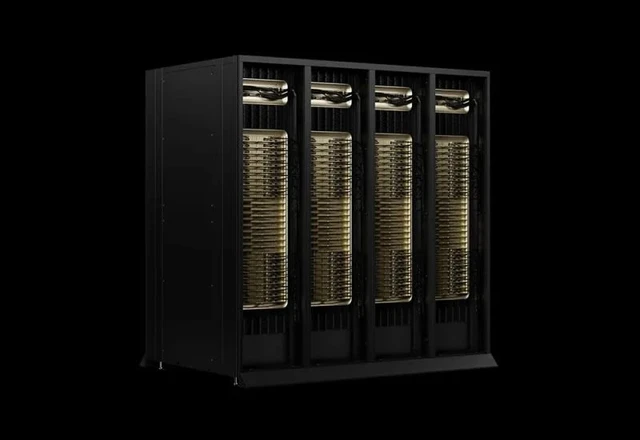
The Kyber system was conceived as a radical leap forward in resource density. The architecture envisions a server rack that integrates 144 GPUs into a single, seamlessly integrated compute complex. To minimize data latency and maximize spatial efficiency, Nvidia employed a vertical module orientation. This approach reduces the physical length of the interconnects between GPUs, a factor that is critical for training models with trillions of parameters, where inter-node communication speeds frequently become the primary bottleneck.
However, this pursuit of extreme density has led to a technological deadlock. The problem centers on the multi-layer printed circuit board (PCB) that serves as the central interconnect hub. In systems of this scale, the PCB ceases to be a mere substrate and becomes a sophisticated labyrinth of hundreds of conductive traces that must transmit signals at incredible frequencies without loss or crosstalk. Manufacturing difficulties with this component jeopardize not only individual racks but also the more expansive NVL576 configuration. This system, designed to link eight racks via high-speed optical interconnects, now risks either a delayed launch or a highly limited market release.
Nvidia's attempts to find a workaround have proven unsuccessful. A contingency plan involved pairing two previous-generation racks to simulate the performance of the Rubin Ultra. However, the hyperscalers—the world's largest cloud providers—strenuously criticized this option. From an operational standpoint, the design was deemed excessively cumbersome, and the associated OPEX was viewed as unjustifiably high.
Consequently, Nvidia finds itself in a position where no proven, efficient solution for scaling Rubin Ultra exists in the short term. This creates a precarious precedent: a niche is opening in the ultra-high-performance AI infrastructure segment that AMD and Google are poised to exploit. The latter's developments in specialized Tensor Processing Units (TPUs) and new accelerator lines are already attracting the attention of leading AI laboratories seeking an alternative to single-vendor dominance.
Nevertheless, Nvidia's current market position remains resilient. The current generation of the Rubin family has already entered serial production. These systems are expected to reach key partners, including Amazon Web Services, Microsoft Azure, and Google Cloud, this autumn.
Despite the roadmap adjustments regarding Kyber, financial forecasts remain optimistic. Analysts believe that demand for existing solutions is so overwhelming that data center revenue for the second half of fiscal year 2027 could exceed Wall Street expectations by 20%. Thus, even while confronting the physical limits of production, the company continues to dictate the terms of the game, albeit while losing a portion of its absolute technological edge in the realm of scaling.
 The Price of Acceleration: CXMT’s Rapid Push into Memory