Modern gaming and professional overclocking demand real-time system telemetry without compromising the immersive experience. Traditional software overlays often obstruct critical on-screen action, introducing visual noise that disrupts focus and fractures concentration. The solution lies in dedicating a physical space specifically for system metrics and utility panels. The new Asus ROG Strix XG129C embodies this philosophy, evolving the auxiliary display into a sophisticated hardware command center.
At the heart of the device lies a 12.3-inch IPS touchscreen featuring an unconventional 24:9 aspect ratio. This ultra-wide format transforms the monitor into a sleek information ribbon, ideally suited for hosting widgets, load graphs, and text logs. A resolution of 1920×720 pixels provides ample information density, while a brightness of 300 nits and a contrast ratio of 1200:1 ensure data remains legible even under intense workspace lighting. Particular attention has been paid to color reproduction: with 125% sRGB and 90% DCI-P3 coverage, the screen is capable of more than just technical metrics, allowing for the display of high-quality visual content.
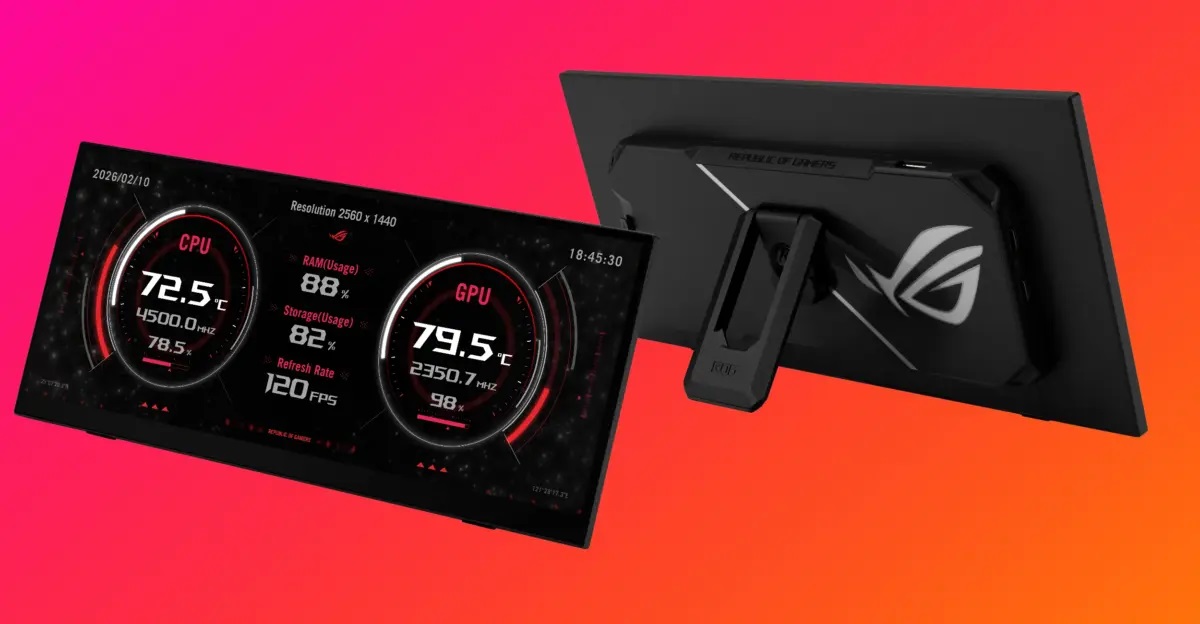
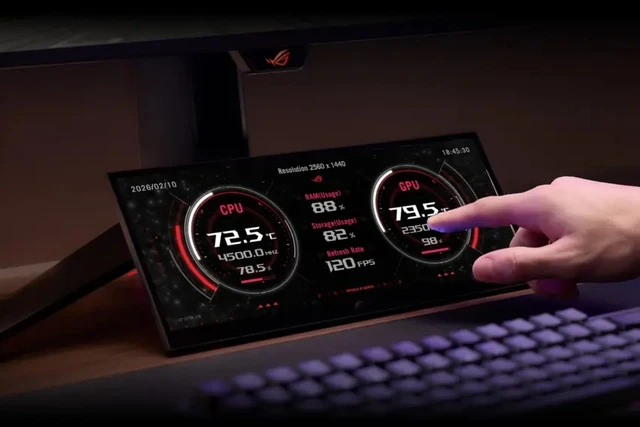
The technological value of the XG129C lies less in its raw hardware and more in its deep integration with monitoring software. The monitor comes bundled with a one-year subscription to AIDA64 Extreme—the industry standard for PC health analysis. Leveraging specialized ROG SensorPanel interfaces, users can transform the screen into a dynamic dashboard displaying real-time CPU core temperatures, GPU clock speeds, and component voltages. This elevates system management to a new level of ergonomics, freeing the primary monitor from cluttered overlay windows.
In terms of industrial design, Asus has prioritized mobility and versatility. The chassis is just 6.3 mm thin, allowing it to integrate into any setup without cluttering the workspace. To ensure flexible placement, the device features both a built-in stand and a tripod mount, opening up possibilities for non-traditional positioning—such as placing it directly beneath the main monitor or inside a PC case.
Connectivity is handled by a modern USB-C port for data transfer, while an additional port supports charging up to 20W. For compatibility with legacy hardware, an HDMI 1.2 port is included. A refresh rate of 75Hz ensures that graph animations and panel transitions remain fluid, which is critical for a seamless visual experience.
The introduction of the XG129C is part of a broader strategy by Asus to diversify its display portfolio. The company previously introduced the ZenScreen OLED MQ16FC—a portable 16-inch screen tailored for creative tasks—underscoring a trend toward hybrid workspaces. Simultaneously, the high-performance gaming segment continues to evolve: the brand's new dual-mode monitors can switch between 4K and Full HD, with the latter allowing for a record-breaking refresh rate of 480Hz. In doing so, Asus is building a comprehensive ecosystem where each display type serves a specific purpose, ranging from extreme performance to granular system resource control.
 The Price of Acceleration: CXMT’s Rapid Push into Memory