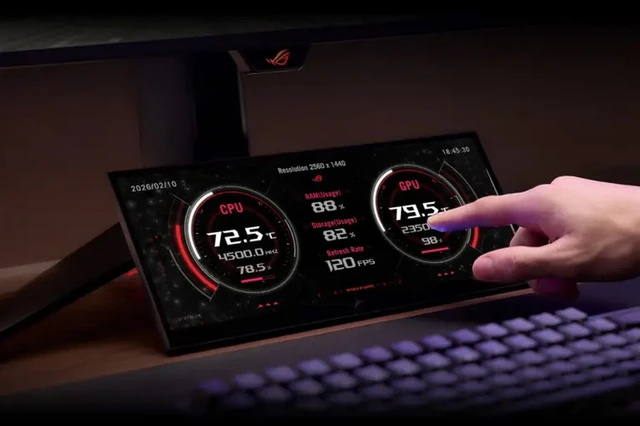
Modern gaming rigs have long since evolved beyond the single-monitor paradigm, morphing into sophisticated multi-display ecosystems. The demand for real-time hardware telemetry has fueled the rise of niche system-monitoring solutions, and Asus is meeting this need with the launch of the ROG Strix XG129C. This specialized display is engineered to serve as the central hub for control and data visualization within a high-end gaming setup.
The concept of auxiliary displays in the PC enthusiast community has evolved from makeshift DIY mods using old smartphones into fully realized commercial products. The ROG Strix XG129C represents Asus's attempt to standardize this experience, offering a turnkey solution for those who want to monitor CPU clock speeds, GPU temperatures, and memory load without having to tab out of a game or a professional application.
The device's technical foundation is dictated by its specialized purpose. At its core is a 12.3-inch IPS panel with an unconventional 24:9 aspect ratio. This design transforms the monitor into an elongated information strip with a resolution of 1920 × 720 pixels. Despite its compact form factor, Asus refused to compromise on color reproduction: a coverage of 125% sRGB and 90% DCI-P3 ensures that graphical widgets and system indicators appear vibrant and accurate. A brightness of 300 nits and a 1200:1 contrast ratio keep the image legible even under intense workspace lighting, while a 75Hz refresh rate ensures fluid interface animations.
System integration is implemented with streamlined efficiency. The primary focus is on the modern USB-C standard, which allows for the transmission of both video signals and data via a single cable, effectively minimizing cable clutter on the desk. To expand functionality, a second USB-C port with 20W charging support is provided, while an HDMI 1.2 port ensures compatibility with legacy hardware or alternative signal sources.
However, the hardware is only half the equation. To transform a screen into a fully functional monitoring dashboard, specialized software is required. Asus addresses this by bundling the device with a one-year subscription to AIDA64 Extreme—the industry standard for deep PC system analysis. When paired with the proprietary ROG SensorPanel interfaces, the user gains a tool capable of streaming real-time system telemetry, turning the monitor into a high-tech control hub.
The ergonomics of the XG129C underscore its premium positioning. With a thickness of just 6.3 mm, the display feels almost weightless. While a built-in stand allows it to sit directly on the desk, those preferring more complex configurations will appreciate the tripod mounting holes. This opens up possibilities for positioning the screen at any angle or even integrating it directly into the system chassis.
Priced at 240 euros, the device sits in the same price bracket as mid-range primary monitors. Nevertheless, the ROG Strix XG129C is not positioned as a replacement for a main display, but as a specialized accessory for those who value the aesthetics of control and maximum informational density within their workspace.
 The Phenomenon of the Foldable iPhone Ultra