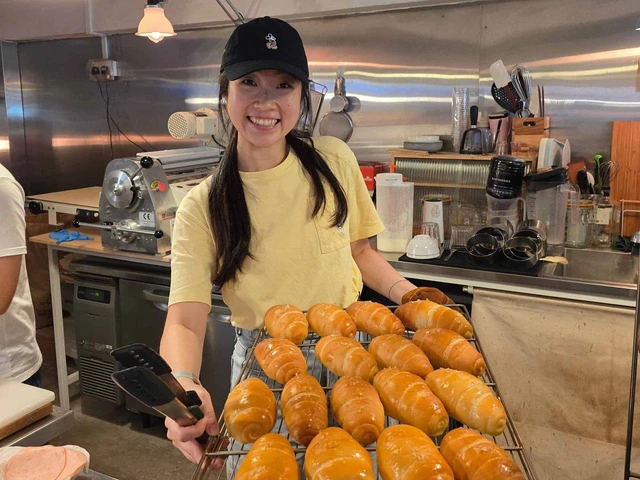
The modern era is fundamentally redefining the concept of the professional trajectory, transforming the career pivot from a gamble into a calculated, manageable project. At the intersection of high-tech expertise and artisanal craftsmanship, a new breed of entrepreneur is emerging—one capable of scaling ideas with unprecedented velocity. The journey from banking software engineering to the founding of a craft bakery serves as a vivid illustration of this symbiosis. By leveraging generative AI, the transition from the corporate office to the production kitchen was transformed into a precise calculation and a highly efficient experiment.
Transitioning from the stability of corporate finance into the inherent volatility of small business requires more than just courage; it demands a systemic approach. For a software engineer and Imperial College London alumnus, leaving a major bank was a strategic move to combat professional burnout and break the cycle of executing others' ambitions. In this light, launching a venture was not an emotional impulse, but an engineering challenge: the objective was to develop a high-quality product within a compressed timeframe.
The catalyst was a culinary encounter in South Korea, where the popularity of "salt bread" caught his attention. However, attempting to replicate the recipe at home revealed a fundamental hurdle common to the culinary arts: the sensitivity of biochemical processes in dough to external variables. Instructions designed for the temperate climate of the US proved non-viable in the extreme humidity of Singapore. Atmospheric moisture directly impacts flour hydration and yeast activity, leading to compromised texture and consistency.
To solve this, he implemented an iterative testing strategy augmented by Google Gemini. The AI served as an analytical filter, processing multiple recipe variations simultaneously to isolate key differences in proportions and kneading techniques. When technical failures occurred, the AI generated a series of hypotheses regarding the root causes, which were then validated through consultations with a professional baker. This synergy—combining the computational power of a neural network with the empirical expertise of a master—exponentially accelerated the process of refining the product to a commercial grade.
Parallel to the technical development, a marketing strategy based on the principle of public accountability was deployed. Launching a TikTok blog with a hard deadline—sales starting in exactly 100 days—built the necessary social momentum and generated anticipation long before a physical storefront existed. This window was used to secure critical resources, leading to a partnership with a cafe owner who provided access to professional equipment during off-hours.
Operational management was similarly delegated to the AI. Gemini functioned as a virtual chief of staff, handling everything from optimizing social media scripts to building pre-order systems and deconstructing overarching goals into daily sprints. This automation of administrative friction reduced overhead by approximately 80%, freeing up cognitive bandwidth for the most critical task: quality control.
The current business model is rooted in lean principles and agility. A streamlined menu featuring one base recipe with monthly flavor rotations minimizes overhead while maintaining audience engagement through the novelty factor. Despite the technical success, the most challenging transition was shifting from an engineering mindset to the psychology of sales, where the uncertainty of demand proves more stressful than solving complex technical problems.
This case illustrates a new paradigm of "solopreneurship," where a single individual proficient in AI can replace an entire entry-level team of marketing, analytics, and administrative staff, focusing exclusively on strategic growth and product excellence.
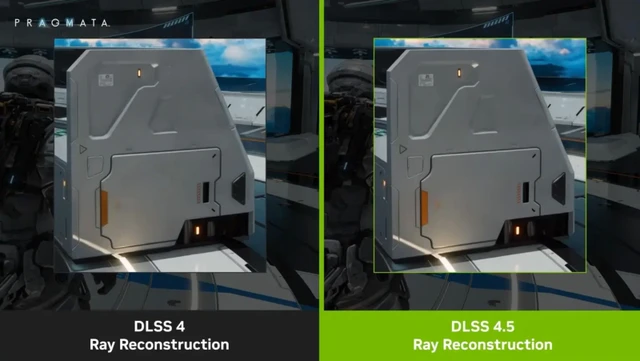 The Evolution of Rendering in DLSS 4.5