The global market for critical minerals has evolved into a high-stakes geopolitical battlefield, where resource security is now the primary determinant of technological hegemony. Tungsten—indispensable to both the defense sector and cutting-edge industrial applications—has emerged as a potent lever of international influence. While the discovery of massive deposits in Nevada promised the United States a long-sought liberation from import dependency, the path toward commercial extraction has collided with the strategic priorities of the aerospace sector. The escalating friction between the mining firm 3 Proton Lithium and NASA underscores a fundamental tension: the drive for resource sovereignty versus the imperative to preserve irreplaceable scientific infrastructure.
Tungsten holds a pivotal position in the hierarchy of strategic materials. Its exceptional hardness and extreme melting point make it indispensable for the production of armor-piercing munitions, precision tooling, and critical electronic components. In recent decades, however, a precarious market dynamic has emerged: China controls approximately 80% of global supplies, effectively leveraging this monopoly as a tool of geopolitical influence. This dependency has triggered a dramatic price surge; since February of last year, the cost of tungsten has skyrocketed by nearly 600%, jeopardizing the production chains of numerous developed economies.
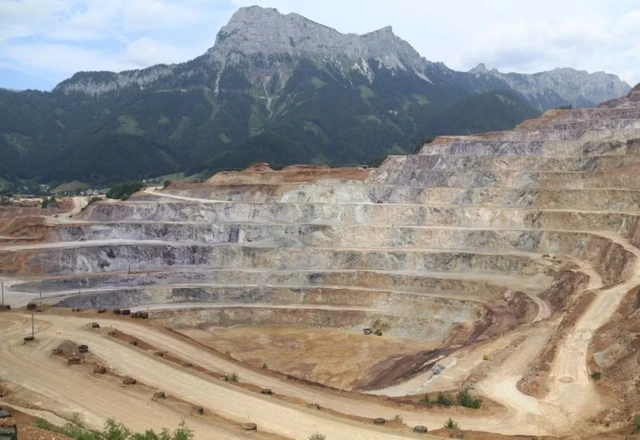
Against this backdrop, the discovery of a deposit in eastern Nevada by 3 Proton Lithium (3PL) represents a strategic breakthrough. The site boasts the largest tungsten reserves ever identified on U.S. soil, estimated at 1.78 million tons—five times the volume of any other known domestic deposit. Even accounting for partial land loss, the potential value of the resources at this site, based on current market prices, reaches $152 billion. Furthermore, the region surrounding the town of Ely has emerged as a genuine mineralogical cluster; beyond tungsten, significant deposits of lithium, boron, and potash have been identified across an area of approximately 150 square kilometers.
However, the realization of this industrial potential has hit a significant roadblock in the form of NASA. The agency utilizes roughly one-third of the claimed territory to ensure uninterrupted satellite communications and the calibration of high-sensitivity equipment. The specific topography and radio-electronic environment of the desert make this site unique for domestic aerospace operations. Industrial mining would inevitably generate interference for sensors and signal transmission systems, effectively rendering the operation of this space infrastructure impossible.
The conflict has now shifted into the legal arena. In 2023, at NASA's request, a 20-year moratorium on mining was imposed on these lands. In response, 3PL has initiated a lobbying campaign to lift these restrictions, centering its arguments on national security. The situation is further complicated by the fact that the U.S. has been entirely dependent on tungsten imports for a decade; efforts to diversify supply chains have led to the pursuit of alternatives abroad, including $1.6 billion allocated through specific political channels for the development of similar resources in Kazakhstan.
While expedited approval mechanisms exist for critical minerals, resolving the dispute between NASA and the mining sector will take time. Even if 3PL prevails and the ban is lifted, launching a full-scale mining complex will take years. Consequently, the short-term tungsten deficit remains a critical point of vulnerability, underscoring the fragility of technological sovereignty in the face of global market volatility.
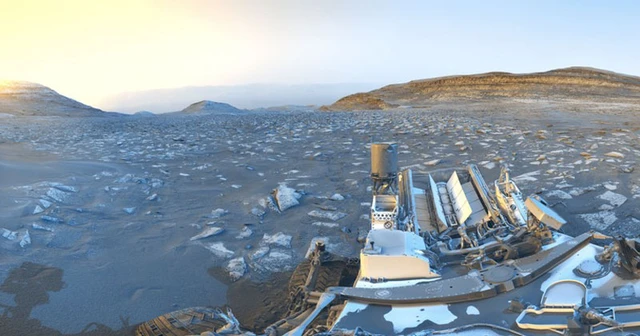 The 5,000-Day Milestone of Martian Exploration