For too long, the wireless audio industry has operated under the paradigm of planned obsolescence. Battery degradation inevitably rendered premium devices obsolete, transforming them into e-waste after only a few years of use. Sennheiser is now challenging this status quo with the launch of the Momentum True Wireless 5. The introduction of replaceable batteries is more than just a technical milestone; it is a direct response to the growing global demand for sustainability and longevity in consumer electronics.
The fundamental flaw in the TWS lifecycle has always been rooted in their architecture. The pursuit of extreme miniaturization and lightness often meant that internal components were essentially potted in adhesive, rendering any attempt at internal access fatal to the device. Consequently, even flagship models became disposable: once the battery's chemical capacity depleted, users were faced with a binary choice—endure dwindling playback time or purchase an entirely new set.
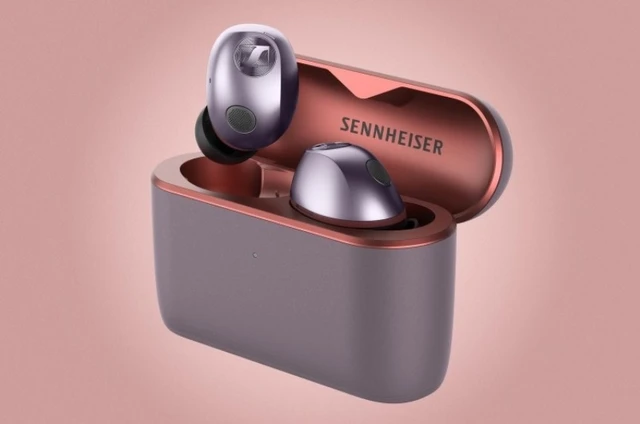
The Sennheiser Momentum True Wireless 5 break this vicious cycle. This latest iteration of the flagship earbuds features a substantially overhauled design which, according to the vendor, not only enhances ergonomics, fit stability, and portability but solves the fundamental issue of maintainability. Both the earbuds and the charging case are now equipped with user-replaceable batteries. Specialized service centers and risky desoldering operations are no longer required; a miniature screwdriver is all that is needed.
This move is part of a broader paradigm shift in consumer electronics. Stringent sustainability regulations are taking hold in Europe, mandating that manufacturers prioritize repairability. Legislative pressure is forcing brands to rethink their engineering philosophies, pivoting away from adhesives in favor of screw-based assemblies and modular architectures.
It is worth noting that the concept of swappable batteries has already been successfully implemented in full-size headphones by brands such as Fender and Glorious. However, translating this approach to the True Wireless segment is a far more daunting engineering challenge due to the extreme density of component packaging. Sennheiser is effectively setting a new industry benchmark, proving that ecological sustainability and high-density integration can coexist.
From a commercial standpoint, the Momentum True Wireless 5 maintain a sense of continuity. The device hits the market on September 3rd at a price point of $299.95, mirroring the cost of the previous Momentum 4 generation. Beyond the technical evolution, the company offers aesthetic variety, introducing the model in five distinct colorways. Consequently, the product transcends being a mere audio gadget to become a long-term investment, where the total cost of ownership is significantly reduced by the ability to simply refresh the power cells.
 The Evolution of Apple's Augmented Reality Ecosystem