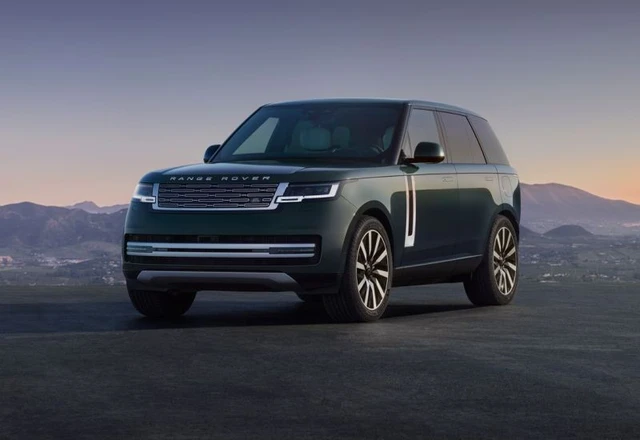
The shift toward electrification within the luxury automotive sector has proven to be a formidable challenge for legacy European marques. Under the relentless pressure of Chinese tech giants, a preoccupation with rapid time-to-market often comes at the cost of brand identity and craftsmanship. Jaguar Land Rover has charted a different course, deliberately delaying the debut of its flagship to ensure an uncompromising standard of execution. The Range Rover Electric is poised to prove that digital transformation can preserve the enduring spirit of a true off-road icon.
The two-year delay in the Range Rover Electric's market debut was less a symptom of technical failure and more a calculated strategic pivot. While competitors like Porsche, Audi, and Mercedes-Benz found themselves locked in a fierce battle with Chinese manufacturers—who offer high efficiency at more aggressive price points—the British marque chose to double down on its fundamental pillars: uncompromising comfort, off-road mastery, and prestige.
The vehicle's technical architecture is anchored by a cutting-edge 800-volt system. This high-voltage framework drastically reduces charging downtime: a 10% to 80% state-of-charge takes just 22 minutes, while a brief ten-minute session adds approximately 220 km of range. The powerhouse of the vehicle is a 118.5 kWh traction battery, delivering a real-world range of up to 532 km, and 595 km under the WLTP standard.
The flagship's performance metrics are impressive, even by modern EV standards. Dual electric motors produce a combined 542 horsepower, propelling the hefty SUV to 100 km/h in just over four seconds. Particularly noteworthy is the 850 Nm of torque—a figure the manufacturer claims is 20% higher than that of similarly sized competitors, a critical advantage for maintaining composure in challenging environments.
However, the true essence of the Range Rover Electric lies in its off-road pedigree. Engineers have implemented an intelligent traction management system capable of detecting wheel slip 100 times faster than traditional internal combustion engine (ICE) systems. This capability enables a one-pedal driving mode that remains effective on inclines of up to 45 degrees. Furthermore, the vehicle retains a wading depth of up to 900 mm, confirming its status as a legitimate off-roader rather than a mere urban crossover.
The development process was exceptionally rigorous: the team filed over 300 patent applications, and the vehicles underwent 250,000 virtual simulations. Real-world testing covered a distance equivalent to 38 circumnavigations of the globe, with hardware stressed across an extreme temperature envelope ranging from -45 to +90 degrees Celsius. This exhaustive approach ensures a level of reliability backed by an eight-year warranty or 160,000 km.
The model's pricing strategy underscores its elite positioning. Depending on the trim and region, costs range from $138,000 for the SE version in the US market to $304,000 for the exclusive SV Black in the UK. Inside, the cabin embraces a philosophy of understated minimalism; physical controls are concentrated on the steering wheel and center console, ensuring the interior remains uncluttered and serene.
This release marks a pivotal chapter in the brand's history. The next milestone will be the debut of the Range Rover GT coupe, built on the new EMA platform. Expected to hit the market by the end of the year, this model will further solidify the marque's transition into the era of high-tech electrification.
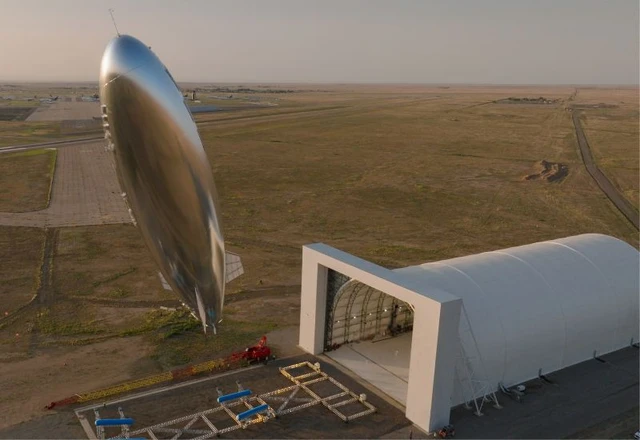 Stratospheric Platforms for Global Coverage