The global semiconductor market is undergoing a period of tectonic shifts, as over-reliance on any single segment has evolved into a critical strategic risk. Qualcomm, which has dominated the mobile landscape for decades, is now aggressively pursuing new growth vectors to offset the stagnation of the smartphone market. Its pursuit of a partnership with ByteDance signals a strategic pivot toward developing bespoke, specialized solutions tailored for data behemoths. This move exposes the profound disconnect between the geopolitical rhetoric of Washington and Beijing and the cold, pragmatic imperatives of global tech corporations.
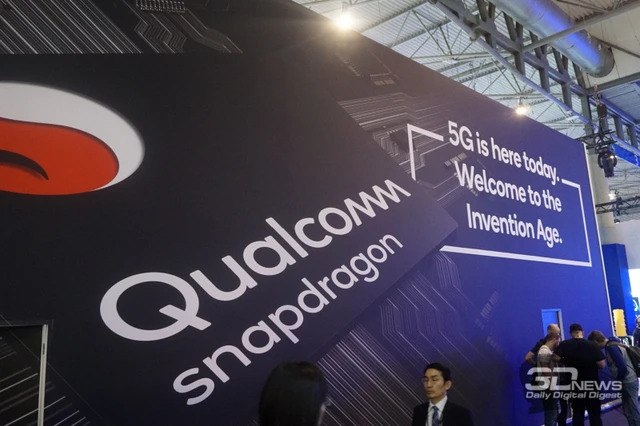
Qualcomm has reached a strategic inflection point. For years, the company leaned heavily on its dominance as the premier provider of modems and mobile platforms, but this complacency, born of market dominance, has evolved into a critical vulnerability. The smartphone market—long its primary revenue engine—is exhibiting alarming dynamics; a combination of component shortages and surging memory costs suggests that the current year could witness the sharpest decline in recorded history. In this climate, diversification is no longer a strategic option—it is a matter of survival.
This quest for new markets has led the American giant to the doorstep of ByteDance, the parent company of TikTok and one of the most influential players in global data processing. Negotiations to develop specialized circuitry for its Chinese partner signal Qualcomm's ambition to evolve from a supplier of off-the-shelf components into a full-scale partner in custom silicon design.
The centerpiece of this potential collaboration is the development of Video Processing Units (VPUs). For ByteDance, whose business model relies on a relentless flow of short-form video content, the efficiency of encoding and decoding directly impacts both infrastructure overhead and the end-user experience. Beyond VPUs, the focus extends to AI accelerators and proprietary CPUs, which would allow ByteDance to optimize its recommendation algorithms for specific hardware architectures.
The architectural bedrock for these developments is expected to be AlphaWave Semi, a high-speed data transfer specialist acquired by Qualcomm last year. Integrating AlphaWave’s technology will enable the creation of chips with unprecedented bandwidth—a critical requirement for modern data centers, where latency in inter-node communication has become the primary bottleneck.
This pivot is part of a broader expansion into the server solutions segment. Qualcomm is aggressively pursuing three key vectors: general-purpose processors, data processing accelerators, and Application-Specific Integrated Circuits (ASICs). The ASIC segment is the most promising yet the most fiercely contested, as it remains the traditional stronghold of industry titans like Broadcom and Marvell.
The geopolitical undercurrents of this deal are particularly striking. Against the backdrop of the escalating US-China confrontation—which has already compromised the interests of Nvidia, AMD, and lithography equipment manufacturers such as Applied Materials and Lam Research—Qualcomm's willingness to collaborate with ByteDance appears as an act of technological pragmatism. It underscores the fact that even amidst trade wars and export restrictions, the deep interdependence of technological ecosystems remains more powerful than political barriers.
Naturally, the outcome of these negotiations remains speculative. ByteDance, possessing immense resources, may explore alternative partners, and regulatory risks could still derail the agreement. However, the mere existence of these discussions signals the dawn of a new era: one where the boundaries between chip designers and content platform owners are permanently blurring in the pursuit of absolute computational efficiency.
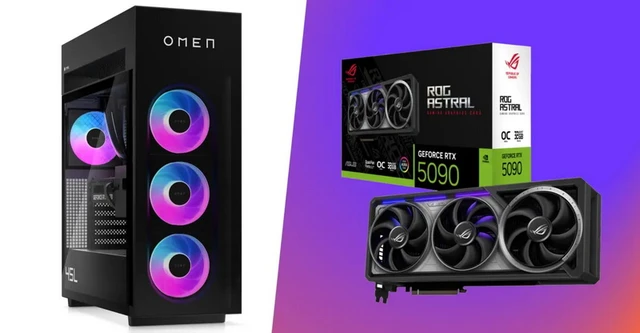 The Economic Paradox of the GeForce RTX 5090