The history of the video game industry is littered with ambitious prototypes that never made it beyond the confines of the laboratory. Sony, renowned for its relentless pursuit of technological excellence, was no exception, developing devices designed to fundamentally redefine the accessibility of gaming. Among these forgotten ventures was the PlayStation Puga—a bold attempt to integrate the console and controller into a single chassis as a means of expanding into challenging markets. This story serves as a poignant illustration of how even fully functional hardware can fall prey to the grinding gears of bureaucracy and the complexities of licensing disputes.
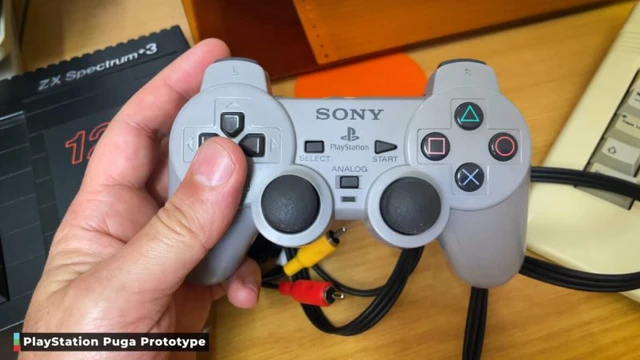
For years, the archives of the Japanese tech giant harbored a secret: a device that could have fundamentally redefined the concept of portability in the late 2000s. Codenamed the PlayStation Puga, the prototype was visually nearly indistinguishable from the ubiquitous DualShock gamepad, yet beneath its shell lay a fully realized gaming system. It was a hybrid marvel—an autonomous computer that required no connection to a stationary console, capable of streaming video directly to a television.
The development of the Puga was driven less by creative exploration and more by cold economic pragmatism. The primary target was the Brazilian market, where heavy import tariffs and stringent legislative restrictions made the sale of standard consoles through official channels either prohibitively expensive or logistically impossible for the average consumer. Sony sought to engineer a highly accessible, localized product capable of bypassing these systemic barriers.
Technically, the device leveraged solutions that were cutting-edge for the mobile segment at the time. At its core was the TI OMAP 3530 processor based on the Arm architecture. Rather than executing PlayStation 1 code natively, engineers utilized emulation, allowing them to integrate the necessary processing power within the compact chassis of a controller. Data was stored on a 4GB memory card, which came pre-loaded with approximately ten titles.
In terms of ergonomics and operation, the Puga was strictly utilitarian. Video output was handled via a standard composite cable, while power was supplied by four conventional AA batteries. This configuration provided up to 20 hours of battery life, ensuring the device remained functional even in regions with unreliable power infrastructure.
However, despite the prototype being fully operational, the project was scrapped in its final stages. The failure was not technical, but legal. The Puga's monetization model relied on an extremely low retail price, which sparked immediate conflict with content rights holders. Third-party publishers demanded standard royalty payments that were incompatible with the device's pricing strategy; in some instances, the royalty per game copy amounted to a mere $0.10. Sony's own internal corporate red tape only exacerbated the issue, as the approval of payments for first-party titles was handled by a separate division, dragging the process past the point of viability.
While the PlayStation Puga never hit the shelves, its lineage did not vanish. The software foundations and the experience gained in optimizing emulation for Arm processors later informed the development of the Sony Xperia Play. This Android-based smartphone, featuring a slide-out keyboard and dedicated gaming buttons, represented Sony's attempt to bring the "gamepad in your pocket" concept into the smartphone era, albeit having severed its tie to the television to become a standalone handheld. Thus, the Puga remains a pivotal, if obscure, milestone in the evolution of mobile gaming.
 The Price of Acceleration: CXMT’s Rapid Push into Memory