In an era of pervasive data surveillance, self-hosted solutions have emerged as the sole bastion for preserving the privacy of our digital memories. While Immich set a gold standard for personal galleries, the demand for sophisticated shared access remained largely unmet for far too long. Enter Noodle Gallery: an ambitious fork designed to transform the solitary archive into a comprehensive ecosystem for collaborative use. The project reimagines the very concept of shared access by integrating cutting-edge AI and intelligent search capabilities.
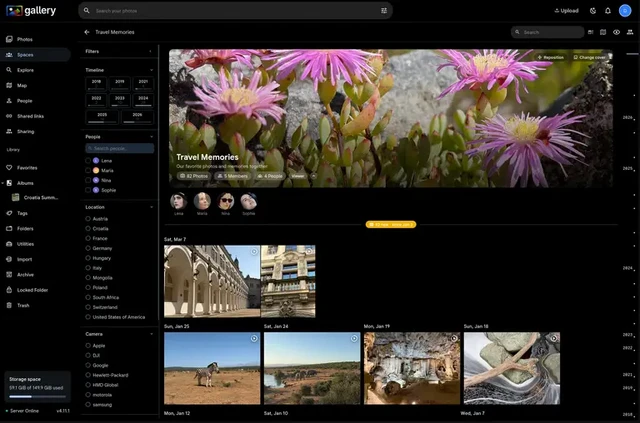
Contemporary media management systems frequently grapple with a fundamental tension: the rigid privacy of a single user versus the overly permissive access typical of "family" accounts. In the original Immich, collaboration is limited to creating albums or utilizing "Partner Sharing," a feature that essentially grants another person full access to the entire library. Noodle Gallery resolves this friction through the introduction of Shared Spaces.
Moving beyond rudimentary folder sharing, Noodle Gallery implements a comprehensive role-based access control (RBAC) system featuring Owner, Editor, and Viewer roles. This allows for granular permission management, enabling the creation of shared timelines where content from multiple contributors merges into a single, unified stream. A significant technical milestone is the elimination of data duplication when adding photos via links—a critical optimization for server disk space. To streamline administration, the system introduces named user groups for bulk invitations, while background processes allow for the one-click import of hundreds of thousands of images.
The logic governing biometric data deserves particular attention. Noodle Gallery’s end-to-end facial recognition engine unifies identities across all spaces accessible to a user. This means that if a face is recognized in both a private library and a shared space, the system links these entities while strictly adhering to access rights: the user only sees the photographs they are explicitly permitted to view.
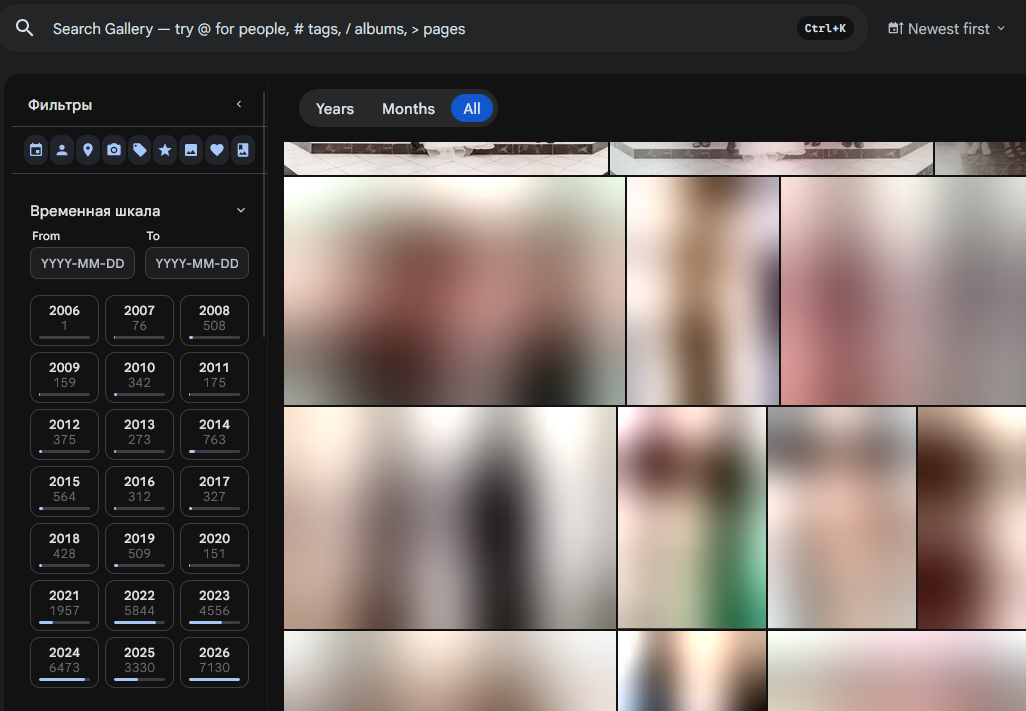
Search functionality in Noodle Gallery has been elevated to the level of professional productivity tools. The introduction of a Search Palette (invoked via Cmd/Ctrl+K) enables instantaneous navigation between photos, people, locations, and settings without leaving the current screen. The intelligent search bar supports real-time syntax suggestions: using the @ symbol for names and # for tags transforms search into a powerful filtering engine.
Furthermore, the system introduces interdependent filters. For instance, selecting a specific country dynamically narrows the list of available cameras and tags, significantly accelerating navigation through massive archives. The timeline has become more versatile, allowing users to toggle instantly between grouping by year, month, or general lists, while a full-featured filter panel is integrated directly into the map interface.
The project's technical stack is augmented by cutting-edge AI capabilities. By integrating the YOLO11 model, the system has evolved beyond human recognition; the gallery now automatically identifies dogs, cats, birds, and other animals. This functionality works in tandem with automated classification and archiving based on specific queries. Additionally, a "Memories" system has been implemented, which uses server-side rules to generate curated collections of recent trips or birthdays.
From an infrastructural standpoint, Noodle Gallery offers expanded S3 storage support with seamless migration capabilities, making the project viable for large-scale family archives or small organizational deployments. To ensure mobility, the developers have created custom forks of the applications for both iOS and Android.
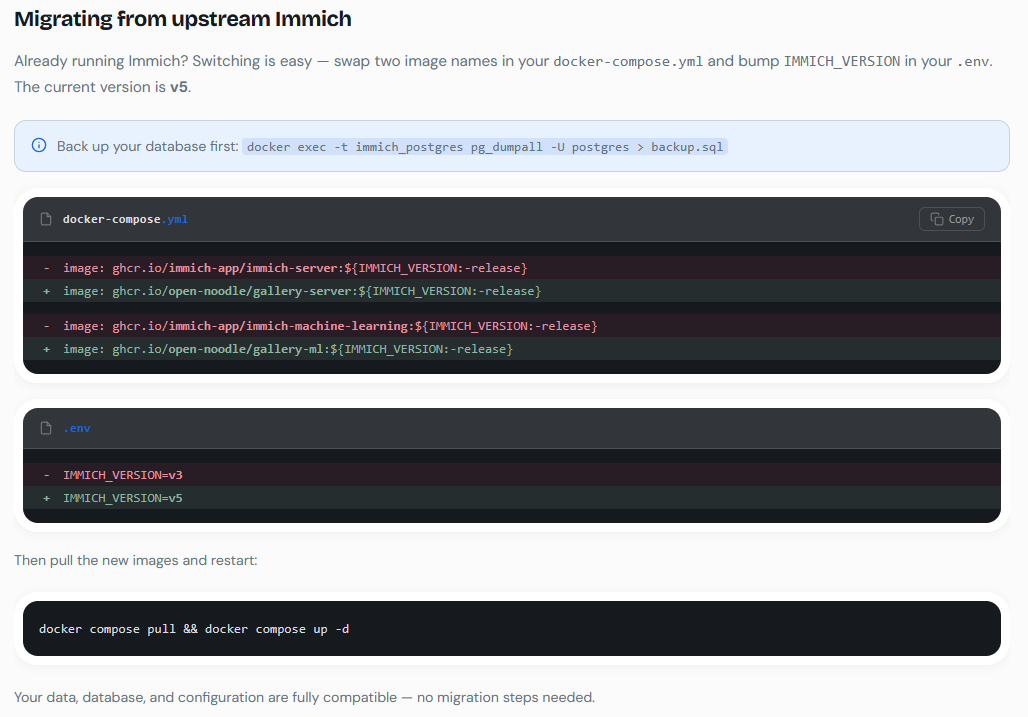
The migration path from the original Immich to Noodle Gallery is designed to be frictionless. Thanks to full compatibility with database schemas and storage structures, the transition is rapid and preserves all metadata. Currently, Noodle has integrated all the latest Immich updates, providing users with a synergy of the core project's stability and the fork's innovative feature set.
 Anthropic’s Strategic Push for Hardware Independence