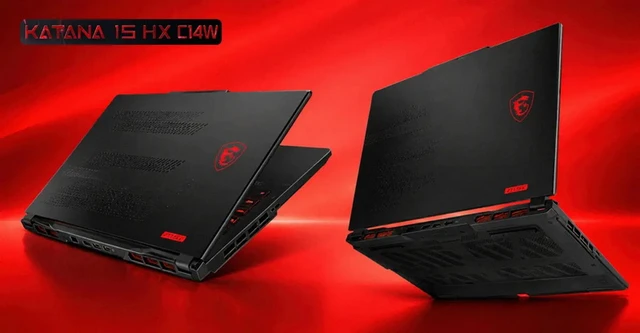
The gaming laptop market is pivoting rapidly toward the DDR5 standard, yet concerns regarding component costs and availability persist. MSI addresses this tension with the launch of the Katana 15 HX C14, granting users the rare flexibility to choose between different generations of memory. This strategy enables a precise balance between peak performance and budgetary constraints, ensuring that raw computing power remains uncompromised. It is a masterclass in technological pragmatism—a convergence of flagship-grade hardware and an unexpected level of configurational agility.
At the heart of the system lies the Intel Core i9-14900HX, a veritable computational powerhouse featuring 24 cores, split into 8 performance cores (P-cores) and 16 efficient cores (E-cores). Based on the updated Raptor Lake-HX Refresh lineup, this chip possesses a critical architectural advantage: native support for two different memory standards. This technical flexibility has allowed MSI to implement an unconventional strategy, offering models configured with either DDR5 or DDR4-3200.
The inclusion of DDR4 support in a 2026 device feels almost anachronistic, especially given the industry's decisive shift toward newer standards. However, MSI pushes the envelope further by claiming support for up to 96 GB of memory for both configurations. This creates a notable technical discrepancy: while such capacities are attainable for DDR5, 48 GB DDR4 modules are virtually non-existent on the market. This suggests either a specification error or the use of exotic module combinations; regardless, it is important to note that this is not a hybrid motherboard, but rather a choice between specific hardware modifications available at the time of purchase.
The graphics subsystem of the Katana 15 HX C14 is driven by the mobile version of the GeForce RTX 5070. The GPU is equipped with 8 GB of the new GDDR7 standard memory, with a rated Thermal Design Power (TDP) of 115W. Combined with the CPU, the system's total power draw reaches 170W, necessitating a rigorous approach to thermal management. To combat overheating, engineers have implemented a cooling solution consisting of dual fans, three heat pipes, and four exhaust vents, ensuring efficient heat dissipation from critical components.
The visual experience is defined by the choice between two distinct panels. The first option is tailored for color-critical professional workflows and high clarity, featuring a resolution of 2560 × 1440 pixels, a 165 Hz refresh rate, and full DCI-P3 color gamut coverage. The second, more traditional configuration offers a resolution of 1920 × 1080 pixels at 144 Hz with sRGB coverage—the gold standard for the vast majority of gamers.
Internal storage is bolstered by two M.2 slots for PCIe Gen4 x4 NVMe drives, ensuring lightning-fast data access. A contemporary wireless suite is provided by Wi-Fi 6E and Bluetooth 5.4. Power autonomy is handled by a 60 Wh battery, supported by a robust 240W power adapter.
The evolution of the Katana series also extends to its physical footprint. The new model weighs 2.1 kg, making it 12.5% lighter and 10.2% thinner than its predecessors. This allows MSI to position the device not merely as a desktop replacement, but as a relatively mobile tool. Despite the global launch, the availability of specific configurations—including the choice of memory standard—will vary by regional market.
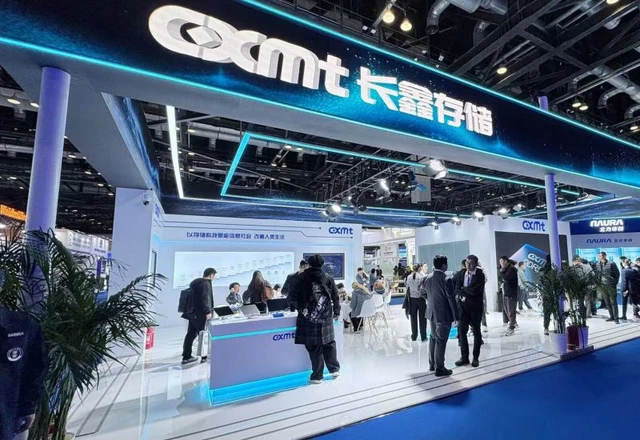 CXMT Lawsuit Against the US Department of Defense