The wearables industry is rapidly evolving, pivoting away from cumbersome headsets toward the seamless integration of a digital overlay into the fabric of daily life. Meta continues to steer this trajectory, experimenting with form factors that blur the line between a high-fashion accessory and a fully functional computer. Recent leaks regarding Project Phoenix reveal the company's ambition to engineer a device that harmonizes extreme mobility with high-performance utility. This project may well be the critical catalyst in the transition from immersive virtual environments to ubiquitous augmented vision.
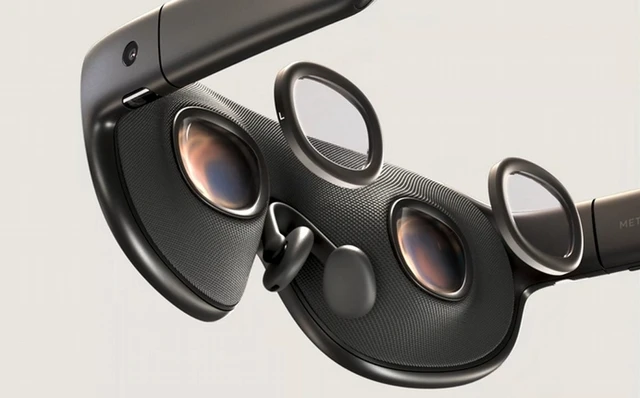
The buzz surrounding the upcoming Meta Connect conference has reached a fever pitch following UploadVR's publication of images featuring a new device codenamed Project Phoenix. The leak originated from a HorizonOS firmware package designed for prescription lenses—a detail that effectively confirms Meta's commitment to the mass market, where ergonomics and personalized vision correction are critical for adoption.
Visual analysis suggests that Meta is pursuing a "middle-ground" strategy. Project Phoenix occupies the space between cumbersome VR headsets and lightweight smart glasses. Its slim frames, reminiscent of classic eyewear, conceal sophisticated optical systems, allowing the user to bypass the social friction often associated with wearing bulky head-mounted displays.
Of particular interest is the technical approach to weight distribution. The images reveal a cable extending from one of the temples, pointing toward an external compute architecture: the primary processor and battery are likely housed in a separate puck carried in the user's pocket. This design allows for a radical reduction in the glasses' weight and solves the problem of thermal throttling and heat dissipation near the temples and forehead. Additionally, the frames integrate outward- and downward-facing cameras, essential for implementing SLAM (Simultaneous Localization and Mapping) and enabling seamless interaction with real-world objects.
With this pivot, Meta enters direct competition with players such as Xreal and Viture. While the current AI-powered Ray-Ban Meta glasses function primarily as a "smart accessory" lacking a full visual interface, and the Quest 3 remains a tool for deep immersion, Project Phoenix is positioned to become an everyday AR utility.
This trend of decoupling computational power from the interface module is not unique to Meta; Google is pursuing a similar path with project Aura XR. The industry trajectory is clear: for AR glasses to achieve true mass adoption, they must cease to look like gadgets and instead become a wardrobe staple, delegating heavy processing tasks to an external module.
Despite the high probability of a conceptual showcase at upcoming events, a full commercial rollout of Project Phoenix is not expected until next year. This window will be necessary for the final fine-tuning of the interaction between HorizonOS and the specialized hardware to ensure a stable, low-latency visual experience during wired data transmission.
 AMD’s Strategic Approach to the Budget Segment