The integration of humanoid robotics into industrial manufacturing has transcended the realm of science fiction, evolving into a stark corporate reality. In South Korea, this transition has ignited the automotive industry's first major labor dispute centered specifically on the deployment of androids. The case of Hyundai and its adoption of the Atlas robot now serves as a global bellwether for the future of the workforce in an era of pervasive automation—a critical flashpoint where technological efficiency clashes with fundamental social safeguards.
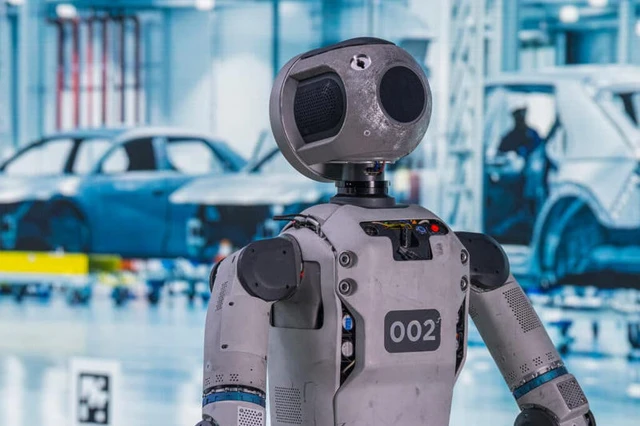
When Hyundai Motor unveiled the updated Atlas earlier this year, thousands of employees saw more than just a technical milestone; they saw a potential threat to their livelihoods. Standing 188 centimeters tall with joints capable of full 360-degree rotation, the robot demonstrated an uncanny fluidity and efficiency. The response from labor unions was immediate: a hardline stance against deploying Atlas on production lines without prior agreement from the workforce.
Tensions reached a breaking point this week as workers at a South Korean plant initiated a partial strike. This event marks a significant industrial precedent—the first time automotive production has been halted specifically due to the expansion of humanoid robotics. While Hyundai management has not disclosed a definitive timeline for full-scale deployment, unions are moving aggressively to establish safeguards now. Similar robotics programs are being spearheaded by other industry giants—including Tesla, Xiaomi, BMW, General Motors, and the German supplier Schaeffler—transforming this local conflict into a symptom of a global trend.
South Korea has naturally become the epicenter of this confrontation. The country's industrial robot density per capita is more than six times the global average. The situation was further inflamed by the rhetoric of President Lee Jae-myung, who likened automation to a "giant chariot rolling forward" that cannot be stopped. These words acted as a catalyst for Hyundai’s union of 40,000 members, who are now fighting to define the rules of engagement within this new technological paradigm.
The trajectory of Atlas began a decade ago with Boston Dynamics' hydraulic prototypes, which required external safety tethers. The turning point came in 2021 when Hyundai acquired a controlling stake in Boston Dynamics, initiating a deep redesign of the robot for specific industrial applications. However, the company's strategic calculus has collided with social resistance. Notably, Hyundai plans to begin deploying Atlas in 2028 at its new Metaplant in Georgia, USA—a region where union influence is minimal, highlighting the corporation's intent to bypass zones of high social friction.
The economic logic behind android integration is compelling: with an estimated cost of $130,000 per unit, the reduction in operational expenditures allows the investment to break even in just two years. In response, the union has put forward unprecedented demands. Workers are insisting on a shift from hourly pay to fixed salaries to prevent a reduction in working hours as processes become automated. Discussions also include raising the retirement age to 65 and establishing direct employment guarantees tied to AI implementation. Furthermore, employees are demanding increased bonuses, arguing that the AI boom has already significantly bolstered company revenues.
The collapse of recent negotiations led workers to reject four-hour shifts. Consequently, the production of 5,000 vehicles is now at risk, with potential sales losses for the company estimated at approximately $134 million. Despite this pressure, Hyundai management remains committed to its robotics roadmap, completing the buyout of SoftBank's remaining stake in Boston Dynamics this June.
For the robotics industry, this case serves as a critical litmus test: for the first time, humanoid machines will be vetted not in sterile laboratories, but within the chaos and dynamism of a live factory floor. Nevertheless, there are optimistic scenarios. The French automaker Renault, for instance, has already reached an agreement with unions regarding mandatory retraining for employees whose roles are displaced by robots. This model may provide the only viable exit from the current deadlock, evolving the conflict into a symbiosis between human and machine.
 Nvidia N1X and the New Era of Arm PCs