The global automotive industry is undergoing one of the most seismic shifts in its history as it pivots toward electrification. Yet, within the supercar realm, the pragmatic drive toward sustainability frequently collides with the visceral demand for driver engagement. Lamborghini—a brand defined by a paradoxical blend of conservatism and audacity—has opted to decelerate its transition toward full electrification. This strategic pivot exposes a profound tension between relentless technological advancement and the raw, sensory allure of the internal combustion engine.
The luxury automotive industry is currently navigating a period of profound volatility. While some players, such as Ferrari with its ambitious Luce project, are generating significant noise around electrification, others are beginning to question the wisdom of rushing to abandon tradition. For Lamborghini, this dilemma has evolved beyond mere technical or environmental concerns—it has become a fundamental question of brand identity.
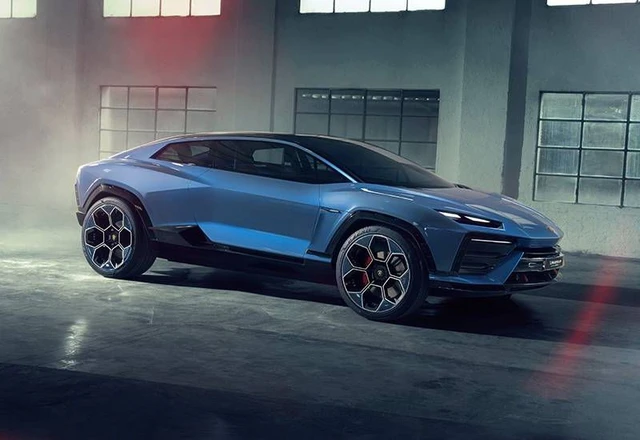
At the heart of this internal conflict lies the Lanzador concept. Originally unveiled as the harbinger of the marque's electric era, the vehicle has undergone an unexpected strategic pivot in the eyes of management. It is now becoming evident that the production version of the Lanzador will debut not as a pure battery-electric vehicle (BEV), but as a plug-in hybrid (PHEV).
The newcomer's powertrain architecture will likely rely on the time-tested 4.0-liter twin-turbo V8 borrowed from the Urus. This decision allows Lamborghini to preserve that specific "character" of the machine—an visceral quality that cannot be synthetically replicated via software. The launch timeline has also shifted: while previous projections pointed toward 2028, a full-scale debut is now expected closer to the end of the current decade.
The drivers behind this conservatism are rooted in consumer psychology and existing technological limitations. According to Lamborghini's leadership, the modern EV market suffers from a deficit of emotional resonance. While an electric powertrain delivers flawless precision, instantaneous torque, and colossal power, it lacks the visceral experience provided by a combustion engine. For a supercar owner, the symphony of the engine and its physical vibrations are as critical as zero-to-sixty metrics.
Consequently, even the Urus—the sole crossover in the brand's lineup—will not transition to full electrification immediately. The company continues to invest in battery and e-drive development, but it is doing so with caution, recognizing that a "purebred" Lamborghini EV may not materialize until 2030 at the earliest.
Against this backdrop, Lamborghini appears to be an outlier. Its competitors are moving faster: Porsche already offers an electric Cayenne, Ferrari and Bentley are aggressively integrating batteries into their flagships, and Croatia's Rimac has effectively rewritten the rulebook for the hypercar segment. The situation is further complicated by the expansion of Chinese manufacturers, who are bringing thousand-horsepower machines to market with staggering speed—often coming from industries far removed from traditional automotive engineering.
Nevertheless, Lamborghini’s "electrophobia" is not a sign of technical lag, but rather a conscious choice to safeguard the emotional bond between driver and machine. In an era where cars are increasingly becoming gadgets on wheels, the brand is betting that passion and the roar of an engine will remain the primary values for true connoisseurs of speed.
 Stratospheric Platforms for Global Coverage