The quest for a "perpetual" power source has long since transcended the realm of science fiction, evolving into one of the most ambitious frontiers of modern applied physics. While conventional chemical batteries are constrained by finite charge cycles and inevitable material degradation, betavoltaic cells offer a fundamentally different paradigm for achieving energy autonomy. Recent breakthroughs in isotope battery technology have yielded a quantum leap in power density, pushing the technology toward the threshold of large-scale commercial viability. We are witnessing a transition from laboratory curiosities to practical, mission-critical tools for medicine, aerospace, and deep-sea exploration.
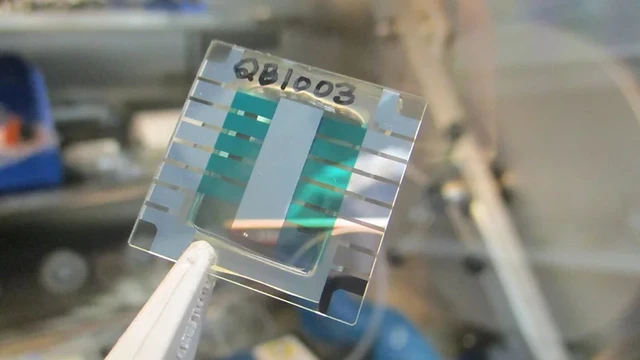
At the heart of atomic battery technology lies the utilization of energy derived from the beta decay of radioactive isotopes. Unlike conventional nuclear reactors, these devices do not rely on chain reactions or thermal expansion; instead, they operate on a principle analogous to that of a solar panel. However, rather than capturing photons of light, a semiconductor converter captures the beta electrons emitted by the isotope. This process generates a direct electrical current, resulting in power cells characterized by extraordinary stability and longevity.
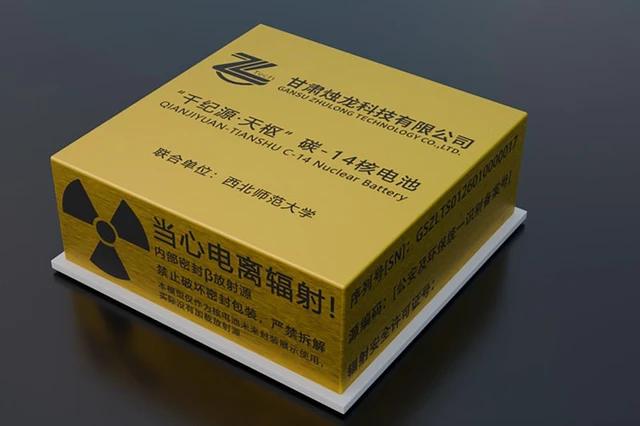
The latest generation of these devices, dubbed the Qianjiyuan Tianshu, leverages the isotope carbon-14 (14C) in tandem with an innovative silicon carbide (SiC) converter. The choice of silicon carbide is strategic: as a wide-bandgap semiconductor, it offers exceptional radiation hardness and the ability to operate efficiently under extreme temperatures—critical requirements for hardware designed to function for decades without maintenance.
The most significant technological breakthrough of the past year has been a dramatic surge in power output. While previous iterations delivered a modest 433 nanowatts, the updated version has reached 1.13 microwatts. While such figures may seem negligible for consumer electronics, in the realm of microelectronics, this represents an order-of-magnitude increase in power.
The optimization of physical parameters is equally noteworthy. Developers have successfully reduced the volume of radioactive material to just 22% of previous levels, while the short-circuit current has increased 2.5-fold, reaching 0.713 $\mu$A. The total effective volume of the cell has been compressed to 16.8 cm³, leading to an impressive 15.5-fold increase in volumetric power density. Meanwhile, the open-circuit voltage has remained stable at 2.06 V.
The primary advantage of these systems is their phenomenal lifecycle. Carbon-14 has a half-life of approximately 5,730 years. In practical terms, this means that over the first 50 years of operation, the battery will lose only 5% of its initial power. Such stability makes betavoltaic cells an ideal solution for medical implants and pacemakers. Currently, patients must undergo repeat surgeries every 10–15 years simply to replace depleted batteries; a transition to isotopic power could eliminate this necessity entirely.
Beyond medicine, the technology's potential extends to sectors where grid access or battery replacement is physically impossible. Applications range from Internet of Things (IoT) sensors in inaccessible zones and equipment for polar and deep-sea expeditions to interstellar space probes. The cell's ability to remain operational within a temperature range of −100 to +200 °C confirms its viability for the vacuum of space and Earth's most extreme climatic regions.
The current stage of development marks a transition from theoretical prototypes to the preparation of a full-scale commercial product. The establishment of a fully autonomous production cycle, independent of external components, positions these atomic cells as the foundation for a new class of "immortal" autonomous systems, capable of functioning for centuries without any human intervention.
 Pushing the Boundaries of Energy Density in Lithium-Based Systems