The visual content industry is hurtling toward 8K resolutions and ultra-high refresh rates, necessitating a fundamental overhaul of interface bandwidth. The HDMI 2.2 standard emerges as the definitive answer to this challenge, delivering a twofold increase in data throughput over its predecessor. The arrival of the first certified Ultra96 cables marks the critical transition from theoretical specifications to commercial availability. The infrastructure is now primed for the next generation of GPUs, which will fully unlock the potential of this standard.
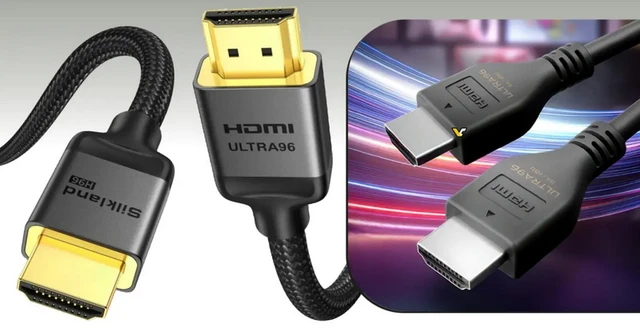
The cycle of interface evolution often outpaces the hardware it serves, and the HDMI cable market is no exception. Chinese manufacturer Silkland has effectively ushered in the consumer phase of the HDMI 2.2 rollout with the launch of its Ultra96 series. These accessories deliver a bandwidth of up to 96 Gbps—exactly double the capacity of the Ultra High Speed cables that were considered the gold standard of the HDMI 2.1 era.
The technical foundation of this leap rests upon the evolution of Fixed Rate Link (FRL) technology. It is the optimization of data transmission that has enabled this increase in throughput, paving the way for uncompressed video streams at 4K with a 240Hz refresh rate, or 8K at 60Hz with full 4:4:4 chroma subsampling. Looking ahead, with the integration of compression algorithms, the standard is capable of supporting resolutions up to 16K, elevating home display systems to the level of professional studio solutions.
Beyond the "brute force" of raw gigabits, HDMI 2.2 introduces critical intelligent enhancements. A key innovation is the Latency Indication Protocol (LIP), which allows the signal source and the display to exchange real-time latency data—a critical factor for achieving perfect audiovisual synchronization. Simultaneously, the standard maintains full backward compatibility, supporting all established features: VRR, ALLM, QFT, QMS, Dynamic HDR, and eARC.
The race for market dominance has unfolded between Silkland and Japan's ELECOM. While both companies introduced certified Ultra96 solutions, Silkland proved more agile in terms of end-user availability. A pivotal factor here is rigorous certification: every cable length undergoes independent verification, and authenticity is confirmed via a QR code on the official HDMI portal, eliminating the proliferation of substandard counterfeits in the high-speed interface market.
However, a distinct disconnect currently exists between cable capabilities and the performance of available hardware. Today's flagships, such as the Nvidia GeForce RTX 5090 or the upcoming Radeon RX 9000, remain bound by the HDMI 2.1b specification. Even the Intel Arc B series does not exceed this standard. Consequently, purchasing an Ultra96 cable today is essentially an investment in future-proofing.
Full support for HDMI 2.2 is expected to be a defining characteristic of the next generation of graphics cards. Specifically, the AMD GFX13 (RDNA 5) architecture is rumored to support bandwidth in the 64–80 Gbps range. While this falls short of the theoretical 96 Gbps maximum, it still represents a significant leap forward. A similar transition is anticipated for the Nvidia GeForce RTX 60 series, which should finally bridge the gap between data transmission capabilities and the demands of ultra-high resolutions.
 The Identity Crisis of the Founders Edition GPU