The global race to develop general-purpose humanoid robots is shifting from the realm of laboratory experimentation to the stage of industrial deployment. While Tesla and Figure AI vie for market dominance, Hyundai is making a strategic move toward the full consolidation of its technological assets. The acquisition of the remaining stake in Boston Dynamics signals a pivot from pure R&D toward the construction of a tangible industrial ecosystem. The central question is no longer whether a robot can walk, but how effectively it can replace a human operator on the assembly line.
The final acquisition of the remaining 9.65% stake in Boston Dynamics from SoftBank for $325 million cements Hyundai Motor Group's position as the sole owner of one of the world's most advanced robotics hubs. This transaction is the logical culmination of a strategy initiated in 2021, when the Korean giant acquired a controlling 80% interest for $880 million. Consequently, Boston Dynamics' trajectory—stretching from the clandestine labs of Google and Alphabet to the stewardship of SoftBank and finally to full integration within an automotive powerhouse—culminates in the creation of a fully vertically integrated holding.
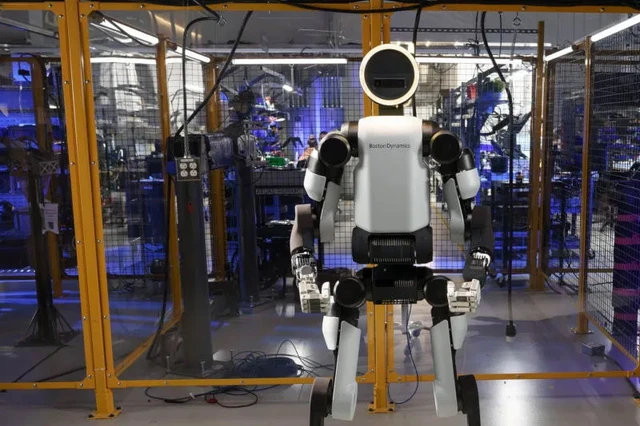
It is telling that the final stage of this merger coincides with the debut of the commercial version of Atlas. At CES 2026, the world witnessed more than just a display of humanoid agility and remote-controlled stage presence; it saw a definitive business roadmap. Hyundai does not intend to market Atlas as a standalone consumer product in the immediate future. Instead, the robot is slated to become a cornerstone of automation at the company's electric vehicle plant in Georgia, USA. By 2028, production-ready Atlas units are expected to be fully operational, with their capabilities expanding by 2030 from simple parts sorting to the execution of complex technological operations.
However, the transition from a high-profile spectacle to an industrial standard is fraught with significant technical hurdles. The deployment of the quadruped robot, Spot, demonstrated that autonomous systems can confidently handle monitoring and inspection. Yet, a humanoid form factor necessitates interaction with infrastructure designed specifically for humans, demanding an extraordinary level of precision. For Atlas to become economically viable, it must achieve a reliability threshold of 99.9% and possess the ability to master new production cycles within a matter of days.
Hyundai’s strategic edge lies in its role as its own primary customer. This removes the burden on Boston Dynamics to secure external clients during the early stages, allowing the technology to be refined in real-world conditions. Furthermore, the group is leveraging internal synergies to optimize the hardware: the Hyundai Mobis division has already been integrated into the development of Atlas's actuators. This approach to the supply chain minimizes reliance on third-party vendors and accelerates hardware iteration cycles.
Against this backdrop, a high-stakes battle is unfolding in the humanoid robotics sector. Tesla is aggressively repurposing capacity at its Fremont plant for the production of Optimus, while the startup Figure AI is already conducting system trials at BMW factories. Meanwhile, China's Unitree is betting on aggressive pricing strategies to release more affordable models. Nevertheless, Hyundai's strategy appears more pragmatic: rather than competing for a share of the general-purpose solutions market, the company is focused on forging the perfect tool for its own manufacturing ecosystem.
Simultaneously, SoftBank is undergoing a massive strategic pivot. Its exit from Boston Dynamics is not a retreat from robotics, but rather a reallocation of resources toward generative artificial intelligence. Investments in OpenAI, which have reached $41 billion, signal the Japanese conglomerate's ambition to dominate the "brains" behind future systems.
The new frontier for SoftBank is the Roze AI project. This initiative is designed to merge AI and robotics to construct physical infrastructure—ranging from data centers to energy facilities. Masayoshi Son's vision extends far beyond simple manipulators; he aims to take Roze AI public with a $100 billion valuation, transforming artificial intelligence into a force capable of physically reshaping the landscape of modern industry and urban environments.
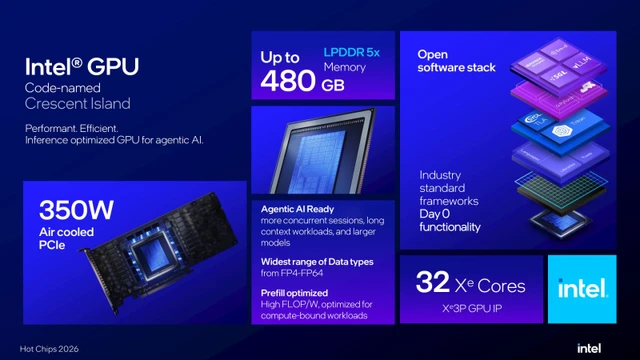 A New Memory Paradigm for AI Accelerators