The boundary between visual design and software engineering is rapidly dissolving. Figma, having cemented its status as the industry standard for UI/UX, is evolving beyond static mockups toward the generation of live, functional code. The acquisition of the Bud team signals a strategic pivot toward autonomous, AI-driven application development—a move that transforms a design tool into a comprehensive production environment for digital product engineering.
The interface design industry is undergoing a paradigm shift: the era of "drawing" screens is giving way to an era of automated assembly. In this context, Figma’s acquisition of Bud (formerly known as Orchids) is more than a mere expansion of its toolkit; it is a strategic bid to command the entire product development lifecycle—from the initial spark of an idea to production-ready code.
A Y Combinator-backed venture, Bud was conceived as an ambitious AI-driven platform for application development. Its capabilities extended far beyond simple visual editors, enabling the generation of solutions for mobile devices, websites, and even integrations for Slack and web browsers. The cornerstone of Bud’s value proposition was its AI agents' ability to interact with external services, analyze web pages, and autonomously write code to automate complex workflows. Essentially, the startup built a bridge between the conceptual description of a feature and its technical execution.
The deal entails the full integration of Bud’s talent into Figma’s organization, with the Bud and Orchids platforms slated for decommissioning by July 18. Current users have been prompted to migrate their projects, signaling the definitive absorption of the startup's technology into the design giant's ecosystem.
While Figma has not officially disclosed a detailed roadmap for integrating these new capabilities, the company's strategic trajectory is clear. Recent product updates signal a pivot away from static mockups toward high-fidelity interactive prototyping. The launch of Figma Make for web application creation, coupled with deep integrations with powerful tools like Codex and Claude Code, underscores the company's ambition to create an environment where a designer doesn't just "draw" a button, but instantly imbues it with logic.
By deploying its own AI agents and absorbing the Bud team, Figma is closing in on the "holy grail" of a seamless Design-to-Code pipeline. Looking ahead, this could entirely eliminate the friction between the mockup and the final product: AI will translate visual iterations into clean, optimized code in real-time, evolving Figma from a graphic editor into a comprehensive software development platform.

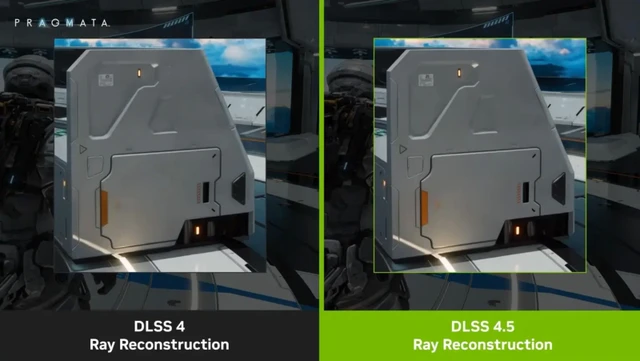 The Evolution of Rendering in DLSS 4.5