Modern advancements in artificial intelligence have collided with a fundamental physical constraint: the critical thermal saturation of computational power. The paradox lies in the fact that while basic matrix multiplication operations are inherently energy-efficient, their sheer scale transforms server racks into epicenters of extreme heat dissipation. The transition from air cooling to liquid cooling has become an inevitability, yet this shift has introduced a new set of ecological and engineering hurdles. Resolving this crisis requires more than just upgraded heat sinks; it demands a fundamental reimagining of the physics governing the interaction between semiconductors and their cooling media.
The energy overhead of a single 32-bit floating-point matrix multiplication is negligible—less than four picojoules. Compared to the computational cost of calculating an arctangent or an exponent, the emulation of neural networks on semiconductors appears exceptionally efficient. However, the sheer scale of modern Large Language Models, operating with trillions of parameters, renders this efficiency an illusion. When thousands of GPU cores operate in parallel, the aggregate heat dissipation becomes catastrophic.
The era of air-cooled data centers has effectively come to an end. While Blackwell-generation GPUs already dissipate up to 1,000W, the new Rubin family and its Ultra variants are pushing the envelope to 2,300–3,600W per chip. This far exceeds the physical limits of air-cooling efficiency, which caps at approximately 1W per square millimeter. Consequently, the industry faces a stark choice: discover a radically new method of heat extraction or accept that the ROI timelines for AI infrastructure will be indefinitely pushed back by escalating power and water costs.

The shift toward liquid cooling is dictated by simple physics: the heat capacity of water is several times higher than that of air. However, this creates an ecological conflict. Traditional open-loop cooling systems rely on water evaporation in cooling towers, leading to colossal resource consumption. Statistics show that the water footprint of major cloud providers is growing proportionally to the scale of their AI clusters, creating competition for potable water in drought-stricken regions.
Furthermore, open loops require meticulously purified water to prevent corrosion and scaling; yet, using purely distilled water is impossible, as it is too aggressive toward heat exchanger materials. This forces engineers to transition toward more expensive, but environmentally sustainable, closed-loop systems.
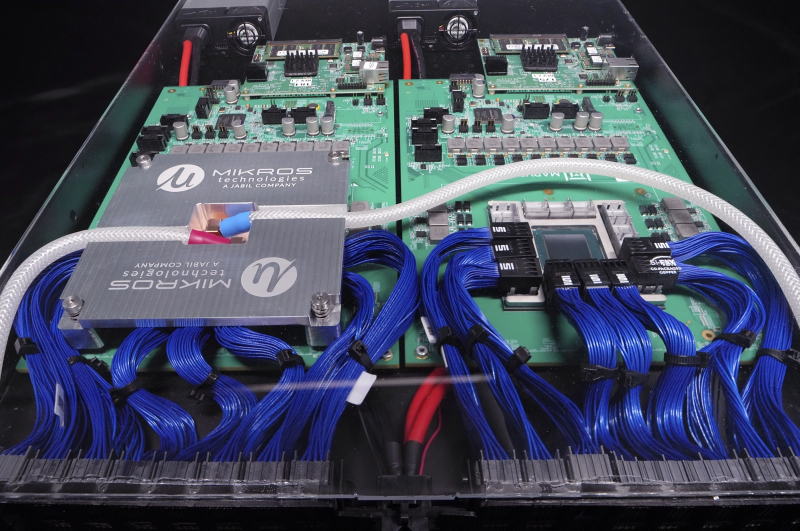
Closed single-phase systems utilize a mixture of purified water and glycol, circulating through cold plates installed directly onto the chips. The heat is then transported out of the server room via chillers or dry coolers. However, such systems have their limits: it is impractical to equip every server component—from power supplies to storage drives—with individual tubing. As a result, the industry is adopting a hybrid approach, where liquid handles roughly 80% of the heat, while the remaining 20% is still dissipated by fans.
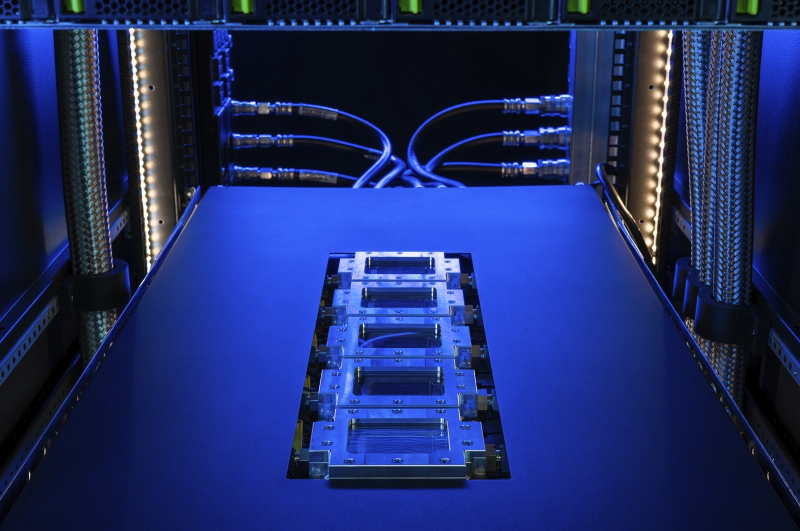
When even closed single-phase systems fail to handle the power density, two-phase cooling enters the fray. Its core principle is the utilization of a substance's phase transition. Boiling requires significantly more energy to break intermolecular bonds than simply heating a liquid. These systems employ a specialized dielectric fluid that boils at temperatures safe for semiconductors. The resulting vapor then condenses in an external heat exchanger, completing the cycle. The dielectric nature of the coolant eliminates the risk of short circuits during leaks, and the abruptness of the phase transition allows for efficient operation even with "warm" coolants.
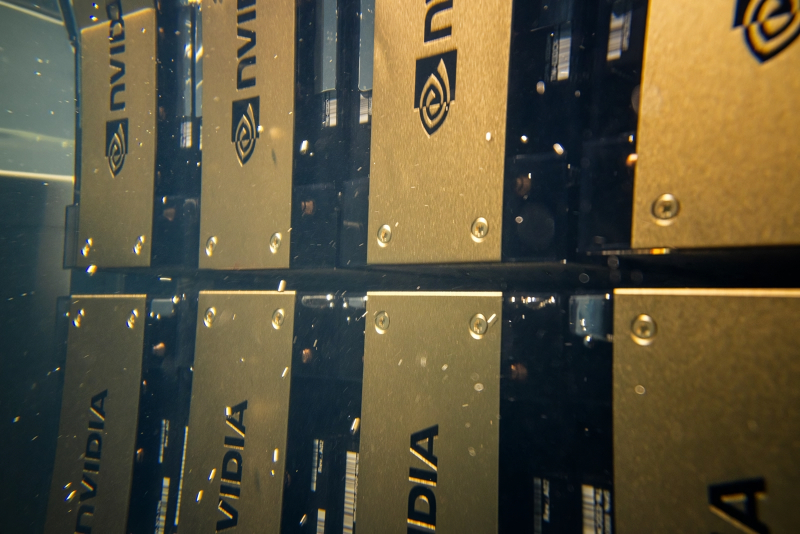
An alternative path is full immersion cooling, where the server is submerged in a bath of dielectric fluid, such as mineral oil. This completely eliminates the need for fans, dust, and vibrations. While maintaining such equipment is more complex, the energy costs for heat removal are substantially reduced. For the hottest components, even immersion systems may employ additional internal channels with high-thermal-conductivity oil, creating a dual-loop system.
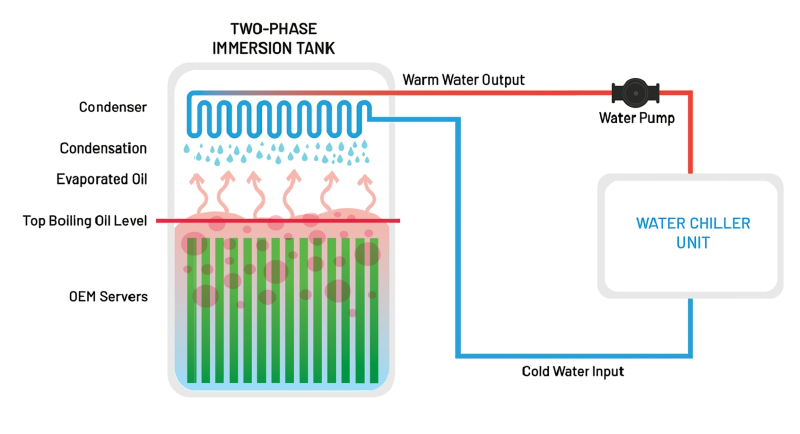
The pinnacle of efficiency is considered to be two-phase immersion cooling, where the liquid boils directly on the surface of the processor's heat sinks. This allows heat removal to increase by one to two orders of magnitude compared to conventional liquids. The primary challenge here is selecting a specific coolant that does not cause component corrosion during boiling. Such systems promise to become cost-effective across most climatic zones, finally solving the problem of water loss.
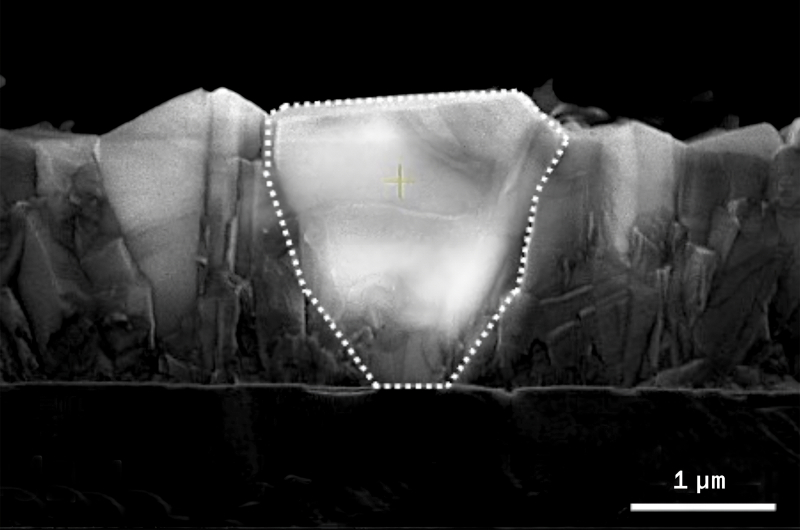
However, all the aforementioned methods treat the symptoms rather than the cause. The problem lies within the chip itself. Although silicon possesses good thermal conductivity, modern integrated circuits are multilayered. Above the silicon base lie layers of dielectric (silicon dioxide), whose ability to conduct heat is two orders of magnitude lower. Consequently, heat becomes "trapped" inside the die, unable to reach the external cooler. This gives rise to the problem of "dark silicon": to prevent the chip from burning out, a significant portion of its transistors must remain powered down or run at reduced frequencies. By some estimates, up to 80% of the area of a modern high-performance die remains "dark."
One way to combat this is through micro-diamonds. Diamond possesses extreme thermal conductivity and is a dielectric. New technology allows for the growth of polycrystalline diamonds directly on the semiconductor substrate at low temperatures. This enables the leveling of the chip's thermal map, accelerating the flow of heat from hot spots to cooler zones and facilitating external cooling.
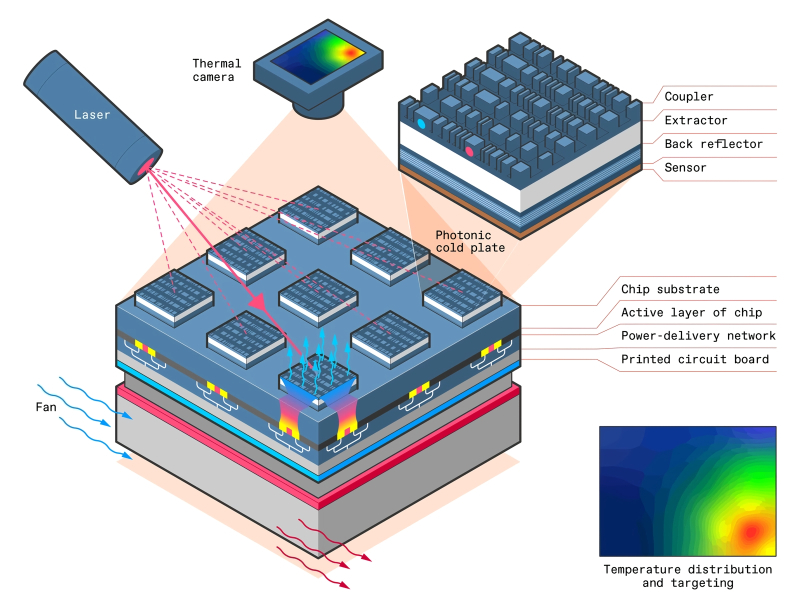
An even more radical approach is offered by photonic cooling. Instead of attempting to "push" heat through insulating layers, the goal is to convert it directly into light. Utilizing the anti-Stokes cooling effect, certain materials can absorb low-frequency photons and emit higher-energy light, effectively cooling down in the process. This allows for the elimination of "hot spots" within the microchip via laser intervention.
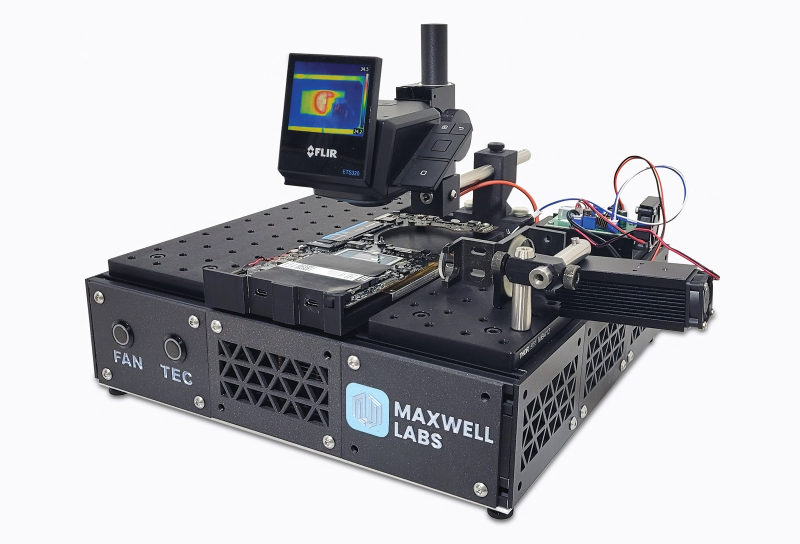
The journey from laboratory prototypes to mass production will be long, but the potential is immense. The combination of new materials, such as diamond spreaders, and photonic radiators could lead to a twofold increase in the power dissipation limit. This would not only allow for higher clock speeds but would finally break the curse of "dark silicon," unlocking the full potential of the transistors. By 2030, we can expect a new generation of data centers that consume 40% less energy while doubling their computational power.
 The Speed Limits of Modern Gaming Displays