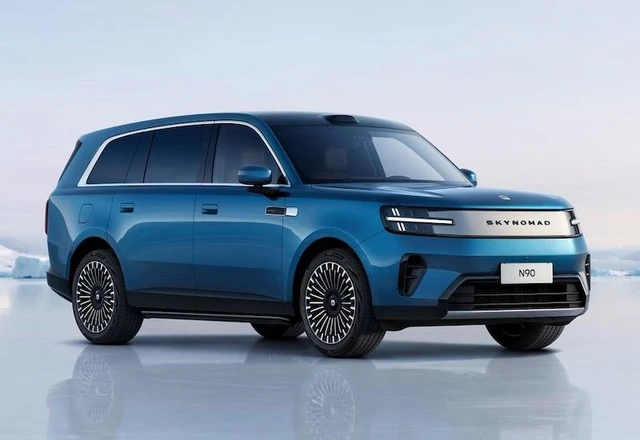
The global shift toward electric mobility has hit a fundamental wall: the inherent conflict between battery mass and actual driving range. In pursuit of an optimal equilibrium, the industry is pivoting toward high-efficiency hybrid systems designed to dissolve the distances between urban centers. The Xiaomi Skynomad N90 Max crossover serves as a prime example of the sophisticated strides made in energy management within the modern Chinese automotive landscape. A real-world endurance test across intercity routes has become the ultimate litmus test for the very concept of the modern hybrid.
The narrative that electric vehicles are hampered by protracted charging times and restrictive range is steadily fading. The current trajectory of the Chinese automotive industry is focused on a radical increase in traction battery capacity paired with intelligent hybrid powertrains. This evolution allows for the creation of vehicles that do not merely simulate electric propulsion but provide genuine freedom of movement over distances previously reserved for traditional internal combustion engines (ICE).
The Xiaomi Skynomad N90 Max’s journey from Shanghai to Beijing provided a compelling case study in this approach. The vehicle covered 1,230 kilometers without a single stop for refueling or recharging. Crucially, the test conditions mirrored everyday operation: the cabin held four passengers, and the luggage weighed 50 kg. Comfort was not sacrificed, with the climate control maintained at a steady 24 degrees Celsius, placing additional demand on the energy system.
The operational strategy for the trip was rooted in aggressive optimization. The powertrain was set to an economy mode prioritizing electric drive, with energy recuperation efficiency dialed up to 80%. Particular attention was paid to the physics of the tire-road interface: tire pressure was increased to 2.9 bar. This maneuver reduced the contact patch and, consequently, lowered rolling resistance—a critical factor for a heavy vehicle traversing long distances.
On open highways, the vehicle maintained an average speed of 104 km/h, with a significant portion of the journey handled by the autopilot. Energy consumption analysis revealed that the crossover can cover 324 km on pure electricity. This figure represents approximately 69.7% of the claimed range under the CLTC cycle, a respectable result for real-world road conditions. The average energy consumption was recorded at 19.7 kWh per 100 km.
The vehicle arrived in Beijing with a residual range of 54 km. Consequently, the total potential range on a full tank and a full charge amounted to 1,284 km, which is 75.3% of the official CLTC specifications.
The technical foundation of the Xiaomi Skynomad N90 Max rests on a synergy between a 76 kWh traction battery and a 1.5-liter internal combustion engine. In this configuration, the ICE functions essentially as an on-board generator, feeding the battery and powering electric motors with a combined output of 416 hp.
With a driver and a full tank, the hybrid's gross weight reaches 2,840 kg. This substantial mass explains why large, three-row crossovers in China remain predominantly hybrid. A full transition to battery-electric power in this class would lead to a critical increase in both weight and cost, while providing negligible gains in actual autonomy. The hybrid architecture emerges as the only rational solution, striking the necessary balance between cost, weight, and true mobility.
 Nvidia’s Big Bet on Physical Intelligence