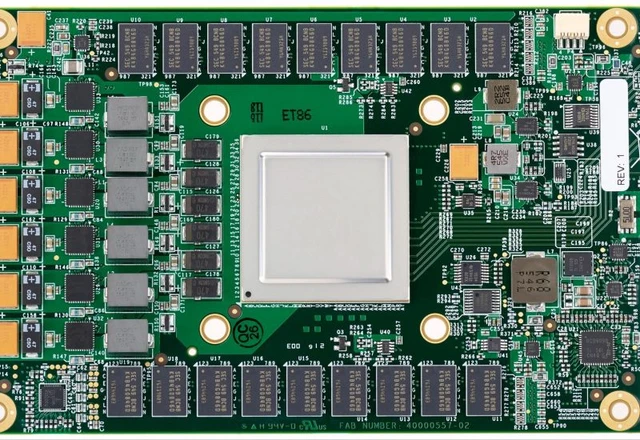
The AI arms race is rapidly shifting its center of gravity from algorithmic innovation to the realm of hardware. Today, over-reliance on a single provider of compute capacity has emerged as the primary strategic vulnerability for the world's leading AI laboratories. DeepSeek, the Chinese startup that has already sent shockwaves through global markets with its disruptive models, is now taking a decisive step toward developing its own proprietary silicon. This initiative is designed to secure the company's technological sovereignty and optimize the costs of deploying neural networks at an industrial scale.
The pursuit of vertical integration has emerged as a dominant trend across the AI landscape. DeepSeek, one of the most ambitious players in the Chinese market, has spent nearly a year in the stealth development of its own specialized processor. The objective is purely pragmatic: to mitigate a critical dependency on Nvidia and Huawei infrastructure—a reliance that, amidst geopolitical instability, has become a strategic bottleneck for scaling technology.
Currently, the project is in its nascent stages. The company is engaged in cautious negotiations with chip designers, foundries, and memory suppliers. Notably, DeepSeek is adhering to a strategy of absolute secrecy; the recruitment of design engineers is conducted away from public job boards, underscoring the strategic weight and confidentiality of the initiative.
The cornerstone of the upcoming chip will be its narrow specialization in inference—the phase where a pre-trained model generates responses for the end user. While model training demands massive, general-purpose compute, inference represents the fastest-growing segment of the workload. As AI services transition from experimental prototypes to mass-market adoption, the computational burden is shifting from training to deployment. Specialized inference chips are significantly more cost-effective and energy-efficient than general-purpose GPUs, offering a path to radically reduce the cost per query.
DeepSeek’s hardware trajectory mirrors the broader drama unfolding within the Chinese tech sector. Its base model, R1—which triggered significant volatility in US equity markets in early 2025—was trained on the Nvidia H800, a modified chip designed specifically for China that subsequently fell under US export bans. This forced the company to pivot toward Huawei’s solutions, specifically the Ascend line. Yet, even this alliance is likely transitional. Huawei, which commands nearly half of China's $50 billion AI chip market, faces mounting competition from the proprietary processors of Alibaba and Baidu.
DeepSeek is not alone in its quest for hardware autonomy. This is a global trajectory: OpenAI, in partnership with Broadcom, has introduced the Jalapeno chip, and Anthropic is similarly exploring the development of its own silicon. The logic is straightforward: those who control the silicon control the cost and the iteration speed of their intelligence.
Nevertheless, the path to a proprietary processor is fraught with immense risk. Developing competitive hardware requires not only multi-billion dollar investments and multi-year design cycles but also access to cutting-edge fabrication processes. For Chinese firms, this challenge is compounded by sanctions pressure: access to the world's leading foundries and High Bandwidth Memory (HBM)—a critical component for inference chips—remains severely restricted. DeepSeek’s success will depend less on the brilliance of its engineers than on its ability to navigate the labyrinth of the global semiconductor supply chain.
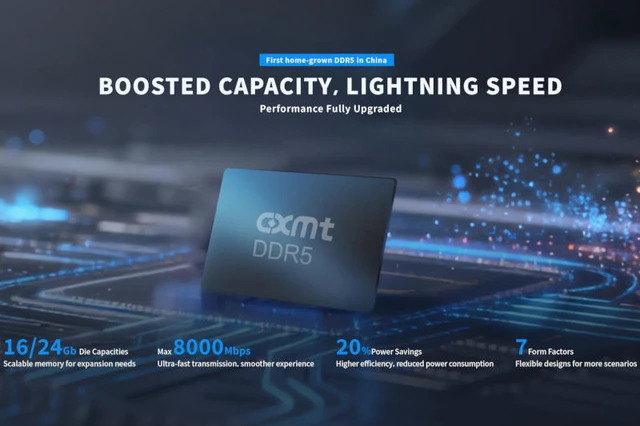 The Price of Acceleration: CXMT’s Rapid Push into Memory