The era of the Internet of Things has ushered in unprecedented domestic convenience, yet it has simultaneously introduced systemic risks to personal privacy. Smart cameras, designed to safeguard our spaces, frequently emerge as the weakest link in the security chain, plagued by fundamental architectural flaws. Recent vulnerabilities uncovered in TP-Link Kasa devices highlight a chronic industry malaise: an over-reliance on static secrets and insecure discovery protocols. These flaws serve as a stark reminder of how a single hardcoded key can jeopardize the confidentiality of thousands of users.
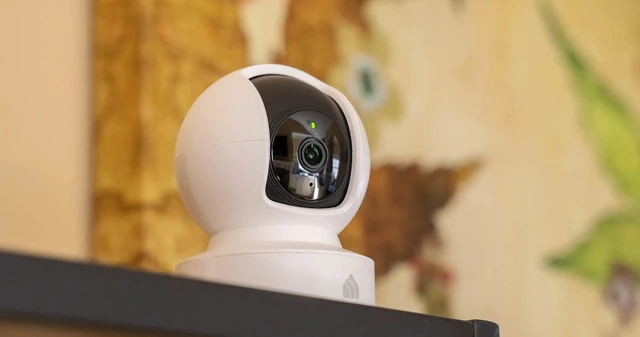
The security of modern IoT devices is frequently sacrificed on the altar of deployment convenience, and the case of the TP-Link Kasa EC70 v4 and EC71 v4 cameras serves as a textbook example of this precarious trade-off. Two critical vulnerabilities have been uncovered in these devices, allowing an attacker positioned within the same local network to gain access to administrative credentials and precise device coordinates.
The most alarming of these is CVE-2026-9770. The root cause lies in the use of a hardcoded cryptographic key integrated directly into the system image. In a robust security architecture, every individual device should possess a unique set of secrets; however, the manufacturer employed a single universal key across the entire product line. This transforms an isolated vulnerability into a systemic failure: once the key is compromised, it becomes a master key for any unprotected camera in this series.
Such an approach completely undermines the confidentiality of data exchange between the device and its web management interface. An attacker can execute a Man-in-the-Middle (MitM) attack to intercept traffic and extract administrator credentials. Under the CVSS v4.0 standard, this flaw has been assigned a high severity score of 8.6. The low complexity of exploitation, combined with the lack of required special privileges, makes this breach exceptionally dangerous for any user whose local network has been compromised or left open to unauthorized access.
Parallel to this cryptographic failure is a second issue—CVE-2026-13230—affecting the local discovery mechanism. This feature is critical for the initial pairing of the camera with the network and mobile application, as it allows devices to "see" one another without prior authentication. However, this inherent openness became the attack vector.
By sending specially crafted discovery requests, a hacker can force the camera to disclose its geolocation data. Although this vulnerability received a more moderate CVSS score of 5.3 and does not allow for direct device control or configuration changes, the privacy risk remains significant. Revealing the exact location of a camera—particularly one installed on the exterior of a building or in a strategically sensitive area of an enterprise—provides an adversary with valuable reconnaissance data regarding the physical layout of the target.
The resolution to these vulnerabilities has come in the form of firmware updates. For the Kasa EC70 v4, the fix is provided in version 2.4.0 Build 20260520 rel.4191; for the Kasa EC71 v4, it is version 2.4.1 Build 20260621 rel.76536. Beyond updating the hardware itself, updating the accompanying mobile application is critical to ensure full compatibility with the new security builds.
This incident underscores the urgent need for the IoT industry to pivot toward a Zero Trust model and abandon static secrets in favor of dynamic key management. As long as manufacturers continue to rely on shared passwords and keys across entire product lines, "smart home" security will remain an illusion, entirely dependent on the perceived strength of the local network perimeter.
 Nvidia N1X and the New Era of Arm PCs