The contemporary paradigm of space exploration is undergoing a rapid transition, pivoting away from state-led monopolies toward agile public-private partnerships. NASA’s decision to entrust a private entity with the delivery of mission-critical hardware to Mars signals a pivotal evolution in this strategic approach. This is more than a mere logistical exercise; it is the deployment of a sophisticated atmospheric monitoring system for the Red Planet. Such a symbiosis of fundamental science and venture capital is designed to radically accelerate the roadmap toward the first crewed missions.
Under the stewardship of NASA's new chief, Jared Isaacman, the agency is pivoting toward an aggressive strategy of integrating private enterprise into global space programs. The cornerstone of this transition is a multi-year contract with Relativity Space, under which the commercial partner is tasked with developing both a launch vehicle and a specialized platform designed to deploy scientific instrumentation into Martian orbit.
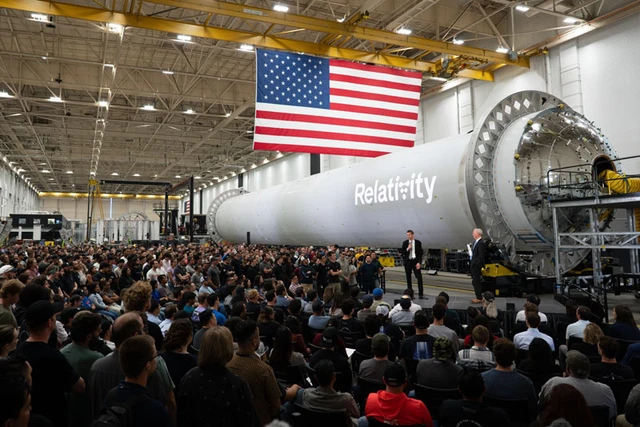
Driving this project is one of the tech world's most formidable figures: former Google CEO Eric Schmidt, who took the helm of the company approximately a year ago and infused it with substantial capital. Relativity Space is aiming to carve out a position in the heavy-lift launch market with its Terran R system, designed to compete directly with SpaceX's Falcon 9 and Falcon Heavy. The road to fruition has been fraught with challenges; a prototype launch in 2023 ended in failure, yet the company refuses to decelerate. The first full-scale flight of the Terran R is anticipated as early as this year—a timeline that introduces a palpable level of risk given NASA's rigid 2028 deadline, the critical planetary window for the transit.
The primary objective of the mission is the delivery of the Aeolus suite—a complex of four high-precision scientific instruments—into Mars' orbit. Effectively, Aeolus will serve as the first comprehensive global weather station for the Red Planet. The system will provide real-time telemetry on atmospheric temperature gradients at altitudes of up to 60 kilometers, analyze cloud density and the dynamics of dust mass movement, and record wind velocity and direction across various atmospheric layers.
The acquisition of this data is paramount for the safety of future expeditions. Strategizing crewed descents to the Martian surface requires a granular understanding of meteorological conditions at potential landing sites. Without precise weather mapping, the risk of losing high-value spacecraft and, more critically, the loss of crew due to unpredictable atmospheric phenomena remains prohibitively high.
This approach to mission architecture reflects a paradigm shift in NASA's operational philosophy: the fusion of state resources and global scientific expertise with the commercial agility and innovative momentum of the private sector. The synergy between top-tier government instrumentation and private investment not only reduces launch costs but significantly accelerates the data pipeline from sensor to researcher. Ultimately, this transforms a costly and sluggish state bureaucracy into a streamlined technological pipeline, paving the way for the first human footprints in the Martian sands.
 SpaceX’s Hundred-Billion Dollar Leap into Louisiana