Modern aviation is witnessing a paradigm shift toward total autonomy in civil services and territorial surveillance. The capacity for continuous, round-the-clock endurance unlocks unprecedented opportunities for rapid disaster response and environmental stewardship. China's TP200 project represents a pivotal milestone in the engineering of certified systems designed from the outset for seamless integration into shared airspace. This UAV is poised to obliterate the distinction between specialized aviation and robotic surveillance ecosystems.
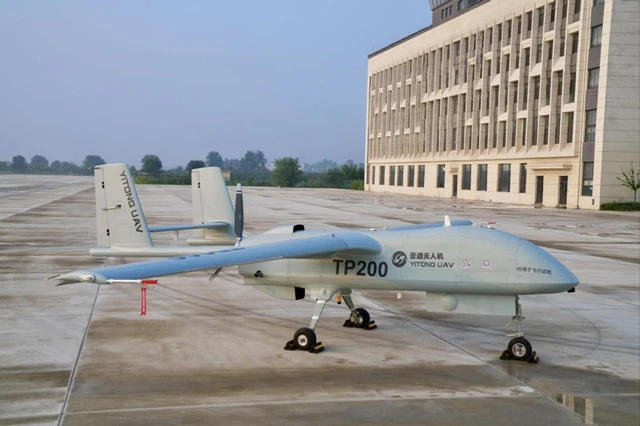
The maiden flight of the TP200 multipurpose UAV, conducted in Yantai, Shandong Province, signals the arrival of a new contender in the heavy-duty civil UAS segment. With a maximum takeoff weight (MTOW) of 700 kg, the aircraft demonstrated stable, controlled flight, validating its projected speed and climb rate benchmarks. However, the project's primary value lies not merely in the successful flight itself, but in its development philosophy: the TP200 is the first Chinese aircraft in its class engineered from the ground up to meet the stringent requirements of the Civil Aviation Administration of China (CAAC), rather than being a modified prototype adapted after the fact.
The engineering architecture of the TP200 relies on a time-tested configuration: a high-wing design paired with a pusher propeller powered by an Avgas piston engine. This setup ensures an optimal balance between aerodynamic efficiency and long-term reliability during extended sorties. The aircraft's dimensions are imposing, featuring a 10-meter wingspan and a total length of 6 meters. With an empty weight of 450 kg, the TP200 supports a payload capacity of 200 kg, allowing for the integration of sophisticated equipment without critically compromising flight performance.
The TP200's performance metrics render it a versatile tool for operating in challenging geographical environments. A service ceiling of 7,620 meters and the ability to operate from airfields located up to 4,500 meters above sea level make it ideal for high-altitude regions. It reaches a maximum speed of 225 km/h, with an operational range varying from 2,000 km under full load to 3,000 km in a light configuration. Its operational flexibility is particularly noteworthy: the aircraft requires a runway of only 300 meters for takeoff and landing, can operate from unpaved strips, and maintains stability against crosswinds of up to 15 m/s.
The drone's functional utility is realized through a modular payload architecture. Depending on the mission profile, the TP200 can be equipped with electro-optical systems, LiDAR for high-fidelity mapping, meteorological sensors, or maritime radars. This transforms the platform into a multifunctional asset for maritime patrolling, search and rescue (SAR) operations, coastline monitoring, and forest fire reconnaissance. Furthermore, its significant lift capacity enables the delivery of critical cargo to remote regions where traditional aviation is either impractical or cost-prohibitive.
At this stage, the project is transitioning from initial flight trials to expanded testing and structural refinement. The ultimate objective is to secure a certificate of airworthiness, which will allow the TP200 to operate fully within civil airspace on a regular basis, ensuring both safety and efficiency in state monitoring missions.
 Texas Opens Its Skies to Air Taxis