Modern search-and-rescue operations are frequently hampered by the insurmountable challenge of gaining physical access to victims trapped beneath debris. Despite significant advancements, conventional robotics often prove too cumbersome or lack the necessary adaptability to navigate the chaotic topography of a collapse site. The solution lies in the convergence of biology and electronics—a synthesis that leverages the innate evolutionary advantages of living organisms. Cutting-edge breakthroughs in insect cyborgization are transforming these creatures from mere biological sensors into fully functional, mobile medical assets.
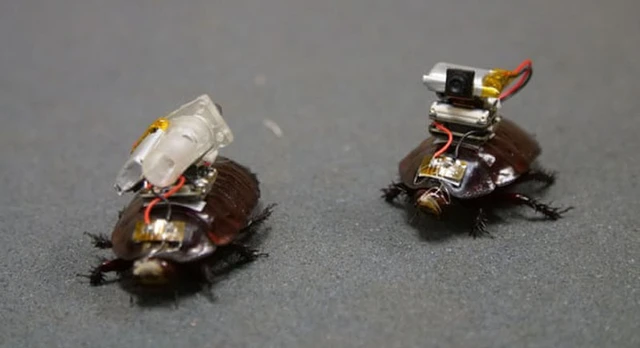
Contemporary engineering is witnessing a growing paradigm shift toward hybrid systems, where a biological organism serves as the primary chassis and electronics act as the control module. One of the most promising frontiers in this field is the development of "paraborgs"—cyborgized specimens of the giant rhinoceros beetle, Macropanesthia rhinoceros. Possessing an innate ability to navigate extremely complex terrain and squeeze through narrow crevices, these insects have become the ideal platform for emergency response systems.
The technical framework of the project, spearheaded by specialists from the University of Queensland and the University of New South Wales, transcends mere teleoperation. A low-mass electronic payload is mounted on the insect's back and integrated into its nervous system via implanted electrodes. This allows an operator to adjust the trajectory of movement by leveraging the insect's natural reflexes while simultaneously receiving visual data through an onboard camera. In essence, the beetle's biological navigational autonomy is synergized with human strategic intent.
A pivotal evolutionary leap in the development of these systems was the transition of these units from reconnaissance scouts to fully operational medical assets. The paraborgs' arsenal was expanded to include a teleoperated microsyringe. The logic behind this implementation is straightforward: in disaster scenarios, such as the aftermath of an earthquake, the speed of first-aid delivery is the determining factor. The ability to administer medication directly to a victim located in areas inaccessible to humans could be the critical margin between life and death before the individual can be physically extracted from the rubble.
The technical execution of the injection process presents significant hurdles in spatial positioning. For a successful administration, the insect must not only reach the target but also ensure structural stability, effectively bracing its legs against the ground to stabilize the microsyringe. Test results demonstrate high efficiency over short distances: when the target is within a 15-centimeter radius, injection accuracy reaches 95%. However, when analyzing the full operational cycle—from search and navigation to final positioning and administration—the overall success rate is approximately 72%. This underscores the primary challenge of modern biorobotics: the difficulty of controlling a living organism in high-precision positioning mode.
Looking ahead, the developers envision the evolution of this technology through the concept of specialized swarms. Rather than creating universal devices, the goal is to deploy functionally differentiated cohorts of biorobots. Some individuals would serve as scouts, equipped with high-sensitivity environmental sensors and cameras, while others would function as medical modules dedicated to providing aid.
Such an approach is not designed to supplant professional rescuers, but rather to radically augment their operational reach. Preliminary estimates suggest that the transition from laboratory trials to real-world deployment of these "squads" could occur within the next 5 to 10 years, ushering in a new era of biomedical engineering and search-and-rescue operations.
 The Limits of Terrestrial Survival on the Moon