The quest for peak energy efficiency in aviation consistently drives engineers back to the blueprints of nature. While contemporary drones expend vast amounts of energy to maintain altitude via propellers, birds harness the inherent energy of the atmosphere. Researchers from the Max Planck Institute for Intelligent Systems and the University of Stuttgart have operationalized this principle in a robot dubbed "Floaty." The device reimagines the very concept of flight, substituting active thrust with the intelligent manipulation of drag. This breakthrough expands the horizons for autonomous systems, enabling them to remain airborne for hours by leveraging external environmental resources.
For too long, modern robotics has been constrained by the paradigm of active thrust. Quadcopters, now the industry standard, essentially wage a constant battle against gravity, expending a vast portion of their battery life simply to maintain a stationary hover. Nature, however, offers a different path: biomimicry, which leverages the energy of the surrounding environment. This philosophy is the foundation of Floaty, a propeller-less device capable of soaring by harnessing ascending air currents.
The operational principle of Floaty relies on the dynamic modulation of its aerodynamic profile. Rather than generating its own airflow, the robot interacts with existing currents. The upper section of its chassis features four independently controlled flaps that function as "plumage." By manipulating the angle and position of these elements, the system alters the effective surface area exposed to the wind. This allows the device to redistribute drag and precisely control lift, roll, pitch, and yaw, ensuring stability across six degrees of freedom (6DoF).
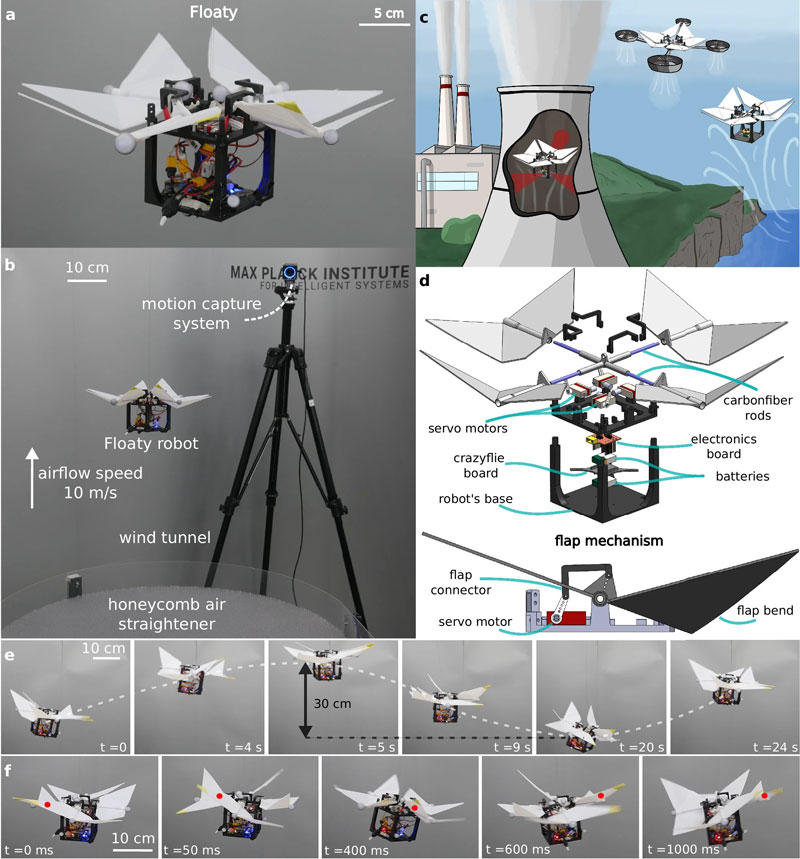
Implementing this architecture required solving a complex engineering challenge regarding static stability. To prevent the craft from losing equilibrium or tipping, engineers shifted the center of gravity 7 centimeters below the plane of the control flaps. Stability was further enhanced by a specific 42.5° curvature of the flaps, optimizing their interaction with the airflow. To orchestrate this process, a specialized aerodynamic model was developed to calculate real-time commands for the servomotors, keeping the device in a state of stable equilibrium.
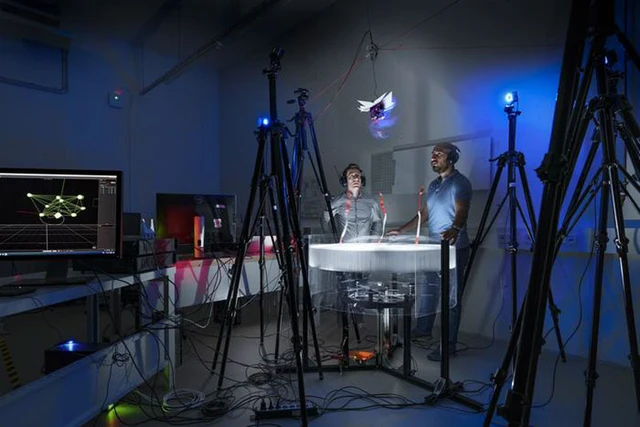
The efficacy of this approach was validated during trials in a vertical wind tunnel. With flow velocities ranging from 8 to 11 m/s, the 340-gram robot demonstrated remarkable resilience, successfully withstanding lateral perturbations of up to 4 m/s—approximately 40% of the primary flow. The device's positioning was monitored via a high-precision OptiTrack system with a 200 Hz refresh rate, allowing for a granular analysis of its hovering dynamics.
The most significant breakthrough, however, lies in power efficiency. Powered by two compact LiPo batteries, Floaty can remain airborne for an average of 33 minutes while consuming only 3.4 W. This translates to approximately 10 W/kg. In contrast, standard multicopters typically require between 100 and 250 W/kg to maintain a hover. Consequently, shifting from active thrust generation to the passive utilization of air currents yields a ten-to-twenty-fold increase in energy efficiency.
The potential applications for this technology extend far beyond laboratory experiments. The ability to remain airborne for extended periods with minimal power consumption makes Floaty an ideal tool for inspecting industrial infrastructure characterized by strong updrafts, such as smokestacks or ventilation shafts. Furthermore, these principles could be integrated into the payload management systems of meteorological sondes or used for the high-precision guidance of missiles entering dense atmospheric layers. In the long term, this could pave the way for hybrid aerial vehicles capable of seamlessly switching between active flight and energy-efficient soaring.
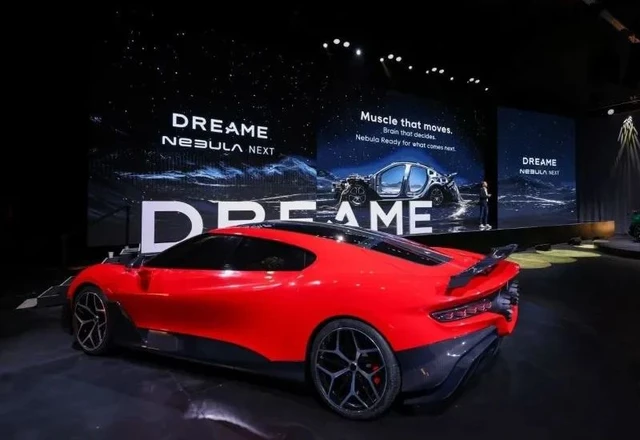 The Shattered Illusion of the Dreame Jet Hypercar