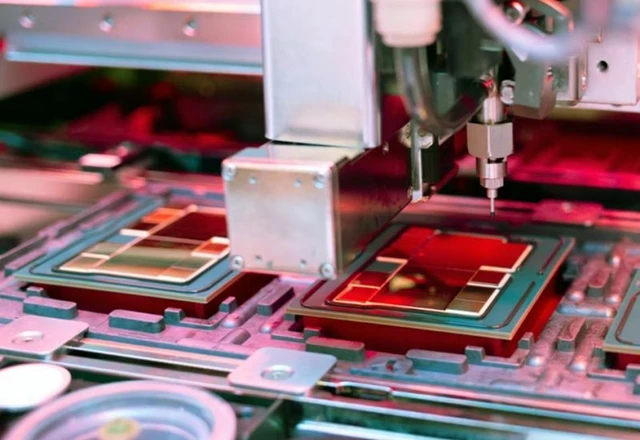
The global semiconductor market is once again grappling with a severe supply-demand imbalance, turning scarcity into a primary instrument of leverage. At the heart of this friction lies ASML, which maintains a virtual monopoly over the production of mission-critical lithography systems. News of impending price hikes has sparked significant tension with TSMC, its primary client and a titan of the tech industry. This standoff underscores the inherent fragility of the global supply chain—a landscape where the fortunes of industry leaders are precariously tied to the terms dictated by a single vendor.
The economics of semiconductor fabrication are governed by fundamental laws: when demand vastly exceeds capacity, the cost of resources inevitably surges. We have already seen this scenario play out in the memory market, and now a similar mechanism is triggering at the very heart of the industry—the lithography equipment segment. ASML, the world's sole provider of Extreme Ultraviolet (EUV) systems, is preparing to revise its pricing strategy, sparking predictable friction with its key partners, most notably Taiwan's TSMC.
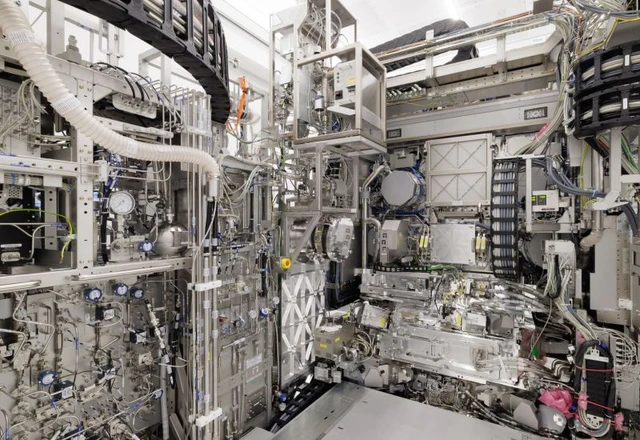
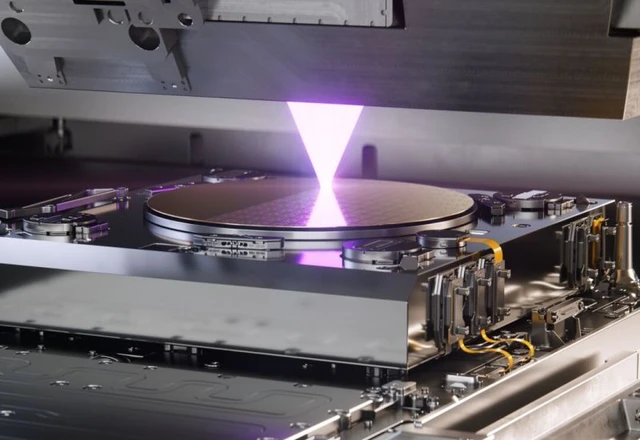
The conflict of interest here is fundamental. For TSMC, ASML's hardware is not merely a tool; it is the only viable path to producing chips at 3nm and below. Any price adjustment for these systems directly impacts capital expenditures (CapEx) and production margins. Given that a single modern lithography unit can exceed $400 million, even a marginal percentage increase translates into colossal sums that place a heavy burden on manufacturer budgets.
ASML’s position is one of absolute confidence. The company has already revised its financial forecasts, raising expected revenue to a range of $43–45 billion. Furthermore, its order book is filled through the end of 2028, with plans to increase equipment output by 30% next year. In the absence of genuine competition in the EUV segment, clients have little choice but to accept these new terms.
However, this pricing pressure will extend beyond those chasing nanometer records. It also encompasses Deep Ultraviolet (DUV) systems—more accessible, high-volume tools. This segment is currently in highest demand among Chinese firms, whose access to cutting-edge technology is throttled by export restrictions. With DUV system costs expected to rise by approximately 10%, the impact of ASML's policy will broaden, affecting chipmakers across the mid-to-low-end segments.
Ultimately, this situation underscores a precarious level of centralization within the technological stack. When a single entity controls access to the primary technology for semiconductor production, it gains the power to dictate terms to the entire world. For TSMC and other market players, this serves as a stark reminder that technological leadership in chip fabrication is entirely contingent upon the benevolence of a single equipment supplier.
 The Horizon of China's Technological Sovereignty in Lithography