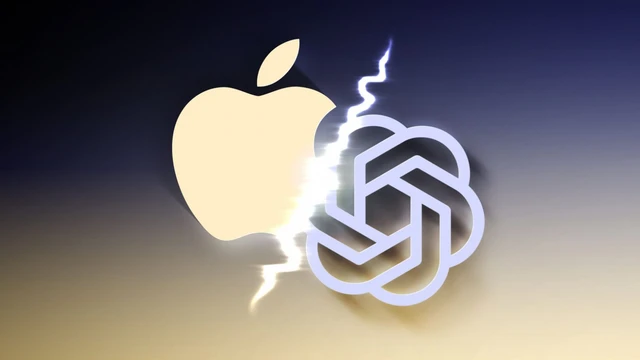
The quest to engineer the definitive hardware for artificial intelligence is devolving into a high-stakes legal battlefield. As tech giants clash over elite talent and proprietary breakthroughs, the ramifications are extending far beyond routine employment disputes. Apple’s recent maneuvers against OpenAI signal the dawn of a new era of aggressive protectionism within Silicon Valley. At the core of this conflict lies a fundamental tension: where does an individual's professional expertise end, and corporate intellectual property begin?
The friction between Apple and OpenAI has escalated from mere market rivalry to open litigation. Cupertino has issued formal legal notices to dozens of former employees now operating within OpenAI, with a mandate that is surgically precise: preserve all correspondence and documentation relevant to the alleged misappropriation of trade secrets. According to the Financial Times, approximately 40 individuals have received these notices, signaling the scale of Apple's suspicions—the company believes the leak of confidential information extends far beyond those named in the initial filing.
At the heart of Apple’s grievance is the allegation of a coordinated strategy to poach key specialists specifically to gain access to proprietary hardware developments. This is not framed as simple talent acquisition, but rather as a systemic transfer of institutional knowledge regarding design solutions and manufacturing processes that Apple has refined over decades.
Two figures have come under particular scrutiny: Tan Tan and Chang Liu. Tan, a 24-year veteran who previously led product design at Apple, now serves as the Director of Hardware at OpenAI. Liu, formerly a senior systems engineer, has similarly defected to the competitor. For Apple, these departures are critical; both individuals possessed an intimate understanding of the company's internal device ecosystem.
The situation is further aggravated by specific allegations of digital espionage. Court documents suggest that one former employee allegedly downloaded a massive volume of confidential files from Apple’s shared network folders just weeks after their departure. For the plaintiff, this incident serves as smoking-gun evidence that the migration of talent was accompanied by actual data exfiltration.
The scale of this talent exodus is staggering: reports indicate that over 400 former Apple employees are now on the OpenAI payroll. From the perspective of Cupertino’s legal team, such volume suggests that these breaches are systemic rather than isolated incidents. Within Apple, there is a conviction that the discovered facts are merely the "tip of the iceberg," masking a deeper penetration into their secret R&D.
OpenAI has adopted a rigid defensive posture, denying all allegations and asserting that there is no evidentiary basis for the lawsuit. Meanwhile, Apple is seeking an injunction to block the use of any of its proprietary technologies in the development of OpenAI’s upcoming AI hardware, while simultaneously demanding full damages and holding Tan and Liu accountable for breaches of their employment contracts.
This dispute mirrors a broader global trend in the industry: as software based on Large Language Models (LLMs) reaches a certain plateau, the only path toward a qualitative leap is the creation of specialized hardware. In this battle for the physical embodiment of intelligence, intellectual property has become the most valuable—and simultaneously the most vulnerable—asset.
 Nvidia N1X and the New Era of Arm PCs