Modern medical diagnostics is on the precipice of a fundamental paradigm shift, as traditional methodologies yield to high-velocity, real-time data analytics. Midjourney, a powerhouse renowned for its breakthroughs in generative art, is making a surprising pivot, applying its core competencies to the realm of biomedical imaging. Their newly unveiled ultrasound computed tomography (CT) technology promises to displace cumbersome MRI machines with a safe, rapid, full-body scanning alternative. This ambitious venture aims to transform comprehensive diagnostics from an occasional clinical procedure into a seamless, everyday ritual of proactive health management.
Midjourney's foray into medical imaging feels like a logical, albeit audacious, evolution. A company that has mastered the art of manipulating visual imagery at the pixel level is now pivoting toward the physical data of the human body. At the core of their new offering is the concept of ultrasound computed tomography—a method designed to generate detailed 3D maps of internal organs without the risks associated with ionizing radiation.
The scanning process represents a radical departure from the sterile environment of a traditional X-ray room. The system utilizes an aqueous medium, which serves as an ideal conductor for ultrasonic waves, minimizing signal loss at interfacial boundaries. The patient is positioned on a specialized platform within a pool, which smoothly submerges the body at a constant rate of 5 cm/s. Simultaneously, a ring array of sensors performs a layer-by-layer acquisition of reflected ultrasonic pulses, capturing tissue density, bone structure, and organ morphology.
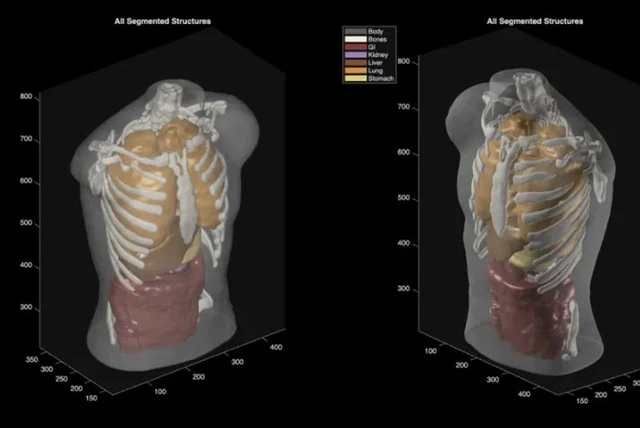
The pivotal component of the system is the artificial intelligence, which acts as the primary interpreter. Raw ultrasound data consists of complex grayscale arrays that are virtually illegible to the human eye in real time. Midjourney's algorithms transform this data, "rendering" the 3D map into a high-fidelity image accessible for analysis by both physicians and users. According to the developers, the long-term goal is for the precision and detail of these scans to outperform the capabilities of modern MRI scanners.
The primary advantage of this technology is its inherent safety. Unlike CT scans, which rely on ionizing radiation, or MRIs, which utilize powerful electromagnetic fields, ultrasound is entirely benign. This paves the way for a "preventative monitoring" paradigm: full-body scans completed in just 60 seconds could be performed regularly—for instance, to track physiological changes after intense physical exertion or as part of a routine comprehensive health screening.
However, the transition from prototype to medical standard is complicated by stringent regulatory frameworks and the necessity for multi-year clinical trials. To accelerate adoption, the company has opted for a "soft-launch" strategy. Midjourney plans to open a network of branded wellness centers in San Francisco, where scanning will be offered as part of a premium service suite alongside saunas and massages. This approach is designed not only to popularize the technology but also to aggregate a colossal volume of data for fine-tuning neural networks—a critical requirement for the early detection of oncological diseases, which are all too often diagnosed too late.
The technical realization of the project was made possible through a partnership with Butterfly Network, a leader in innovative ultrasound sensors. The scanner's hardware consists of 40 modules integrating thousands of transducers and receivers. By propagating waves multi-directionally from various angles, the system constructs an ultra-dense data set.
Processing this volume of information requires immense computational power—approximately two petaflops per scanning session. At this stage, such energy intensity remains a bottleneck; however, algorithmic optimization and the integration of specialized AI processors are expected to bring the technology to the mass market, transforming a complex medical procedure into a swift, seamless digital health snapshot.
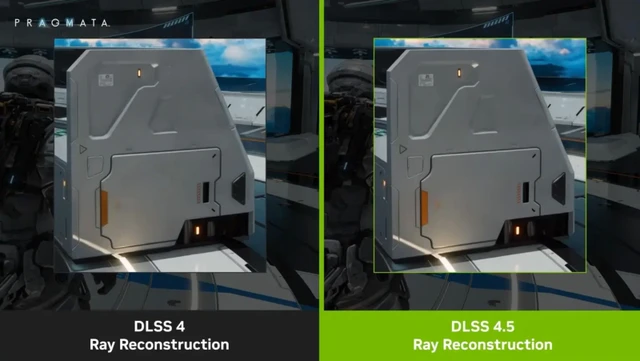 The Evolution of Rendering in DLSS 4.5