The modern world stands at a critical juncture, caught between the necessity of cautious AI regulation and an insatiable drive for unrestrained technological acceleration. While segments of the industry advocate for a strategic slowdown in the name of safety, political and corporate elites are doubling down on total expansion. At the heart of this tension lies a powerful alliance between state authority and the titans of semiconductor manufacturing. This is no longer merely a question of software; it is about forging a new infrastructure capable of rewriting the very rules of global economic evolution.
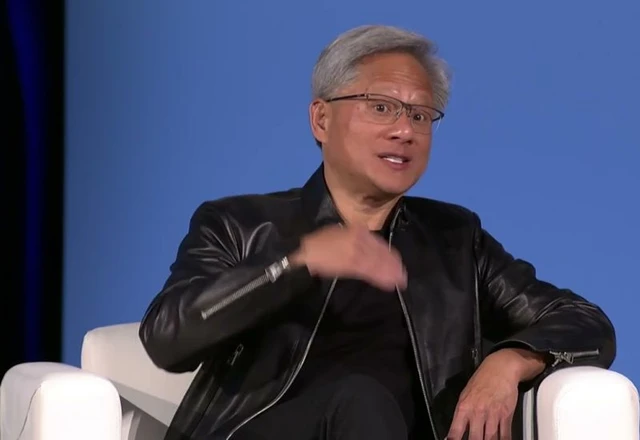
A defining moment of this technological convergence was an unexpected phone call from Donald Trump to Jensen Huang, CEO of Nvidia, during the latter's public appearance at the All-In Summit. The call, broadcast over speakerphone to the audience, served as a manifesto of optimism amidst the prevailing anxiety over the "existential risks" of AI. While many startup leaders and researchers urge caution—and even a temporary moratorium on development to establish control mechanisms—the US political trajectory is shifting decisively toward acceleration.
Concerns regarding a potential "machine uprising" or the loss of algorithmic control were dismissed as a fallacy. In this paradigm, safety must not become a bottleneck for progress. On the contrary, the advancement of artificial intelligence is viewed not as a threat, but as the sole path to maintaining global competitiveness. This approach mirrors the broader geopolitical race: the acknowledgment of China's commitment to AI development underscores the belief that any artificial pause in the US would be perceived as a voluntary surrender of strategic ground.
Particular emphasis is being placed on the physical foundation of AI: data centers. Today, compute capacity is emerging as a new class of strategic resource, comparable in significance to oil, gold, or diamonds. Furthermore, the scale of this infrastructure's influence may eventually surpass even the transformative effect of the internet. However, a sharp conflict has emerged between ambition and reality. The example of Google, which has shifted data center construction to Finland due to the complexity of domestic approvals, highlights the bureaucratic friction that could become a critical obstacle.
For the American economy, the construction of massive server farms is seen not only as a technological necessity but as a catalyst for social revitalization. In regions that have languished in decay for decades, the arrival of data centers has the potential to create new jobs and radically elevate living standards, effectively lifting local communities out of systemic stagnation.
Jensen Huang, acting as the primary architect of the hardware layer for this revolution, reaffirmed Nvidia's commitment to ensuring that the dividends of the AI race are accessible across all strata of society. In this vision, the gains must be distributed across all states and industries, transforming Nvidia's technology stack into the bedrock of a new economic cycle—one where compute power becomes the primary driver of national prosperity.
 The Commercial Debut of the Googlebook Ecosystem