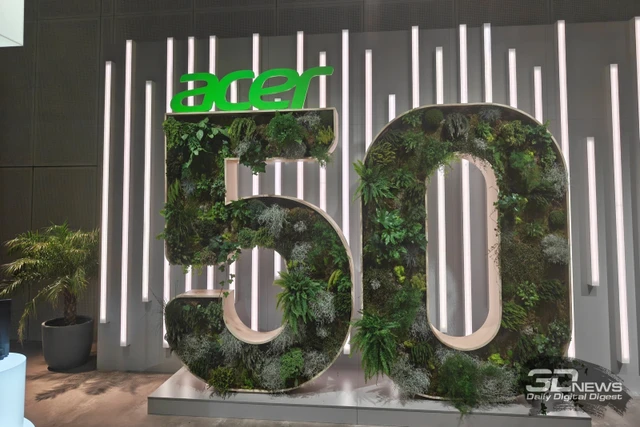
The personal computing landscape is undergoing a fundamental transformation, as the lines between gaming consoles, professional workstations, and mobile devices continue to dissolve. IFA 2026 served as the stage for Acer to unveil its latest strategic pivot; marking its 50th anniversary, the company introduced a lineup of devices that challenge conventional benchmarks for both ergonomics and raw performance. Ranging from ultralight carbon-fiber chassis to localized Nvidia-powered supercomputers, Acer aims to address every conceivable facet of human-data interaction. This technological snapshot signals a broader industry shift: moving beyond the mere "spec war" toward the development of intelligent, repairable, and versatile tools.
One of Acer's most ambitious gambits is Project DualPlay Mini—a conceptual device under the Predator brand that seeks to bridge the long-standing divide between mobile gaming and professional productivity. This hybrid is designed to transform seamlessly from a handheld console into a compact laptop. Its 8-inch display is mounted on a rotating hinge: in one configuration, it serves as a classic handheld; in the other, it becomes a fully functional mini-PC featuring a physical backlit keyboard optimized for WASD controls.
The device's technical foundation relies on an Intel platform and the proprietary Predator AeroBlade cooling system, utilizing metal fans for thermal management. Despite its engineering elegance, the device remains a concept; its significant weight and bulk raise questions about the mass-market viability of such a form factor. Nevertheless, the DualPlay Mini serves as a critical bellwether for the industry's trajectory toward "all-in-one" convergence devices capable of replacing multiple gadgets.
In contrast to the experimental nature of the concept, the Predator Atlas 7 is a production-ready, polished product. It represents a more streamlined iteration of the gaming handheld, featuring a 7-inch Full HD display with a 120Hz refresh rate. Under the hood lies serious horsepower: an Intel Arc G3 Extreme processor paired with Intel Arc B390 graphics and a substantial 24GB of LPDDR5X RAM. Of particular note are the sticks equipped with TMR (Tunnel Magnetoresistance) sensors, which effectively eliminate "stick drift" and provide the precision control essential for competitive gaming.
Parallel to its gaming ambitions, Acer has reimagined mobility within the Swift lineup. The Swift Blade 14 is positioning itself as the gold standard for the modern ultrabook: despite its 14-inch screen, the device weighs a mere 799 grams. This was achieved through the strategic use of magnesium-aluminum alloys and carbon fiber composites. Yet, the machine is far from a mere "typewriter"—it is powered by an Intel Core 7 350 processor and a stunning 3K OLED panel with full DCI-P3 color gamut coverage. Complementing this are the Swift Air 14 and 16, which emphasize unibody aluminum chassis and the energy efficiency of the Intel Core 300 series.
The true paradigm shift, however, is the Acer SFF RTX Spark—a compact workstation built on the Nvidia RTX Spark platform. Unlike most contemporary "AI PCs," where the Neural Processing Unit (NPU) handles only auxiliary tasks, the Spark is a full-fledged computing system designed for the local deployment of Large Language Models (LLMs).
The synergy between the Blackwell RTX GPU with 6,144 cores and the 20-core Nvidia Grace CPU, unified by 128GB of shared memory, allows the system to reach 1 petaflop of AI performance. This shifts the AI workflow from the cloud directly to the user's desk, ensuring total data privacy and zero network latency, making it an indispensable tool for developers and content creators.
While much of the industry pushes for maximum component integration, the Acer Vero 16 champions sustainable consumption and repairability. This fourth generation of the eco-series features a user-centric redesign: the bottom cover is toolless, and the battery and SSD are easily replaceable. The most radical innovation is the ability to upgrade the processor across at least two generations, effectively dismantling the concept of planned obsolescence. Despite its ethical focus, the technical specs remain high: an Intel Core Ultra X9 388H, 32GB of RAM, and a 16-inch OLED display.
Visual innovation continues with the Aspire G 3D 16. Leveraging SpatialLabs technology, the laptop generates volumetric images without the need for specialized glasses. A dual-camera system tracks the user's eye movement, dynamically adjusting the image perspective. The ability to convert standard 2D content into 3D, combined with a powerful AMD Ryzen AI Max+ 395 processor and Radeon 8060S graphics, transforms the device into a potent tool for 3D modeling and visualization.
For the esports segment, Acer introduced the Predator XB253Q U1 monitor, which defies traditional display limits by offering a staggering 1000Hz refresh rate. With a response time of 0.3ms, this display is engineered for scenarios where milliseconds determine the outcome of a match. Alongside it, new QD-OLED and Mini LED panels offering 4K and 5K resolutions cater to both professional gamers and graphic designers.
The ecosystem is rounded out by a wide array of peripherals and specialized hardware. The EP130K portable monitor, featuring e-paper simulation, offers a new experience for reading and stylus-based work, while the foldable PD163Q P3 transforms any workspace into a comprehensive four-screen command center. In the enterprise sector, the Veriton RI110 AI mini-PC stands out, capable of running AI models with up to 120 billion parameters, underscoring the company's commitment to decentralized computing. Even the micro-mobility segment received an update with the Predator ES Thunder Pro scooter, featuring a powerful 500W motor and a sophisticated traction control system.
The final flourish was the revival of the legendary Packard Bell brand for its centenary. The DotBook line and accompanying accessories—ranging from audio glasses to feature phones—represent Acer's attempt to blend nostalgia for a classic brand with modern technological standards.
The overarching takeaway from Acer's presence at IFA 2026 is that the company has evolved beyond being a mere hardware manufacturer. It is transitioning toward the creation of complex ecosystems where ultralight design, extreme AI performance, and an ethical approach to repairability coexist within a single strategic vision.
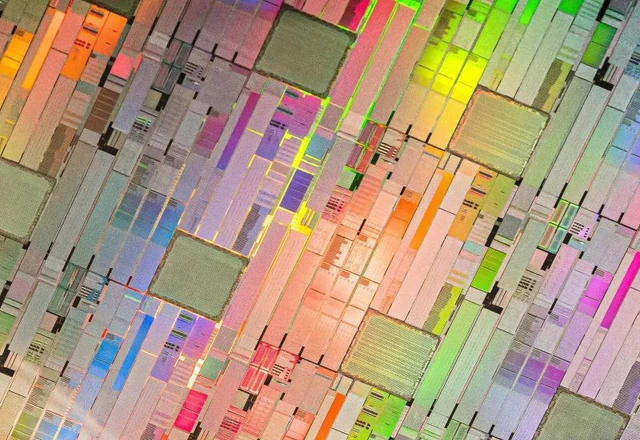 The Triumph of 3nm Chip Manufacturing