The global AI surge has triggered an unprecedented shortage of semiconductor memory, fundamentally reshaping the industry's power dynamics. Chinese titans CXMT and YMTC—long dismissed as mere beneficiaries of state subsidies—have rapidly evolved into formidable market contenders. Today, they are no longer merely competing with global incumbents; they have begun to exert significant leverage over the industry's largest buyers. This transformation signals a strategic pivot: moving away from low-cost dumping toward a position of aggressive pricing dominance.
For years, the memory manufacturing industry was viewed as a low-margin commodity sector where survival depended on massive scale and ruthless cost optimization. Within this ecosystem, ChangXin Memory Technologies (CXMT) and Yangtze Memory Technologies (YMTC) existed primarily through heavy subsidies from the Chinese state. However, the meteoric rise of generative AI and the rapid expansion of data centers have triggered a global shortage of DRAM and NAND, effectively upending the market hierarchy. Faced with acute demand, Chinese manufacturers have gained significant leverage, transitioning from industry followers to dominant price setters.
A telling indicator of this shift is the public friction between CXMT and Huawei. Over several months, the memory manufacturer consistently raised prices, ignoring demands for discounts from one of the region's largest tech conglomerates. The tension peaked in June when CXMT effectively barred engineers from SiCarrier—an equipment supplier linked to Huawei—from entering its research center. While joint projects continue, the gesture sent a clear signal: the era of unconditional subservience to the customer is over.
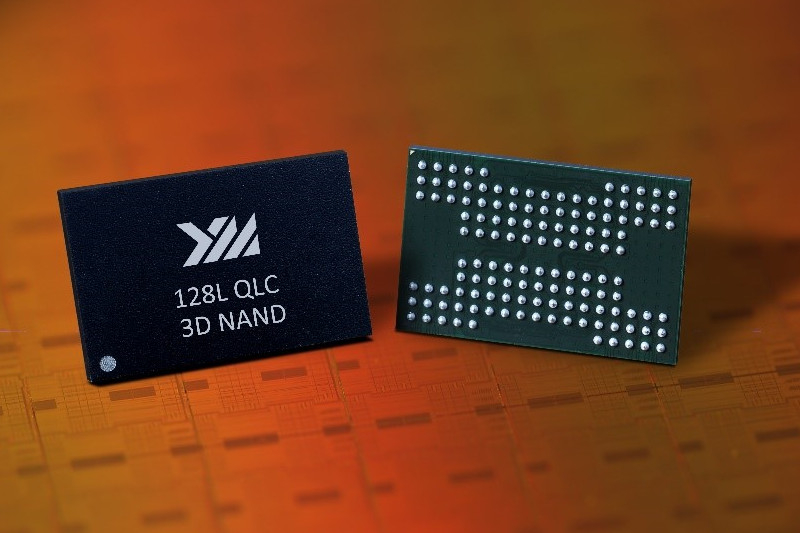
The companies' financial metrics reflect this exponential growth. CXMT's first-quarter revenue surged by 719% year-over-year, reaching $7.5 billion—a windfall that allowed the company to fully offset a decade of losses. The scale of their ambition is further evidenced by strategic partnerships: a five-year contract with ByteDance valued at over $7 billion underscores the deep integration of Chinese memory into the infrastructure of major digital platforms. Against this backdrop, CXMT is preparing for its debut on the Shanghai Stock Exchange with an offering volume of $8.6 billion, while YMTC is eyeing a valuation of approximately $148 billion.
However, this success has sparked significant apprehension in Washington. The Pentagon has already classified both companies as part of China's military-industrial complex, leading to stringent restrictions on access to U.S. software and equipment. A rift is emerging within the U.S. corporate landscape: while Micron, the primary competitor to the Chinese players, advocates for maximum sanctions, Apple seeks to prevent CXMT from being blacklisted to avoid jeopardizing its own supply chains.
Parallel to this financial ascent is an aggressive scaling of production capacity. YMTC has begun encroaching on the South Korean consumer SSD market, effectively eroding the market share of Samsung and SK hynix. Meanwhile, driven by colossal domestic demand, CXMT has focused on constructing new fabrication plants. Plans to increase productivity to 600,000 silicon wafers per month could allow the company to surpass Micron in total output by 2030.
The technological gap remains the primary challenge. Experts estimate that CXMT lags behind global leaders by approximately two generations, or roughly five years. This situation is exacerbated by the ban on the most advanced lithography systems from ASML. Nevertheless, YMTC has demonstrated remarkable adaptability; following the 2022 sanctions, the company replaced nearly half of its imported equipment with domestic alternatives and developed proprietary methods for producing multi-layer flash memory using less advanced toolsets.
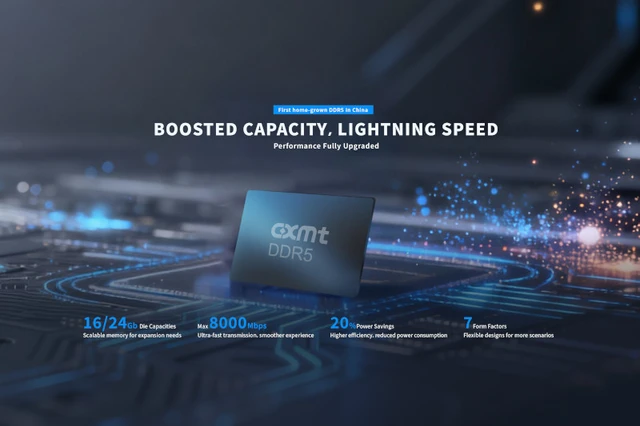
The market is currently witnessing a paradox. Chinese memory, once perceived as a budget alternative to Samsung or Micron, has become a highly sought-after asset. In certain segments of DDR5 server modules, CXMT's offerings are already commanding higher prices than those of the Korean leaders. This leap has transformed China's state champions from dependent players into a force capable of independently redefining the balance of power in the global semiconductor market.
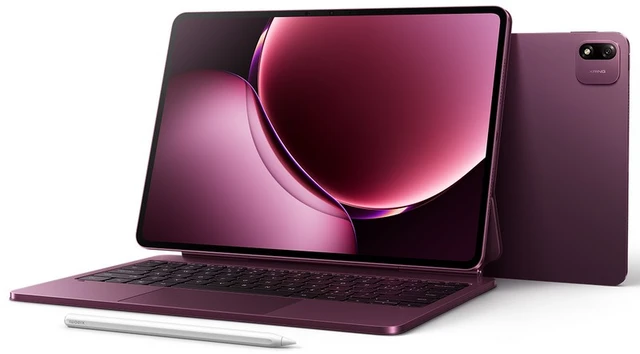 Power and Poise: The Xiaomi Pad 9 Pro Max