The transition from a private, visionary venture to a public entity is invariably fraught with intense market volatility. SpaceX, long considered the gold standard of private aerospace, is now confronting the brutal realities of equity fluctuations. The current slide below its initial valuation mirrors Tesla’s early turbulence, hinting at a recurring pattern of "correction before the breakthrough." The critical question remains: will Starship be the catalyst that pivots investor sentiment and restores the company's trajectory toward growth?
The initial weeks following its IPO were a resounding triumph for SpaceX: share prices soared to $225, far surpassing the offering price of $135. However, the euphoria proved fleeting. Currently, quotes have slipped below the $108 mark, representing a 20% decline relative to the primary offering price. While this trajectory sparks justifiable apprehension, to a keen analyst, it feels familiar—echoing the early volatility of another Elon Musk venture.
The Tesla precedent offers a glimmer of hope. In June 2010, shortly after its public debut, the automaker's shares also dipped by 18%. Yet, by the end of its first year as a public company, Tesla managed to reverse the trend, recovering those losses and returning to growth. The catalyst for this turnaround was the announcement of the Model S—a vehicle that transformed Tesla from a niche experiment into a mainstream powerhouse and convinced investors of the reality of future profitability.
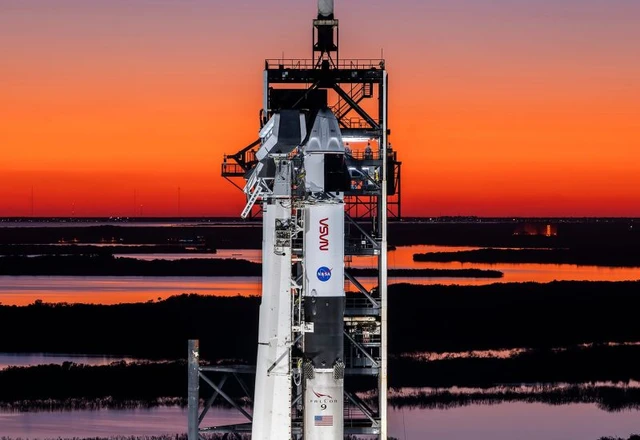
For SpaceX, Starship is poised to be the equivalent "savior product." This super-heavy lift launch vehicle is steadily proving its operational viability through a series of trials, including the recently completed 13th test flight. The potential of Starship extends far beyond simply increasing payload capacity compared to the proven Falcon 9. Complete reusability promises to radically slash the cost of delivering a single ton of payload into orbit, fundamentally reshaping the economics of orbital logistics.
Furthermore, the success of Starship is inextricably linked to the evolution of Starlink. The satellite constellation serves as the primary revenue engine for the entire SpaceX ecosystem; the ability to deploy the network more aggressively via new launch vehicles could be the decisive factor in the company's financial stabilization.
Nevertheless, market skepticism is not without merit. SpaceX faces several formidable challenges. First, with the exception of the Starlink segment, the company remains far from breaking even. Second, revenue growth rates appear insufficiently robust for a business with a $1.4 trillion market capitalization. This situation is further complicated by massive investments in artificial intelligence which, despite their strategic importance, are currently widening the aerospace giant's operational deficits.
Ultimately, the era of SpaceX's hegemony is drawing to a close: an increasing number of ambitious competitors are entering the sector, ready to contest the markets for launch services and satellite communications. Under these conditions, the first year of public trading may be characterized by stagnation or even further decline. The future of the stock now depends directly on the success of the Starship program—it is this venture that will determine whether SpaceX becomes an attractive asset for long-term investors or remains a victim of its own hyper-inflated expectations.
 The 5,000-Day Milestone of Martian Exploration