The United States is engaged in a massive push to reshore semiconductor manufacturing. However, the physical construction of fabrication plants has proven far more straightforward than the cultivation of a skilled workforce. A critical skills gap is now emerging as the primary obstacle to the nation's pursuit of technological sovereignty. By 2030, the industry could face a shortfall of 157,000 specialists—a deficit that threatens to undermine the efficacy of multi-billion dollar investments.
The resurgence of the American semiconductor industry demands more than just massive capital injections and government subsidies; it requires a critical mass of skilled labor. The fundamental challenge is that human capital cannot be conjured overnight. According to forecasts from McKinsey and the SEMI Foundation, the market will face a deficit of 157,000 vacancies by the end of the decade—a gap that will be exceptionally difficult to bridge with existing resources.
The situation is further complicated by a paradoxical set of statistics: despite an abundance of engineering programs, only 3% of U.S. STEM graduates choose a career in the semiconductor industry. Meanwhile, the vast majority of chipmakers report a critical shortage of personnel. This creates a dangerous imbalance where the physical infrastructure of the fabs is outpacing the intellectual readiness of the workforce.
Adding to the tension is a profound cultural divide. The expansion of the U.S. market is being driven by Asian giants such as TSMC and Samsung Electronics, but in practice, the collision of corporate cultures has been fraught. The Taiwanese management model, predicated on rigid discipline and systemic overtime, has met with sharp resistance from American employees. To prevent delays in commissioning its Arizona plants, TSMC was forced to implement a large-scale cross-cultural exchange: American engineers were sent for internships in Taiwan, while Taiwanese specialists were deployed to the U.S. to align operational processes with corporate standards.
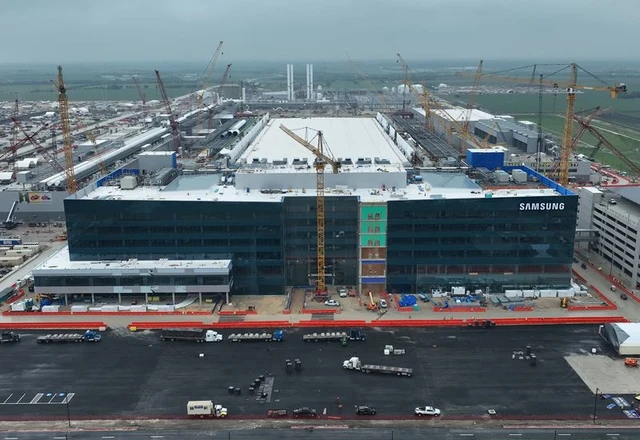
Simultaneously, Samsung is investing approximately $35 billion in new capacity in Texas. In the city of Taylor, the company plans to create 3,500 jobs, turning the hiring process into a race against the clock as project deadlines tighten. Meanwhile, Micron Technology is pursuing a different strategy, focusing its talent acquisition efforts directly in Asia—particularly South Korea, where memory manufacturing expertise is traditionally strongest.
The economic dimension of this talent drought is evident in a significant compensation disparity. Highly skilled Asian experts, now a scarce resource, are receiving annual bonuses that can, in some cases, exceed $400,000. By comparison, base salaries for rank-and-file American specialists range from $127,000 to $187,000 per year, with the $238,000 threshold reserved exclusively for senior management.
To mitigate this crisis, the industry is pivoting toward the creation of integrated educational ecosystems. Specialized training programs for Intel, TSMC, and SK hynix are being rolled out across Arizona and Indiana. Notably, a former Motorola plant in Arizona was repurposed specifically for student training, with equipment supplier Applied Materials contributing $200 million to the cause. Even ASML, the monopolist in lithography equipment, has opened its own training center in the U.S. to accelerate personnel adaptation to its complex scanners.
Further compounding the issue are shifts in U.S. immigration policy, which have made the relocation of specialists from Asia a costly and bureaucratically arduous process. This has effectively forced chipmakers to pivot their focus toward the domestic labor market.
Today, the synergy between industry and academia has become an existential imperative for the sector. In Indiana, students are training on equipment identical to that which will be installed at SK hynix plants, and TSMC is granting priority to graduates of targeted programs. Intel is similarly investing in workforce development for its Arizona and Ohio sites, despite a slowdown in the construction of the latter. Federal grants issued since 2022 have enabled the expansion of educational programs across more than 80 institutions nationwide, laying the foundation for the long-term development of a national semiconductor industry.
 Forecasting Exponential Growth in Nvidia Shipments