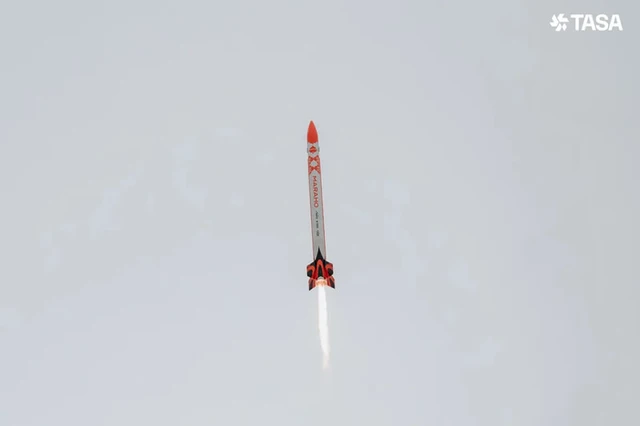
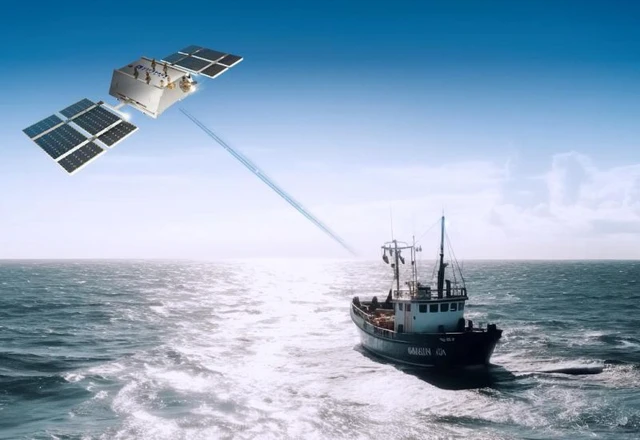
For decades, the prohibitive cost of accessing near-Earth space has remained the primary bottleneck hindering humanity's full-scale expansion into the cosmos. Conventional chemical propulsion systems demand an astronomical amount of propellant simply to fight gravity and punch through the dense layers of the atmosphere. Chinese engineers are proposing a radical alternative: leveraging electromagnetic acceleration technology in synergy with the unique geography of the Tibetan Plateau. This approach aims to replace the most capital-intensive phase of launch with a high-tech "slingshot," potentially slashing launch costs by an order of magnitude.
The concept of an "electric start" for rockets—providing initial momentum via an electromagnetic catapult—shifts the discourse on space transportation from the realm of chemical combustion to the applied physics of superconductors. The fundamental hurdle of any launch is the so-called "tyranny of the rocket equation": to lift a payload, a massive amount of fuel must be burned, but that fuel itself possesses mass, which in turn requires even more fuel to lift. Electromagnetic acceleration allows a significant portion of this energy-intensive workload to be transferred from the rocket's onboard systems to ground-based infrastructure.
To realize this vision, Chinese specialists have selected one of the most extreme locations on Earth: the Tibetan Plateau. The choice of the "Roof of the World" is driven not only by strategic considerations but by pure physics. At such extreme altitudes, the air is significantly rarefied, which critically reduces aerodynamic drag during the first few seconds of flight when the rocket achieves its maximum acceleration. It is here, in the city of Ziyan, that a specialized research institute has been established, now becoming the epicenter of development for commercial space launches.
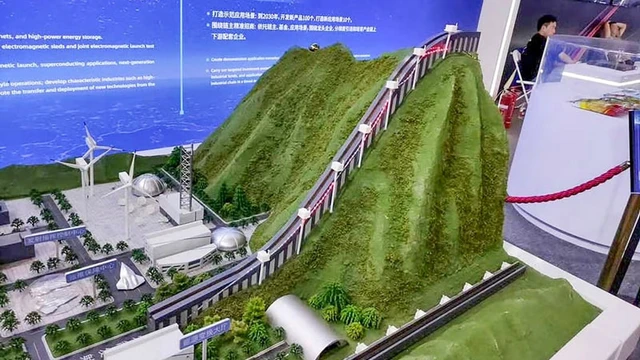
The technological foundation of the project was laid as early as 2019 with the registration of key patents. The system is based on principles similar to those used in maglev trains or modern electromagnetic aircraft carrier catapults. Specifically, it involves the creation of a powerful linear motor that literally "propels" an object along a guide rail at immense speeds.
A pivotal milestone was the testing conducted by the CASIC Third Academy. On a 380-meter test track, speeds of 234 km/h were recorded using high-temperature superconducting electrodynamic suspension. This validated the viability of the concept: superconductors enable the transmission of colossal amounts of energy with minimal loss, generating magnetic fields of incredible intensity.
Recent tests in Ziyan have focused on the applied aspects of control. Engineers successfully verified the operation of superconducting magnets across a wide range of modes and, more importantly, refined the precision braking system. Particular attention was paid to the autonomy of the magnets; the ability to function independently of the refrigeration system paves the way for a reusable, wear-resistant infrastructure that does not require lengthy recovery periods after each launch.
However, the path from a laboratory prototype to a fully operational spaceport in the mountains of Tibet is fraught with unprecedented engineering challenges. Achieving orbital velocity—or even a significant initial impulse—will require multi-kilometer tracks with absolute geometric precision. It is likely that such tracks will need to be housed in vacuum tunnels to completely eliminate atmospheric friction.
Furthermore, the issue of power supply remains. The system will necessitate the creation of giant energy storage arrays capable of discharging terawatts of power in a matter of seconds. No less daunting is the need to modernize the rockets themselves: standard airframes are not designed to withstand the extreme G-loads generated by abrupt electromagnetic acceleration.
Despite these complexities, the potential payoff justifies the project. Transitioning to an electromagnetic start could transform the launch of satellites and cargo modules from rare, prohibitively expensive operations into a routine process, comparable to the operations of a railway terminal. In the long term, this represents more than just resource efficiency; it is a fundamental paradigm shift in the economics of space exploration.
 Drones for Cloud Cover Management Over Solar Power Plants