The boundary between hardware constraints and human ingenuity is often blurred by the relentless curiosity of enthusiasts. While contemporary gaming leans heavily on raw teraflops, the essence of engine architecture has always resided in the art of overcoming resource scarcity. A recent technical demonstration brings this philosophy to life, porting Minecraft's voxel logic to the legendary Game Boy Color. The experiment proves that even eight-bit processors are capable of handling three-dimensional space when pushed to the absolute limits of code optimization.
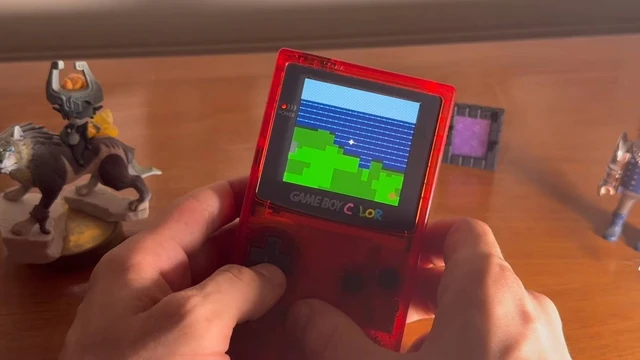
Implementing a full-fledged 3D engine on a platform conceived long before the era of polygonal graphics is nothing short of a triumph in optimization. At the core of this demo lies a cubic world concept, where the user can not only navigate the space but actively interact with the environment—destroying blocks and erecting their own structures. The developer has implemented two operational modes: a fully procedurally generated 3D landscape and a simplified flat map, allowing for flexible management of the system's overhead.
The technical challenge stems from the Game Boy Color's severely constrained specifications. At the heart of the 1998 handheld lies an 8-bit Zilog Z80 microprocessor, paired with a negligible 32 KB of RAM and 16 KB of VRAM by modern standards. With a screen resolution of 160x144 pixels, any attempt to render three-dimensional objects becomes a complex mathematical exercise in real-time projection.
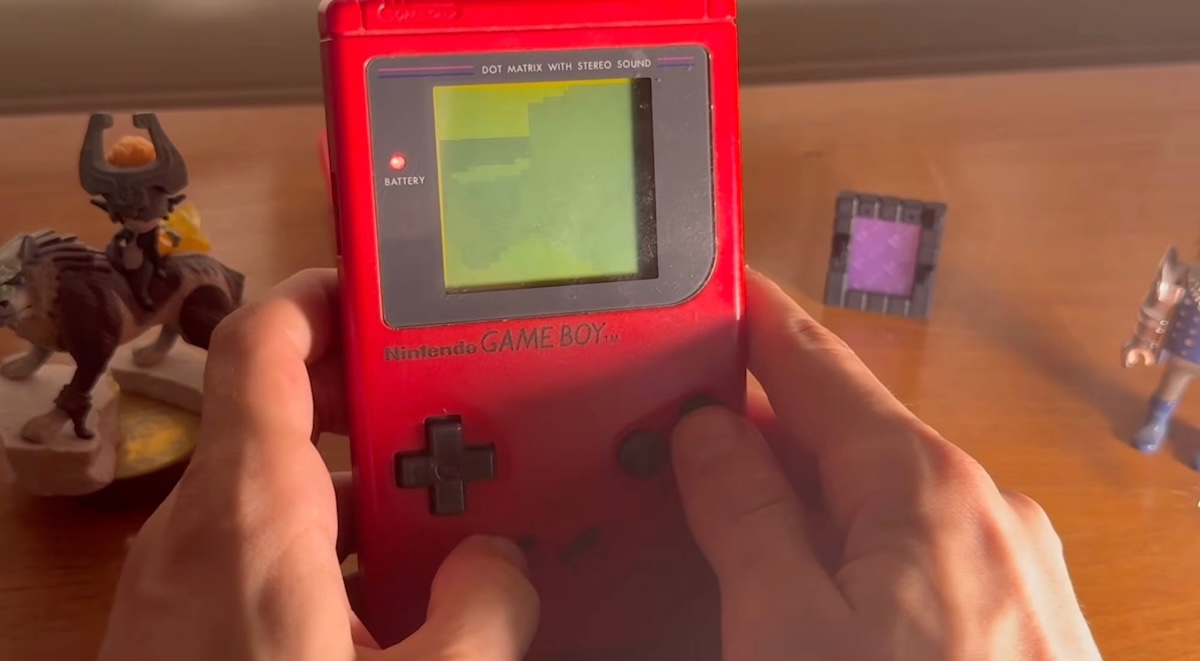
The project's visual identity is dictated by stringent VRAM limits and a total lack of hardware-accelerated texturing. Consequently, the world maintains a minimalist aesthetic, with a color palette restricted by the GBC's matrix capabilities. Notably, the engine boasts a high degree of compatibility: it can run even on the original Game Boy, though the image loses its color, reverting to the classic pea-green grayscale spectrum.
This project is not a commercial venture, but rather a pure exploration of hardware boundaries. Current development is focused on optimizing frame rates and expanding the functional depth of world interaction. Such experiments align with a broader trend of "pushing the limits" of legacy consoles—a movement that has previously seen complex ports such as The Legend of Zelda: Twilight Princess on the Nintendo 3DS or Super Mario 64 on the Game Boy Advance.
The drive to breathe new life into retro technology manifests in other forms as well. Parallel to the creation of new engines, innovative display methods are emerging; for instance, recent attempts to run Game Boy emulators on Electronic Ink (E-ink) displays completely redefine the user experience, transforming a dynamic game into a static, almost literary narrative.
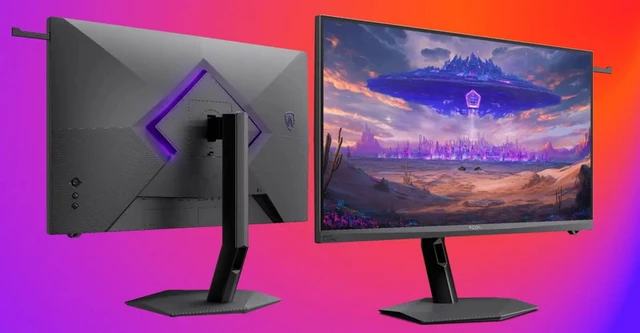 The Pinnacle of Clarity: AOC's New 5K Monitor