For years, the global mobile processor market has functioned as a closed ecosystem, dominated by a handful of tech titans. Yet, the drive toward total vertical integration is now compelling industry leaders to develop their own proprietary semiconductor solutions. Xiaomi is making a bold move in this direction with the introduction of the Xring O3—a chip designed to redefine the standards of memory management and neural network computing. This is more than just another iterative update; it is an ambitious challenge to the established market order.
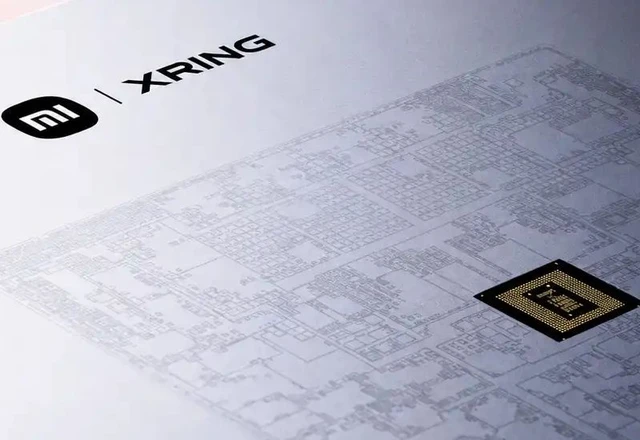
The mobile computing industry is undergoing a profound transformation, where the primary competitive edge is shifting from raw clock speeds to the efficiency of processor-data interaction. In this landscape, the emergence of the Xring O3 represents a strategic breakthrough. Engineered using TSMC’s cutting-edge 3-nanometer process, this chip stands as the first Chinese solution of such complexity, effectively placing Xiaomi in the same league as the world's leading semiconductor architects.
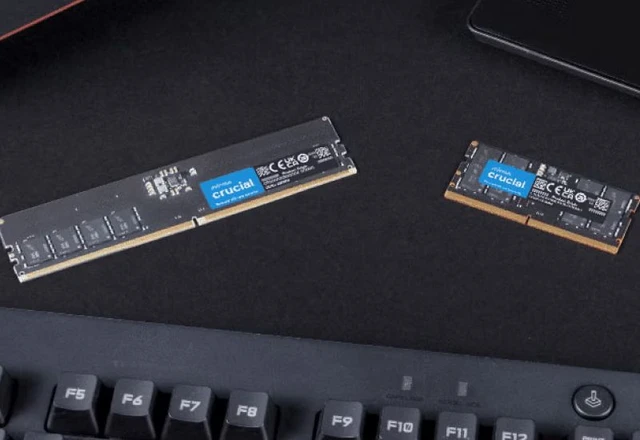
The crowning achievement of the Xring O3 is its support for the LPDDR6 memory standard. In the era of generative AI, memory bandwidth has become the primary bottleneck for system performance. The Xring O3 addresses this challenge by delivering data transfer speeds of up to 10,667 Mbps and a total bandwidth of 113.8 GB/s. Compared to the previous generation, the Xring O1, this represents an impressive 48% leap in performance, enabling devices to process massive datasets with unprecedented velocity.
The die's physical specifications further underscore the company's ambitions. Within an area of 133 mm², 24 billion transistors have been packed—a 26% increase over its predecessor. This density allows for deep optimization tailored to Xiaomi's proprietary AI models. Computational power reaches 200 TOPS for tensor operations and 3.13 TFLOPS for vector operations. Particularly noteworthy is the reduction in computational latency to a record 82 ns, a critical factor for the real-time operation of local neural networks.
To achieve these benchmarks, two specialized AI compute blocks were integrated into the CPU architecture, while the graphics subsystem received eight additional neural acceleration modules. Consequently, local data processing efficiency has increased by 45%, significantly reducing the device's reliance on cloud computing and enhancing user privacy.
The first devices to house this silicon powerhouse will be the Xiaomi 18 Fold foldable smartphone and the Xiaomi Pad 9 Pro Max tablet. However, the Xring O3 is merely one piece of a broader strategic roadmap. The success of the Xring O1, which has already surpassed one million units shipped, has validated the viability of a strategy aimed at reducing total dependence on Qualcomm and MediaTek.
The future evolution of the ecosystem involves a pivot toward domain-specific workloads. For instance, the 6-nanometer Xring O100 is currently in development, designed specifically to accelerate the proprietary MiMo AI model on consumer devices. Parallel to this, Xiaomi is developing the Xring D100—a high-performance 3nm chip dedicated to automotive systems.
The automotive sector demands an entirely different scale of power: the Xring D100 combines a 20-core CPU and a 16-core NPU, supporting up to 160 GB of unified memory. This configuration enables the execution of local large language models (LLMs) with up to 200 billion parameters, transforming the vehicle's onboard computer into a fully autonomous control center capable of handling complex autopilot scenarios and advanced driver assistance systems (ADAS) without relying on external servers.
 The Evolution of the Apple Home Ecosystem