The boundary between audio interfaces and visual perception is rapidly blurring, transforming standard headphones into comprehensive sensory systems. Apple is pivoting toward a philosophy of "background computing," envisioning devices capable of analyzing their environment in real time. Recent leaks from the macOS Tahoe codebase underscore the company's ambition to embed cameras directly into the AirPods architecture. However, the engineering hurdles have proven more formidable than anticipated, forcing a significant recalibration of the release timeline.
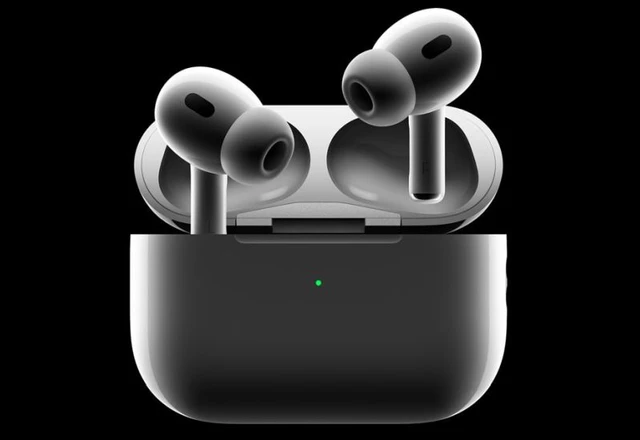
An accidental data leak within macOS Tahoe 26.7 has sparked discussions regarding the next evolutionary leap for AirPods. We are looking at a concept where headphones transcend their role as mere audio playback tools to become sensory extensions for the user. By integrating cameras, the device will be capable of analyzing the user's surroundings, forging a contextual link between what the wearer sees and what they hear.
Despite initial plans for a launch this year, Apple has encountered several critical hurdles. According to insiders, leadership decided in the spring to implement a deep and prolonged testing cycle. The tech stack proved too unstable; software defects, coupled with disruptions in the component supply chain, rendered an autumn debut impossible. Consequently, the release window has shifted, and camera-equipped AirPods are now not expected until 2027 at the earliest.
Apple's engineers are paying particular attention to ethics and privacy. Meta's experience with its smart glasses demonstrated that society is hypersensitive to covert surveillance. To mitigate reputational risks and accusations of espionage, Apple plans to employ low-resolution sensors. These cameras will not be designed for traditional photography or videography; their sole purpose is spatial scanning and the transmission of metadata to power AI functionalities. In this way, the device will "understand" the context of a situation without generating detailed images of people or objects.
Internally, development has proceeded along two parallel tracks. The first prototype, designated B790, was an iterative modification of the AirPods Pro 3 with integrated cameras. The second variant, B798, represents a full-fledged next-generation AirPods Pro, where visual sensors were baked into the core architecture from the outset.
This project is part of Apple's broader strategy to expand into the AI wearables segment. The coming years promise a torrent of innovation: from the first fully realized smart glasses and wearable AI pendants to the long-awaited foldable iPhone. The ecosystem will further expand with touch-sensitive MacBooks, smart displays featuring robotic manipulators, and updated home monitoring systems. All these devices, including refreshed Macs and iPads powered by new silicon, share a singular objective: to create a seamless intelligent layer between the human and the digital world.
 Anthropic’s Strategic Push for Hardware Independence