The divide between mobile devices and home entertainment ecosystems is rapidly evaporating. Google is currently exploring ways to harness high-precision smartphone sensors to fundamentally enhance the gaming experience on larger screens. Recent leaks within the Google TV codebase suggest the development of a deeply integrated virtual controller—an initiative aimed at lowering the barrier to entry for casual gamers who lack specialized hardware.
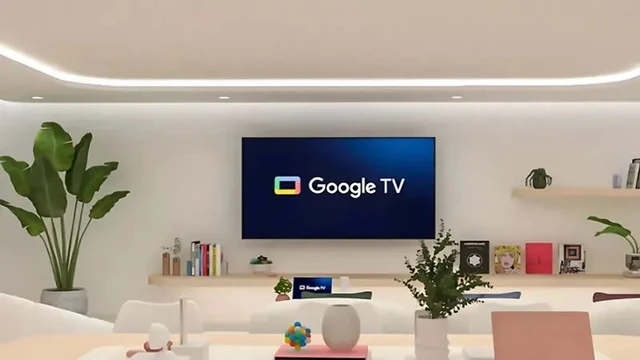
The home entertainment landscape has long been gravitating toward device convergence, and recent updates to Google TV software further validate this trajectory. In a recent system build (version 4.39.4903.975565386.7-release), string references for "Gamepad" and "Joystick," along with a specific parameter—GamingRemoteFeature__enable_gamepad—have surfaced. These findings strongly suggest that Google is developing functionality to transform the ubiquitous smartphone into a fully realized game controller for the television.
Technically, this development represents an evolution of the existing touch-based remote. However, while the standard remote is designed for menu navigation and content selection, this new mode is engineered for dynamic interaction. It is highly probable that Google is leveraging its experience with Android 17 for foldable devices, where on-screen controls are synchronized with content on an external display. In this scenario, the smartphone acts as a peripheral device, transmitting real-time input and tilt data to the TV panel.
Despite the technical elegance of the solution, it faces a fundamental ergonomic hurdle: the absence of tactile feedback. Unlike physical gamepads with mechanical buttons and analog sticks, a touch screen requires constant visual monitoring. This creates a cognitive gap, forcing the player to divide their attention between the television screen and the surface of the smartphone.
Furthermore, the market is already saturated with third-party applications offering similar functionality. However, native integration from Google could provide a decisive competitive edge by optimizing input lag and ensuring seamless authentication within the ecosystem. When control is baked into the operating system, device interaction occurs at a lower level, which is critical for high-performance, dynamic gaming.
Currently, the feature is in the internal testing phase, and a public release date remains unknown. Nevertheless, this move underscores Google's ambition to evolve the smartphone from a mere display into a universal command center for the entire digital home.
 The Illusion of Growth in the Foldable Smartphone Market