The era of Big Data has definitively evolved into the age of "Deep Data," where personal health metrics have become the primary catalyst for the evolution of artificial intelligence. Tech giants are increasingly grappling with the friction between a user's right to privacy and the imperative to train algorithms on vast repositories of real-world clinical data. Samsung’s latest healthcare initiatives highlight this fracture, effectively turning a user's medical history into currency exchanged for access to cutting-edge services. This establishes a new precedent within the wearables industry: biometric monitoring is no longer merely a service—it has become the raw feedstock for corporate neural networks.
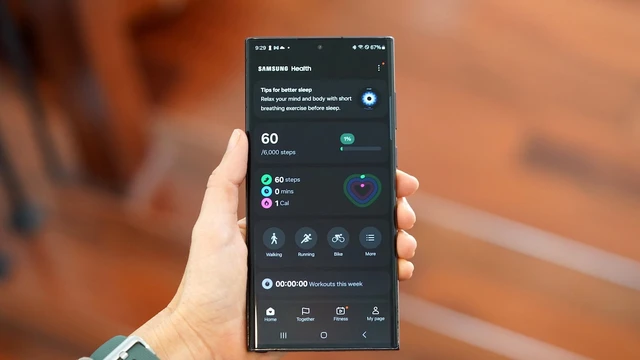
The contemporary wearables landscape is pivoting toward preventive medicine, yet the cost of this evolution is proving unexpectedly steep. Samsung has effectively presented its users with a stark ultimatum: surrender medical data for AI model training or accept its total loss. The mechanism for implementing this mandate is clinical in its pragmatism—the company has introduced a consent toggle that has become a prerequisite for creating backups within Samsung Health.
From a technical standpoint, opting out of these algorithmic partnerships strips the user of their ability to archive health metrics. Once statutory data retention periods expire, the information is permanently deleted, effectively transforming privacy from a fundamental right into a costly luxury.
The scope of data harvesting encompasses the most intimate aspects of human physiology: sleep architecture, medication logs, medical histories, and menstrual cycles. Of particular concern is the fact that access to this intelligence is not limited to automated systems; employees and third-party contractors may also gain access, significantly widening the vector for potential confidential data leaks.
Yet, beneath this aggressive posture lies an ambition to engineer a truly intelligent monitoring ecosystem. The integration of generative AI into Samsung Health—timed with the release of the Galaxy Watch 9 and the One UI 9 Watch interface—elevates the device from a mere "step counter" to a sophisticated personal medical assistant.
Central to this transformation is the Vitals tool. It operates on the principle of deviation analysis: the system establishes a biometric baseline for the user and benchmarks nocturnal data against it. By analyzing heart rate, heart rate variability (HRV), skin temperature, and blood oxygen levels, Vitals can detect signs of illness or profound exhaustion before the user even becomes consciously aware of the problem.
Complementing this are comprehensive systemic health metrics. The Heart Health Score synthesizes body composition, physical activity, and stress levels into a singular cardiovascular index, providing a holistic view of heart health. For athletes, the Cardio Load tool analyzes cardiovascular strain to help prevent overtraining—a critical state where the body ceases to recover. Completing this architecture is the Fitness Index, which allows users to benchmark their current condition against population averages, effectively gamifying the process of health maintenance.
Ultimately, we are witnessing the emergence of a new paradigm: users are granted access to high-tech diagnostics and predictive analytics in exchange for the ownership of their own biological data.
 The Foldable iPhone: A New Chapter for Apple