The modern digital economy, fueled by the meteoric rise of neural networks, is placing an unprecedented strain on natural resources, elevating water to a strategic asset for tech titans. Traditionally, cooling massive server clusters has demanded millions of gallons of freshwater—a requirement that frequently sparks friction with local ecosystems. Within this framework, achieving a "water-positive" footprint is no longer merely an environmental KPI; it has become a matter of strategic infrastructural resilience. Microsoft is demonstrating that a fundamental technological overhaul of cooling systems can outpace climate projections, enabling the company to replenish more water than it consumes.
The hyperscaler industry is entering an era of "water optimism." Recent data reveals that Microsoft has achieved a positive water balance five years ahead of schedule. By the end of fiscal year 2025, the company reported that its water replenishment efforts exceeded total operational consumption—a milestone reached through a radical overhaul of energy efficiency and cooling strategies for its computing power.
A primary metric of this progress is Water Usage Effectiveness (WUE), which measures the liters of water consumed per kilowatt-hour of electricity. Since the early 2000s, Microsoft has improved its data center water efficiency by nearly 90%. While the figure stood at 2.3 L/kWh two decades ago, it has plummeted to an impressive 0.27 L/kWh today. Recent trends are even more telling: since 2022, water intensity has dropped by 25%, already crossing the halfway mark toward the company's ambitious goal of a 40% reduction by the end of the decade.
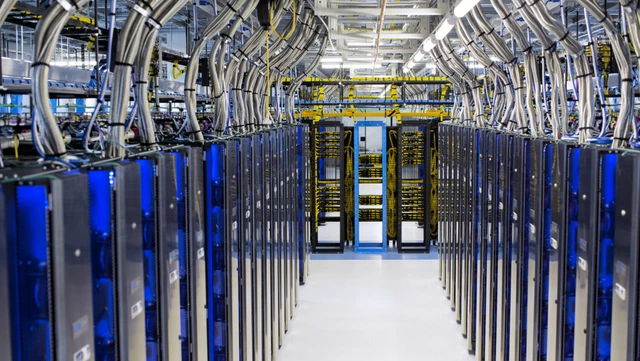
This technological breakthrough stems from a strategic pivot away from traditional evaporative cooling, which essentially "consumes" water to dissipate heat. In its place, Microsoft has deployed direct air and liquid cooling systems, including closed-loop Direct Liquid Cooling (DLC) solutions. By circulating coolant through a sealed cycle, these systems virtually eliminate fluid loss—a paradigm that is now the gold standard for all new data center builds.
Currently, approximately 90% of Microsoft's infrastructure operates on low- or zero-water consumption systems. However, the efficacy of these solutions varies significantly by geography. In northern hubs like Dublin and Amsterdam, cooling systems rely on water for less than 5% of their operating time. Conversely, in arid regions such as Phoenix, Arizona, this figure climbs to 40%, underscoring the immense challenge of resource management in extreme climates.
Alongside technical upgrades, Microsoft is aggressively diversifying its water sources, prioritizing industrial and alternative resources over potable water. In data centers located in Quincy, Singapore, and San Antonio, the share of non-potable water in total consumption has reached 74%, 99%, and 79%, respectively. Furthermore, the company is scaling its rainwater harvesting initiatives—already successful in the Netherlands, Sweden, and Ireland—with plans to deploy similar precipitation recovery systems across Canada, the UK, Finland, Italy, South Africa, and Austria.
 The Price of Acceleration: CXMT’s Rapid Push into Memory