The global smartphone market is undergoing a profound transformation, as quantitative growth gives way to qualitative evolution. Against this backdrop, Samsung has reclaimed its position as the global leader, demonstrating remarkable resilience even amidst a broader industry downturn. The secret to this success lies not in mass-market volume, but in a strategic shift in consumer demand toward premium devices. Today, the market is no longer a race for shipment numbers; it has become a contest of longevity and technological value.
The first half of 2026 marked Samsung's return to the summit of the global smartphone market. With a 22% market share, the company not only edged out its primary rival, Apple (21%), but also delivered an impressive 9% year-on-year growth in shipments. This achievement is particularly striking given the broader industry headwinds: with the global market contracting by 7%, Samsung's performance underscores the exceptional efficacy of the South Korean giant's current strategy.
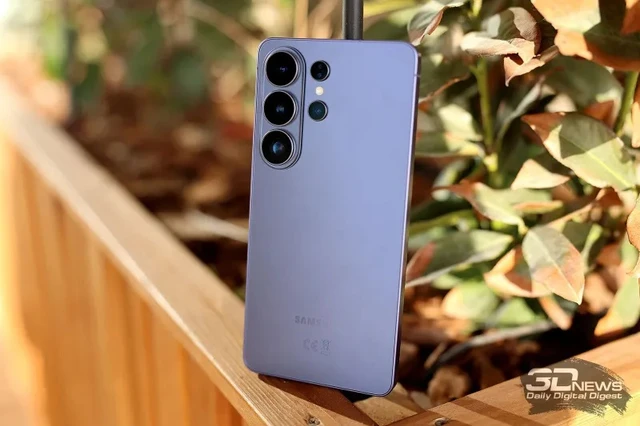
The paradox of this success lies in Samsung's ability to scale shipment volumes despite systematic price increases across its portfolio. Analysis of consumer behavior reveals a fundamental shift: users are increasingly abandoning budget models in favor of flagship solutions, most notably the Galaxy S26 series. The North American market played a pivotal role in this transition, where the brand's presence climbed from 26% to 30% over two quarters, serving as a powerful catalyst for overall growth.
However, this victory was won under intense external pressure. The industry grappled with acute memory shortages and a sharp spike in the cost of key components, triggering a general decline in shipments during the second quarter. While Samsung offset these rising costs through robust demand for its high-margin flagships, manufacturers in the budget segment found themselves increasingly vulnerable.
Xiaomi felt the brunt of this trend most acutely. Despite maintaining third place with an 11% share, the Chinese brand saw shipments plummet by 26%. The root cause lies in the unit economics of production: the soaring cost of memory critically eroded the margins of entry-level devices, rendering their production less viable. Similar struggles are evident among other top-five players, such as Oppo and Vivo, whose market shares have plateaued at 10% and 8%, respectively.
We are witnessing a wholesale transformation of the very concept of smartphone ownership. According to forecasts from analytical firms Omdia and Counterpoint Research, total global shipments will contract to approximately 1.097 billion units by the end of 2026—a decline of 12% to 14.3%. Conversely, the total market value is projected to rise by 12%, reaching $651.6 billion. With the average device price trending toward $594, the budget segment is effectively being hollowed out.
The primary driver of this evolution is the extending lifecycle of the hardware. The share of devices priced under $200, which stood at 40.6% in 2025, is expected to shrink to 25.6% by 2027. Simultaneously, the premium segment—devices priced at $800 and above—is set to grow to 28.4%.
Consumers have ceased to view the smartphone as a disposable commodity to be replaced annually. Manufacturer promises of extended software support—up to seven years of updates—have transformed the purchase of a flagship into a long-term investment. Users are consciously opting for more expensive, reliable, and high-performance devices that remain relevant for years, rather than compromising with the sluggish performance of cheap models. In this new reality, Samsung—leveraging the success of the Galaxy S26 and the anticipated release of the Galaxy Z Fold 8—is defining the trajectory for the entire industry.
 Meta’s New Era of Visual Interaction