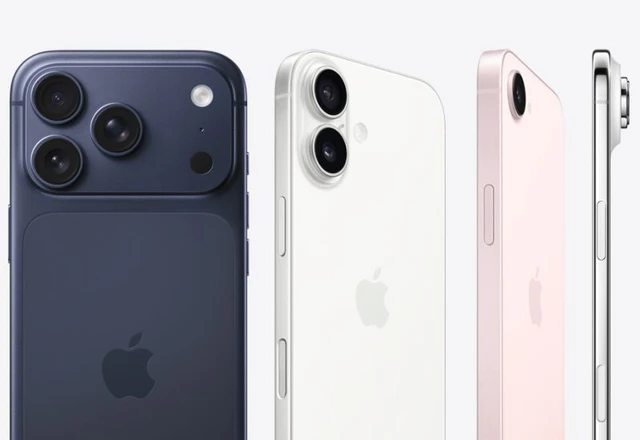
Modern mobile photography has moved beyond the mere arms race of megapixel counts, evolving instead into a sophisticated battle of computational algorithms and specialized optics. The quest for a truly versatile tool—one capable of delivering professional results in both controlled studio environments and the depths of night—has become the industry's ultimate challenge. Recent comprehensive benchmarks of 2026’s flagship devices reveal a tectonic shift in influence toward Asian vendors. In this clash of titans, it has become clear which tech giants truly master the art of light and form.
Modern camera benchmarking methodology demands a shift away from subjective assessments in favor of blind testing. To eliminate brand bias from the perception of the frame, a framework consisting of six core scenarios was developed: daylight landscapes, golden hour lighting, interior shoots, night cityscapes, portraits, and macro photography. To ensure experimental purity, all devices were standardized across retouching settings and file formats, with evaluations conducted across five different focal lengths.
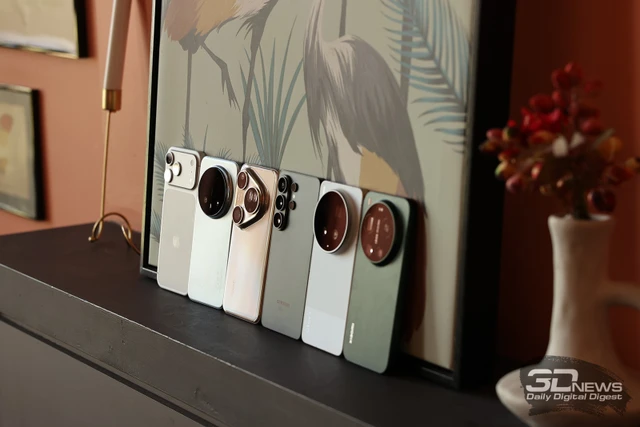
The clash featured the primary contenders for the title of the world's best camera phone: the Apple iPhone 17 Pro Max, Samsung Galaxy S26 Ultra, HUAWEI Pura 80 Ultra, Xiaomi 17 Ultra, HONOR Magic 8 Pro, and the rare vivo X300 Ultra.
Daylight shooting under natural light served as the first serious trial. The vivo X300 Ultra emerged as the undisputed leader here. The smartphone demonstrated exceptional stability across all modules: from an ultra-wide lens free of typical spatial distortions and blown-out highlights to a deep zoom with accurate color reproduction. The Xiaomi 17 Ultra confidently took second place, showing enviable consistency in quality, although it lacked the expressiveness of the wide-angle lens. Despite its overall power, the HUAWEI Pura 80 Ultra suffered from a drop in detail at the periphery of the frame. Bringing up the rear was the iPhone 17 Pro Max, which once again exhibited a tendency toward excessive "warming" of the image, turning blue skies into a grey gradient.
The "golden hour" scenario yielded surprising results. The HONOR Magic 8 Pro claimed victory, although from a technical standpoint, its post-processing proved too aggressive: excessive "whitening" stripped the frame of the sunset's soft atmosphere, and the optics were prone to lens flares. Nevertheless, the visual contrast of these shots attracted the majority of voters. A more academic and disciplined approach was demonstrated by the HUAWEI Pura 80 Ultra; its proprietary algorithms for rendering sunbeams worked flawlessly, creating deep tonal perspective without halo artifacts. Samsung and vivo occupied the middle ground, with the former suffering from noise and cold hues, and the latter from a slight "plastic" aesthetic in the imagery.
Under flat studio lighting, the vivo X300 Ultra dominated once again. Its ability to maintain sharpness across any focal length makes it one of the most reliable tools for interior photography. The HUAWEI Pura 80 Ultra also showed a high level of detail, though it lost out on color saturation at the wide angle. In this segment, the Samsung Galaxy S26 Ultra faced significant challenges: color reproduction became unstable when switching focal lengths, and the telephoto lens exhibited a noticeable lack of detail.
Night photography remains the traditional litmus test for mobile sensors. By 2026, the line between standard mode and "night mode" has practically vanished, as multi-frame exposure is now integrated into the base stream. The HUAWEI Pura 80 Ultra became the voting favorite, although its drive to extract maximum detail from the shadows occasionally led to unnatural lines and a "smudging" effect on faces at maximum magnification. The vivo X300 Ultra offered a more balanced image with superior rendering of light sources. The iPhone 17 Pro Max again found itself among the outliers, producing pale and noisy frames—confirming a systemic crisis in Apple's optics against its Chinese competitors.
Portrait photography revealed diverging philosophies regarding skin rendering and bokeh. The HUAWEI Pura 80 Ultra once again topped the rankings thanks to peak sharpness and correct handling of artificial background blur, even in low-light conditions. The Xiaomi 17 Ultra offered a more contrasty and cool style, which nonetheless worked excellently for wide shots. Here, the iPhone 17 Pro Max performed respectably, eschewing artificial enhancement in favor of naturalism, though it struggled with focusing issues. Conversely, the HONOR Magic 8 Pro overly softened skin textures, making the portraits feel less authentic.
Macro photography proved to be the most contentious phase. Despite the fact that both the vivo X300 Ultra and HUAWEI Pura 80 Ultra utilize specialized telephoto modules for macro, the voting results were paradoxical. The iPhone 17 Pro Max won based on color vibrancy and brightness, even though technically it didn't come close to true macro and struggled with focus. The vivo X300 Ultra, which offered objectively superior clarity and a more three-dimensional image, unexpectedly finished last—highlighting the gap between technical perfection and the consumer's perception of an "appealing image."
The final competitive landscape for 2026 is clear. The HUAWEI Pura 80 Ultra confirms its status as the technological leader, consolidating its wins in portraits and night photography. The vivo X300 Ultra stands as its primary rival, offering the highest quality imagery in daylight and indoor settings. HONOR and Xiaomi demonstrate a stable, strong level of performance—not claiming absolute dominance, but remaining highly competitive.
The most alarming trend is observed among the market's traditional leaders. Apple and Samsung have effectively fallen to the back of the pack. It has become evident that a conservative approach to optics is no longer viable in an era where Chinese vendors are implementing bold engineering solutions and an aggressive computational photography stack.
 Energy Autonomy: The Extreme Edition