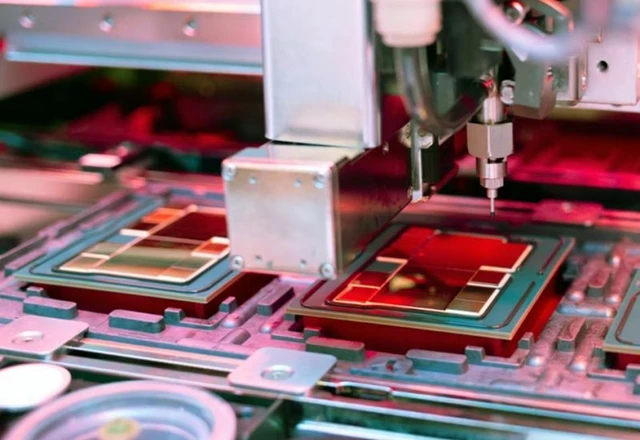
The global AI arms race has evolved into the primary engine of contemporary economic growth. In this high-stakes competition, hardware has emerged as the strategic pivot, dictating the balance of power across the global market. Recent data underscores China's rapid ascendancy as a leading provider of semiconductor solutions, with a surge in chip exports signaling the nation's transition into a new era of technological dominance.
The modern digital economy is undergoing a "hardware-centric" boom, where access to computational power has become the new equivalent of energy independence. In this context, the figures for the first half of 2026 are striking: China has nearly doubled its integrated circuit exports compared to the previous year. We are seeing a staggering volume of 179.44 billion units, totaling $177.28 billion. This surge—nearly 96%—is not merely a result of market conditions, but evidence of a profound structural transformation in the country's export capabilities.
This growth has provided the foundation for double-digit increases across the broader high-tech sector. The primary catalyst has been the soaring demand for data processing infrastructure. Exports of servers, memory modules, and related components climbed by 41.3%, reaching $138.08 billion. In effect, China is evolving beyond its legacy as the "world's factory" for assembly, emerging instead as a key provider of the complex hardware stacks essential for deploying large language models (LLMs) and neural networks.
Beijing’s strategy in this arena is twofold. On one hand, the state is aggressively incentivizing domestic chip development to achieve full technological autonomy and reduce reliance on foreign suppliers. On the other, pragmatism prevails: to sustain AI momentum, authorities continue to permit the procurement of cutting-edge accelerators, such as the Nvidia H200, which remain critical for training the most sophisticated models.
However, the true scale of this expansion is evident not only in semiconductors but also in applied hardware. Chinese manufacturers have begun mass-exporting consumer electronics with integrated AI—ranging from smart glasses and instant translators to robotic exoskeletons.
The robotics sector warrants particular attention, where China has firmly established itself as a net exporter. Shipments of industrial robots rose by 18.6%, reaching nearly $928 million. Diversification is moving toward higher complexity; significant growth is being seen in surgical systems and service cleaning robots. This confirms the thesis that China's technological leap spans the entire value chain—from the base semiconductor wafer to complex autonomous mechanisms operating in operating rooms or industrial sites.
 The Horizon of China's Technological Sovereignty in Lithography