The boundary between science fiction and industrial reality is rapidly dissolving. Humanoid robots are evolving from experimental laboratory prototypes into strategic corporate assets. While their current market penetration remains modest compared to traditional automation, the trajectory of their expansion is exponential. This shift marks a fundamental transformation in the nature of human-machine interaction within a shared physical environment.
The current evolutionary phase of robotics is marked by a striking paradox: despite the immense media hype surrounding humanoid systems, their actual economic footprint remains limited. According to data from the International Federation of Robotics (IFR), approximately 7,000 humanoid robots were deployed globally by the end of 2025. For an industry accustomed to million-unit production runs, this figure may seem modest, yet it represents the baseline for a new technological epoch.
To grasp the scale of this shift, one must contrast these figures with the traditional automation sector. By 2024, the global fleet of industrial robots exceeded 4.66 million units, with annual growth surpassing half a million new machines. Operating alongside them are roughly 199,000 service robots, which have absorbed routine tasks in logistics, cleaning, and customer service. Against this backdrop, 7,000 anthropomorphic systems appear to be a statistical anomaly, yet they represent the most complex and promising vector of development.
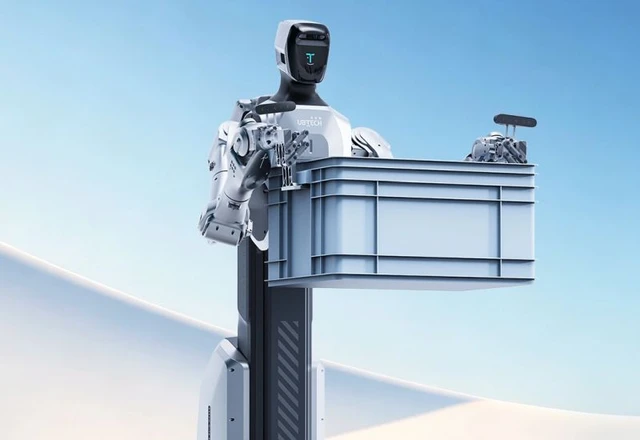
In the view of industry experts, "humanoid" nature is defined not so much by the presence of limbs, but by the ability to function autonomously within environments originally designed for humans. This is a critical conceptual distinction: while a traditional industrial robot requires an entire factory floor to be redesigned around its needs, an android must integrate into existing infrastructure. Furthermore, legs are not a prerequisite—a wheeled chassis can be equally effective, provided it ensures the necessary mobility and interaction with the objects of the human world.
However, the current deployment phase is more exploratory than operational. A significant portion of the systems sold are not yet performing "useful work" in a commercial sense. Instead, they serve as subjects for training neural networks, conducting experiments, and refining interaction algorithms. The primary adopters are automotive manufacturers, who are deploying single units or small clusters of robots within their plants. At this stage, such implementations do not alter the overall landscape of automation; rather, they serve as proving grounds for the technology.
Despite this cautious start, forecasts from Bank of America Global Research point toward an impending explosion in growth. Shipments are expected to reach 90,000 units this year, with the market scaling to 1.2 million robots by 2030. Such a trajectory is typical for technologies transitioning from expensive prototypes to mass-market products.
It is important to note that official IFR statistics cover only the civilian corporate segment. These calculations exclude systems developed for private use, healthcare, or the defense sector. This implies that the actual number of anthropomorphic machines in the world is significantly higher, and the pace of their development may be even more aggressive than public reports suggest. We are witnessing the birth of a new labor infrastructure, where the physical form of the robot ceases to be a limitation and instead becomes a tool for universal versatility.
 The Second Life of a Legend: Ryzen 7 5800X3D